

CIAA contenders are set to clash when Winston-Salem State (WSSU) and Virginia State (VSU) meet on Tuesday at the C.E. Gaines Center. The matchup will carry not just conference implications but also a narrative rooted in fresh leadership and program evolution. These teams — both overseen by coaches hired in April 2025 — have responded to new beginnings in dramatically different but equally compelling ways.
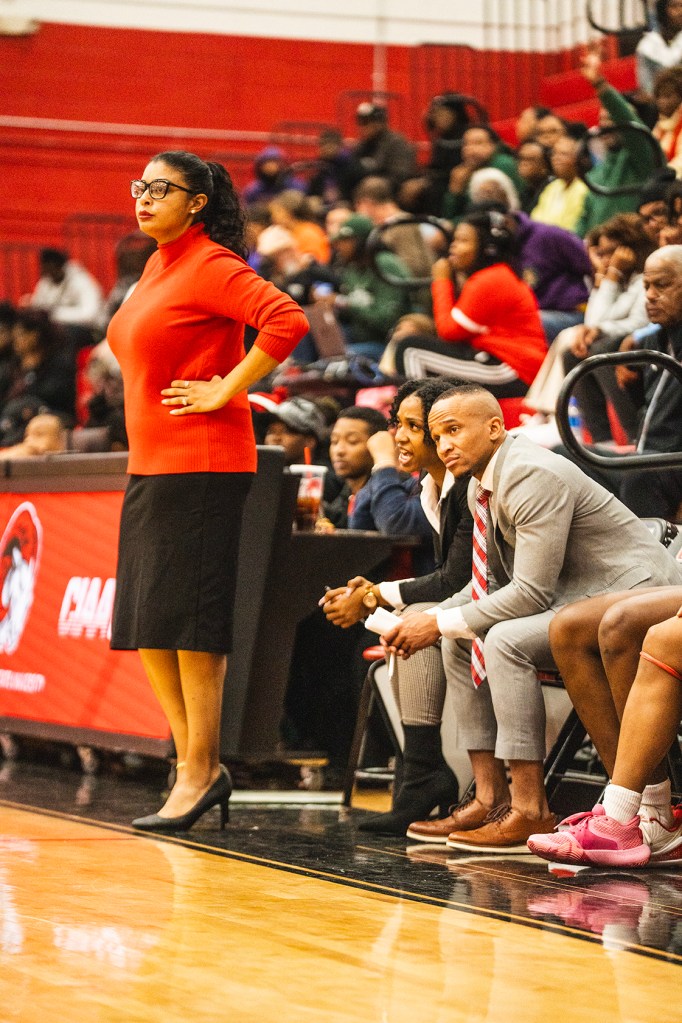
At the heart of the Rams’ surge is head coach Tierra Terry, a WSSU alumna returning home to the program that shaped her. Terry walked the halls of the same campus as a standout player and later cut her teeth as an assistant. She then built a budding contender at Virginia Union. Terry she posted 60 wins over five seasons and helped develop multiple All-CIAA performers before taking the Winston-Salem State job.
Her return to Winston-Salem wasn’t just a hire has ignited a cultural reset. Terry spoke openly about reconnecting with the environment that first inspired her, about belief, pride, and carrying forward the Rams’ tradition. That connection has visibly translated to the court this season. WSSU’s dominant 13-1 start and undefeated conference run reflect a unit playing with poise, confidence, and clear identity — hallmarks of Terry’s coaching philosophy.

Virginia State finding its way under new leadership
Across the floor, Virginia State presents a different kind of story. Millette Green arrived last spring following a successful season as an assistant at Wake Forest and a head coaching stint at Augusta University. Known for her recruiting acumen, experience across multiple Division II and Division I programs, and deep roots in Virginia basketball culture, Green took over a Trojan team with history and expectations.
Green’s mission was clear: build on Virginia State’s winning tradition while instilling a vision that blends competitive excellence with personal development. In introducing her program, she talked not just about wins but about developing “champions on and off the court,” signaling a holistic approach to leadership.
On the floor this season, Virginia State has embodied that discipline. It features a stingy defense that limits opponents to under 58 points per game, and a balanced offense led by Kendahl Spearman and Michaela Lane. VSU is tough to beat when it plays with control possession and play with attention to detail. Its 4-1 conference record reflects steady execution, even if they haven’t yet matched WSSU’s offensive explosiveness.
Keys to Victory: WSSU
1. Turn Pressure Into Points
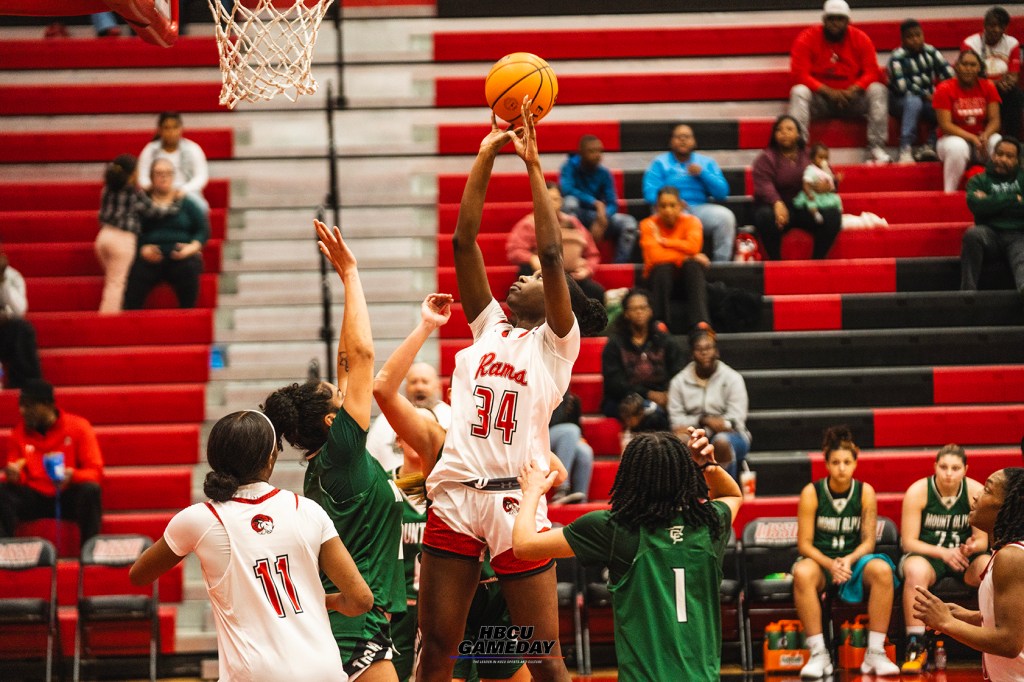
WSSU’s biggest edge is chaos. The Rams average nearly 20 steals per game and force opponents into rushed decisions. For WSSU to win, those turnovers must immediately convert into transition baskets, not empty possessions. When the Rams score before the Trojans can set its defense, they dictate the game.
Indicator to watch: Live-ball turnovers and points off turnovers in the first quarter.
2. Establish Maia Charles Early
Virginia State will likely try to crowd the lane and force WSSU to win from the perimeter. If Maia Charles gets deep post touches early and draws fouls, it changes the geometry of the floor. That opens driving lanes for guards and kick-out threes later.
Indicator to watch: Charles’ touches and free-throw attempts in the first 10 minutes.
3. Control the Defensive Glass
Virginia State isn’t explosive offensively, but it thrives on second chances and physical half-court play. WSSU must finish possessions with rebounds. Allowing extra looks neutralizes the Rams’ pressure advantage.
Indicator to watch: Virginia State offensive rebounds in the first half.
4. Stay Poised at Home
The C.E. Gaines Center can speed games up — sometimes too much. WSSU doesn’t need a track meet for 40 minutes. Shot selection and spacing matter, especially if Virginia State slows the pace.
Bottom line: Pressure without panic.

Keys to Victory: Virginia State
1. Win the Turnover Battle (or at Least Survive It)
Virginia State will not win if it gives the ball away 25+ times. The Trojans don’t need to win the turnover margin — they need to keep it respectable. Shortening the game is the path.
Indicator to watch: Turnovers in the first quarter. If it’s under 7, Virginia State is in good shape.
2. Make WSSU Guard for 25 Seconds
The Trojans are at their best when they force opponents into long defensive possessions. Ball movement, reversals, and patience test WSSU’s discipline and can draw fouls on aggressive defenders.
Indicator to watch: Shot clock usage and WSSU foul trouble.
3. Balanced Scoring, Not Hero Ball
Virginia State doesn’t rely on one scorer. Kendahl Spearman, Michaela Lane, and Sydney Roberts must all be involved. If one player tries to carry the offense, it plays into WSSU’s pressure.
Indicator to watch: Assists and paint touches by multiple players.
4. Own the Physical Matchups
This game will be physical. Virginia State must match WSSU’s strength inside and avoid getting sped up by crowd energy. Defensive rebounding and post defense are non-negotiable.
Bottom line: Structure beats speed — if Virginia State enforces it.
The Coaching Layer
This is also a tempo chess match between two first-year head coaches.
- Tierra Terry (WSSU) wants belief, pace, and aggression — especially at home.
- Millette Green (Virginia State) wants discipline, execution, and maturity.
Whichever team imposes its personality by the end of the first quarter likely controls the game.
CIAA implications in January
If the game is played in the open floor, advantage WSSU.
If it’s played in the half court, advantage Virginia State.
That tension — speed vs. structure — will decide it.
The CIAA crown won’t be won or lost in this game, but it will go a long way into establishing how both teams look against elite competition.