
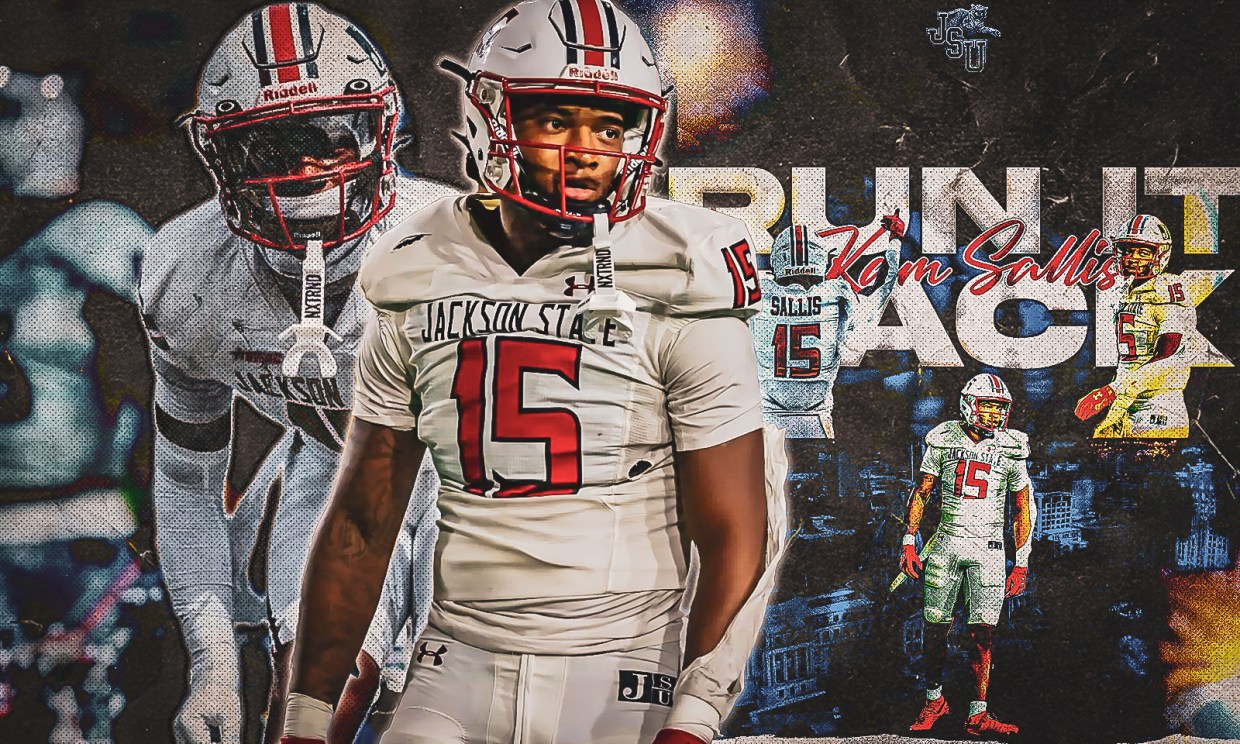
In an era where the NCAA Transfer Portal often feels like a one-way exit ramp from HBCU football to the Power Four. Jackson State safety Kam Sallis just made a different kind of statement.
After briefly testing the portal waters, the sophomore standout has decided to return to Jackson State. Choosing continuity, culture, and belief over a chance at the next level. In doing so, Sallis offers a counterpoint to a prevailing narrative in modern college football. That elite HBCU talent must leave to be validated.
For Jackson State head coach TC Taylor, Sallis’ decision is a quiet but meaningful recruiting win—one that speaks to what the Tigers have built in the post-Deion Sanders era.
Kam Sallis Became a Defensive Anchor at Jackson State
Before the portal ever entered the conversation, Sallis had already established himself as one of the most impactful defensive players in the SWAC. The rangy sophomore safety played a major role in Jackson State fielding one of the league’s top defenses, flashing the size, speed, and instincts that define the modern defensive back.
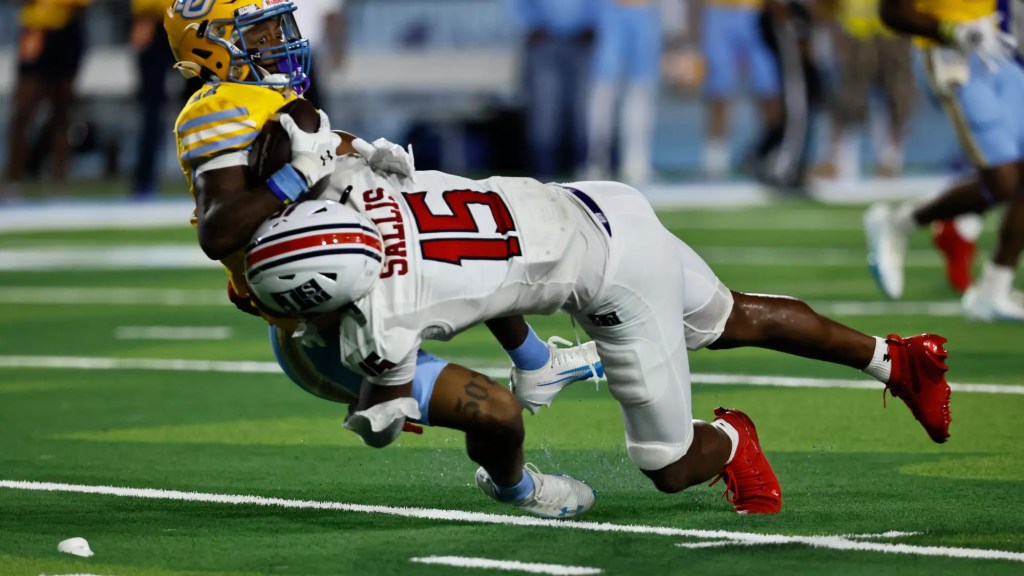
Turn on the film and the traits jump immediately. Sallis covered ground from hash to hash in coverage, played downhill in the run game, and consistently arrived at the ball with bad intentions.
Statistically, the production matched the eye test. Sallis finished the season with 53 total tackles, including 27 solo stops, while adding two interceptions and two forced fumbles. His versatility and physicality made him a constant presence in the Tigers’ secondary and a problem for opposing offenses.
Big Moments, Big Stages
Sallis didn’t just rack up numbers—he showed up when the lights were brightest.
In the SWAC Championship Game, he delivered his best performance of the season, posting a career-high 12 tackles, eight of them solo. Against FBS competition, he held his own as well, recording seven tackles versus Southern Miss, further confirming that his game translates beyond the FCS level.
Those performances didn’t go unnoticed.
Power Four Interest Was (and Is) Real
Sallis’ return to Jackson State wasn’t due to a lack of opportunity. Quite the opposite.
According to The Jordan Sports Group, which represents Sallis, he began receiving P4 interest quickly after entering the NCAA Transfer Portal. With multiple years of eligibility remaining, programs viewed him as an experienced, physical safety with proven production. Precisely the type of player Power Four staffs prioritize.
And yet, after weighing his options, Sallis chose to return.
Culture vs. Convenience in HBCU Football
Sallis’ return highlights one side of the HBCU-to-Power Four pipeline that is often overlooked. Recently, Travis Terrell Jr., another standout at Jackson State, leveraged his production to secure a Power Four opportunity. Another example of HBCU football serving as a launchpad to the highest levels of the sport.
Sallis represents the other side of that coin.
Rather than leaving at the first FBS knock, he chose to stay, betting that Jackson State’s culture, development, and visibility can still meet his long-term goals. In a portal era driven by urgency, that patience is increasingly rare and vital to the fabric of HBCU football.
What Kam Sallis’ Decision Means for Jackson State and HBCU Football
For Jackson State, retaining Sallis stabilizes a critical position on a team that has been affected by portal movement and demonstrates the Tigers can still win meaningful recruiting battles, even against Power Four interest.
For HBCU football, the message is just as important: elite players don’t always have to leave to be validated. Sometimes, the right environment, coaching trust, and belief in the process are enough to keep top-tier talent home.
As HBCUs continue producing elite players, the conversation should shift. The question is no longer whether HBCU football produces top-tier talent—it’s whether it can keep up with the FBS field to retain the players it develops into stars.
Smart move Cam. He didn’t let Pride cloud his mind. Now he’ll be a real Student Athlete again, plus a Degree with a possible next Level career.