

Michael Penix Jr.’s younger brother brings NFL bloodlines, a 6-foot-4 frame, and untapped potential to HBCU football.
The last name will get the first look. What Mekhi Penix does next could give Mississippi Valley State much more than a recognizable addition to its HBCU football roster.
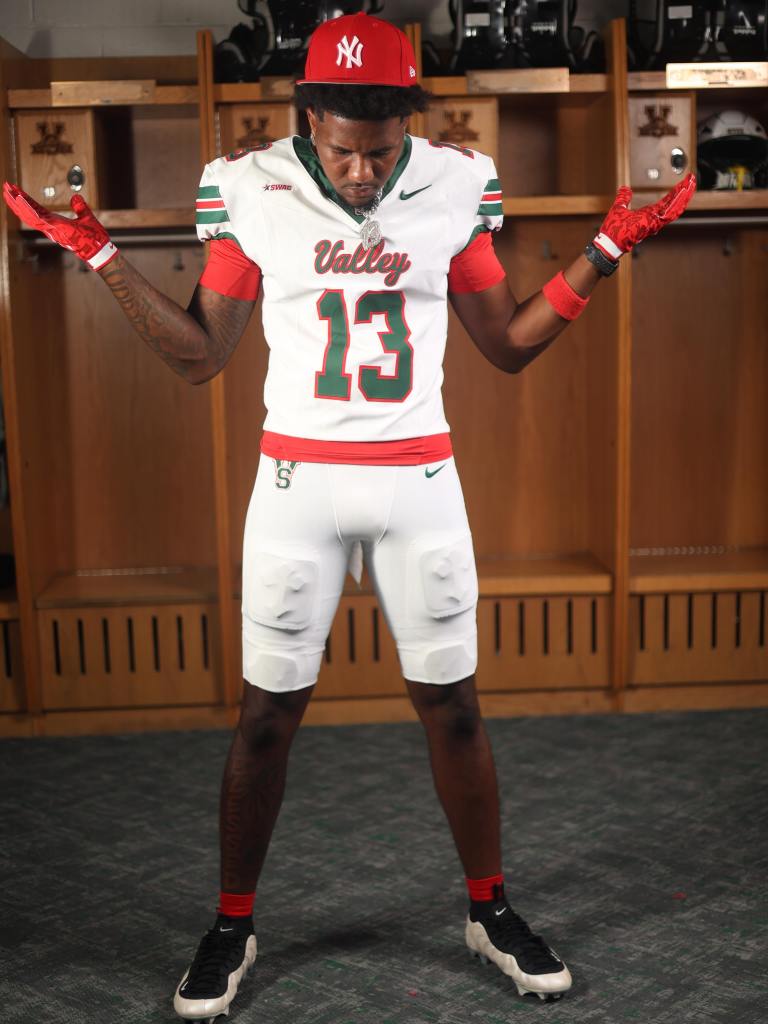
Penix, the younger brother of Atlanta Falcons quarterback Michael Penix Jr., has joined the Delta Devils ahead of the 2026 season. The junior wide receiver is now listed on Mississippi Valley State’s official roster at 6-foot-4 and 220 pounds.
Those measurements make him one of the most physically intriguing receivers in the HBCU program’s revamped offense.
They also give Penix a chance to become more than the younger brother of an NFL quarterback.
At Mississippi Valley State, he could become one of the Delta Devils’ top targets.
An HBCU opportunity with room to grow
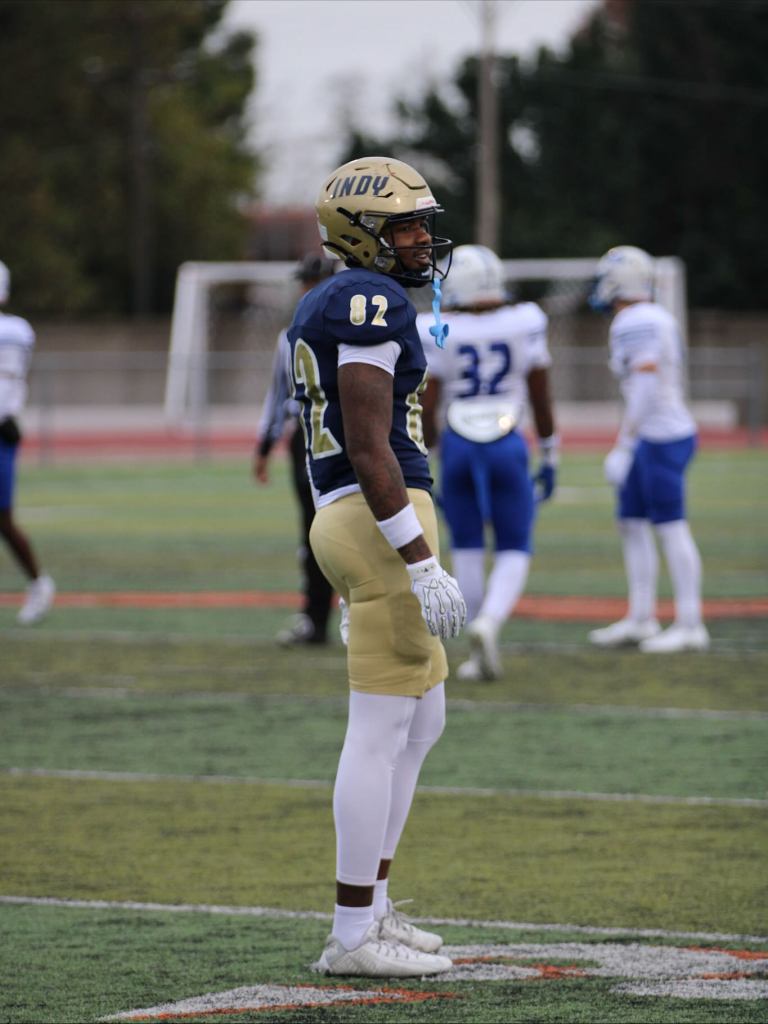
Penix arrives in Itta Bena after spending the 2025 season at Independence Community College in Kansas. He appeared in eight games and finished with 17 receptions for 234 yards and two touchdowns.
Those numbers do not make him an automatic star in the SWAC. However, they show flashes of what Penix could provide in a larger role.
He averaged 13.8 yards per reception at Independence. His combination of size and downfield ability gives Mississippi Valley State a potential boundary receiver who can challenge defensive backs vertically. He could also provide a larger target near the goal line.
That skill set matters for an MVSU offense looking for more consistent production.
The Delta Devils averaged 18.3 points per game in 2025. Their passing attack produced fewer than 200 yards per game, while leading receiver Mekhi Norris finished with 516 yards.
Penix does not have to arrive as a finished product to make a difference. He only needs to turn his physical tools into dependable production.
The opportunity appears to be there.
The Penix name carries football weight
Football runs throughout the Penix family.
Michael Penix Jr. starred at Indiana before transferring to Washington. He led the Huskies to the College Football Playoff National Championship Game and finished second in the 2023 Heisman Trophy voting.
The Atlanta Falcons selected him with the eighth overall pick in the 2024 NFL Draft.
Their father, Michael Penix Sr., was a standout running back at Tennessee Tech during the 1990s. Their mother, Takisha Penix, competed in track and field at the university.
Mekhi initially followed that family path.
He signed with Tennessee Tech after a productive career at Tampa Bay Tech High School. Penix caught 43 passes for 827 yards during his senior season and completed his high school career with 82 receptions for 1,393 yards.
He redshirted at Tennessee Tech in 2023 and made his college debut against Tennessee State in the season finale. His road then took him from the FCS level to junior college and now back to Division I football at an HBCU.
It has not been the direct path his older brother followed. That could make this chapter more meaningful.
From an NFL brother to Jerry Rice’s HBCU
There is also something fitting about Penix attempting to establish himself at Mississippi Valley State.
Few HBCU football programs have a wide receiver legacy that can match Valley’s.
Jerry Rice became a college football phenomenon in Itta Bena before becoming arguably the greatest wide receiver in NFL history. Rice teamed with quarterback Willie Totten in the “Satellite Express,” an offense that overwhelmed defenses and helped make Mississippi Valley State nationally relevant.
Penix should not be compared to Rice. No receiver should carry that burden simply because he puts on a Valley uniform.
But the history adds context to the opportunity.
The Delta Devils are not simply adding the brother of a famous quarterback. They are bringing a big-bodied receiver into an HBCU program where explosive passing football is part of the institution’s identity.
Now Penix has a chance to add his own chapter.
A familiar modern HBCU storyline
Penix also joins a growing group of players who have brought prominent football family names into HBCU programs.
John Sewell, the younger brother of NFL players Penei, Noah, and Nephi Sewell, chose Grambling State. Giovanni Williams played at Miles College while his older brothers, Quinnen and Quincy Williams, became standouts for the New York Jets.
Mar’Kae Diggs, the younger brother of NFL stars Stefon and Trevon Diggs, spent time at Delaware State.
Those moves reflect one of the opportunities available in modern HBCU football. A player can step outside the path established by his family and enter a program where he may have a clearer chance to play, develop, and build an individual identity.
That is what awaits Penix at Mississippi Valley State.
His brother’s NFL success will create curiosity. His family background will make the transfer more interesting than the standard late-summer roster addition.
Neither will catch a pass for him.
Penix must prove that his size translates against SWAC defensive backs. He must earn the trust of his quarterback, find consistency, and turn limited college production into a larger role.
If he does, the Penix name could carry a different meaning in Itta Bena.
It could belong to one of the top targets in an HBCU offense trying to take its next step.