
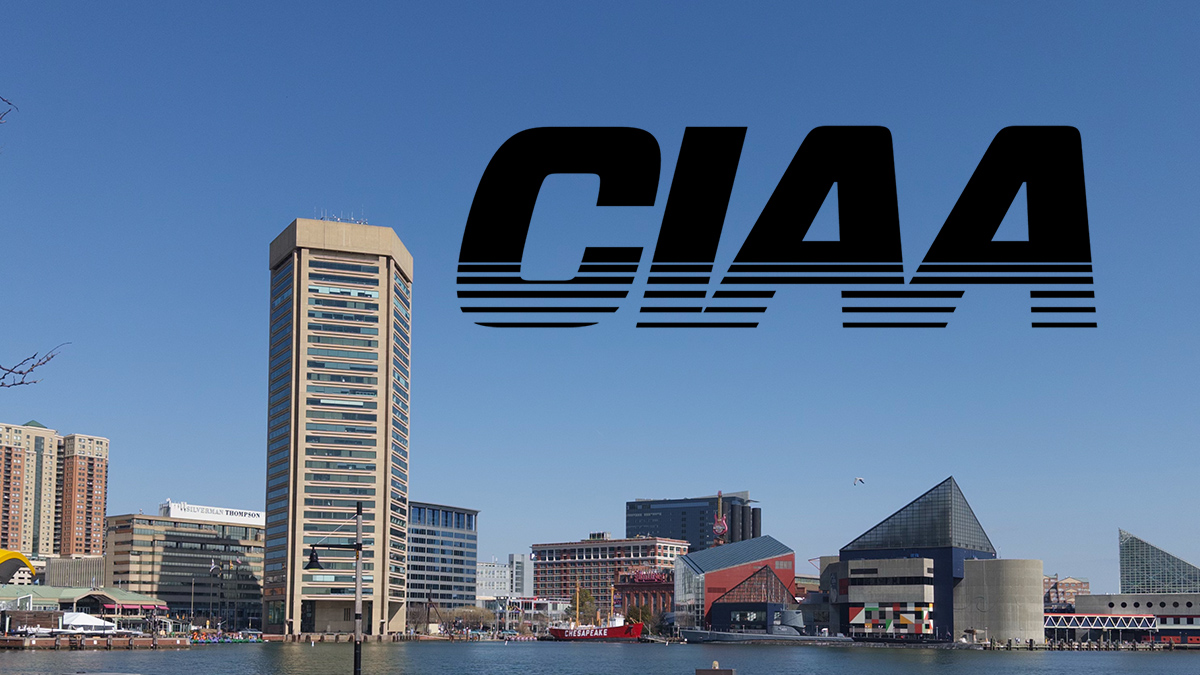
Baltimore and the CIAA are celebrating a record $33.6 million economic impact from the 2026 basketball tournament, another sign of the value HBCUs continue to create for host cities.
The figure marks the highest economic impact in the tournament’s five-year run in Baltimore. It represents an increase of nearly 23 percent over the $27.4 million reported following the 2025 tournament.
More than 33,000 fans passed through CFG Bank Arena during the tournament’s 22-game run. The CIAA reported that more than 8,200 attended the championship game, a 36 percent increase from the previous year.
Those numbers show that the event continues to grow in its adopted home. They also require an important distinction.
The $33.6 million represents the estimated impact on the Baltimore economy. It is not revenue collected by the CIAA, nor is it money divided among the conference’s 12 HBCUs.
“The momentum continues to build here in Baltimore,” CIAA Commissioner Jacqie McWilliams Parker said. “This community is committed to developing a culture and atmosphere of inclusive excellence, all centered around our students and basketball.”
CIAA Tournament delivers millions in visitor spending
Visit Baltimore partnered with Tourism Economics to study spending connected to the tournament. According to the CIAA’s announcement, participants and spectators spent $17.4 million at businesses throughout the city.
That included $4.8 million on food and beverages, $4.4 million on lodging and $3 million in retail spending. Visitors also spent $2.8 million on entertainment and attractions, along with $1.8 million on transportation and rideshares.
The CIAA Tournament supported an estimated 1,630 full- and part-time positions. Those jobs generated $6.7 million in direct income, according to the release.
Nearly 10,000 visitors stayed overnight. Among those who traveled to Baltimore for the event, 74 percent came from outside Maryland.
That traffic matters during a part of the calendar that can be slow for tourism. Baltimore gets hotel stays, restaurant customers and entertainment spending. The CIAA receives a host city that has made the tournament one of its signature winter events.
The tournament produced $32.5 million in economic impact in 2024 before slipping to $27.4 million in 2025. Its 2026 performance established a new Baltimore high.
How much reaches the CIAA’s HBCUs?
Baltimore, the State of Maryland, Visit Baltimore and the local host committee also contributed $1.7 million to the CIAA General Scholarship Fund. That fund supports students at the conference’s member institutions.
However, the announcement does not say how much each school will receive. It also does not provide a distribution schedule or explain whether the full contribution will go directly to the campuses.
Dividing $1.7 million by 12 would produce more than $141,000 per institution. However, there is no evidence that the CIAA will distribute the money equally.
A previous HBCU Gameday review of CIAA tax records provides additional context. In fiscal year 2025, the conference reported $590,000 in direct grants to member institutions. Individual amounts ranged from approximately $15,874 to $50,243.
Those grants do not account for every service or benefit the CIAA provides its HBCUs. The CIAA handles officials fees for its conference members. Still, direct distributions remain much smaller than the economic-impact figures attached to the tournament.
The 2026 event also directed $1.43 million in business to 109 minority- and women-owned companies. That is another meaningful layer of an event built around Black institutions and culture.
The CIAA Tournament will return to Baltimore from Feb. 21 through Feb. 27, 2027. The conference has committed to the city through 2029.
For Baltimore, the tournament has become a growing economic engine. For the CIAA and its HBCUs, the next question remains just as important: How much of the money surrounding the event ultimately reaches the institutions that make it possible?