
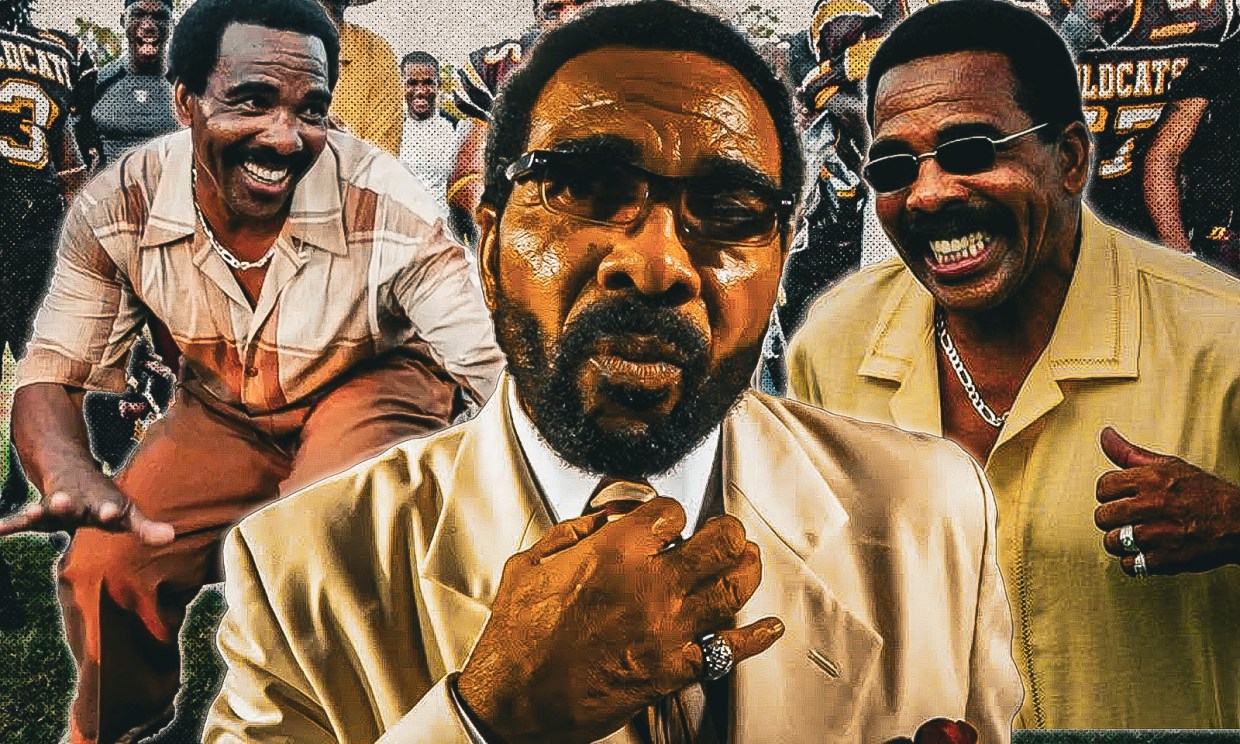
Alvin “Shine” Wyatt is back at Bethune-Cookman for the Florida Classic. In a 2020 conversation with Wali Pitt, he talked about the school that raised him, the players he lived alongside, and the chance he still wanted.
Alvin “Shine” Wyatt gets to walk into the Florida Classic as Bethune-Cookman’s head coach again. He’s 78. It’s been 17 years since his first run in the job ended. And the first team he’ll see from that sideline is Florida A&M (FAMU), the same HBCU that once made him put his signature offense in the shotgun and see if the Wildcats could score their way out of trouble.
When I heard Bethune-Cookman was bringing him back as interim head coach, I thought of our conversation back in 2020. We’d been talking for more than 40 minutes. By then we’d gone from his days as a defensive back to the suits he wore on Saturdays and the years he spent living in an HBCU dorm with his players. As we were wrapping up, he told me he still wanted to coach.
“I’m not retired,” Wyatt said. “I’m just not hired.”
That line had all the swagger you’d expect from Shine. What stayed with me was how quickly he got around to the work. He could help somebody on defense. He could still win. And he wanted to get players through school and see them do well once football was over. On Saturday, Nov. 21, in Orlando, he’ll get to coach his Wildcats again.
How Shine made his mark on HBCU football
Wyatt went from Jacksonville to what was then Bethune-Cookman College, where he was an All-American defensive back and return man.
When we talked about those years, he remembered Larry Little looking out for him as a freshman. He remembered finding out from people on the street that the Oakland Raiders had drafted him. And he remembered exactly what his old defensive coordinator, Tank Johnson, offered him to come back and coach after pro football. A job working with defensive backs for $1,100 a month.
By the time Wyatt got the head job in 1997, he’d spent roughly two decades on the football staff. He’d also coached the women’s basketball team to a MEAC tournament title. He went 90–54 in 13 seasons as an HBCU head football coach, won the 2002 MEAC title and took the Wildcats to their first two NCAA Division I-AA playoff appearances.
Ask him about the “Wyatt Bone” offense, though, and he’ll take you back to the days when he was the one trying to stop the option. He remembered how hard Georgia Southern made life for his defense. One player went the wrong way, and six points went with it. When he got his own team, he wanted an offense that could put a defense in that same bind.
Then came the 2004 Florida Classic. FAMU led 38–14. Wyatt remembered going to the shotgun and keeping the option reads. Bethune-Cookman came back to win 58–52 in overtime. He was still talking me through the adjustment in 2020, as if he could pull up the film and show me exactly where the game turned.
The man in the cream suit
The first time I met Shine, I was making my way back from halftime at North Carolina Central (NCCU). I saw the tailored cream suit and the shades before I was close enough to be sure it was him. Then I heard him explain, with some emphasis, that he was a guest of the chancellor. He was trying to get down to the sideline to watch Bethune-Cookman.
I just so happened to have a spare credential, which I presented much to the surprise of both security and Shine. He wound up giving me an interview right there in front of the fans. He took my number and called me later that night to figure out exactly who I was and what had just happened; and in true Alvin Wyatt fashion, I can still count on a call or text from him around the holidays.
When we got around to the suits in our 2020 conversation, he started with his mother. She always dressed him well growing up. Then he talked about basketball, where dressing up on game day came with the job. He carried that over to football.
He’d spend the week at the board and on the field, walking his players through the game plan. When Saturday came, he put on a suit. He wanted his players to feel as sure of themselves walking onto the field as he did.
The part of the interview that told me just as much about Shine was what he missed about living in the dorm with his team.
Wyatt said he moved in around 1980 and stayed through 2005. He talked about going upstairs to get a haircut and walking to the cafeteria with his players. He got to see who they were in the middle of the week, when there was no crowd, and nobody was keeping score. When he moved out, those were the things he felt himself losing.
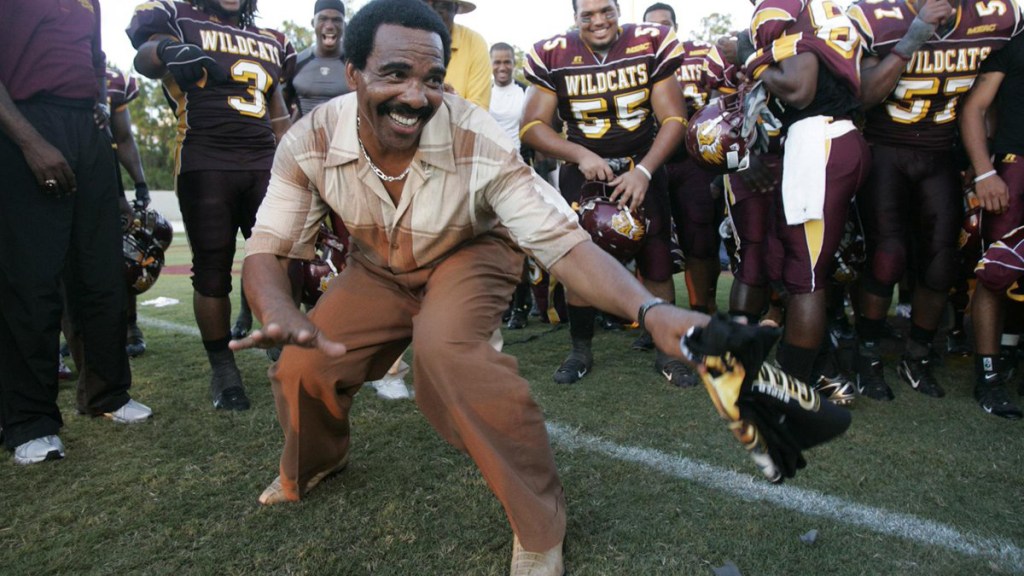
What Bethune-Cookman means to Shine
I asked Wyatt what his relationship with Bethune-Cookman was like after the HBCU let him go in 2009. He told me it hurt. Then he started naming family. His sister, his brother, his mother.
“Bethune-Cookman is everything to me,” he said.
When we talked about that afternoon at NCCU, Wyatt told me what went through his mind as he looked out at the field. “I’m not through with this game.”
I keep coming back to the dorm. Shine had already told me what Bethune-Cookman meant to him, but hearing him talk about living down the hall from his players gave me a picture of what that love looked like.
He wanted to be close enough to see how they were doing in class and who they were becoming away from the field. All those years later, he could still tell me what he missed about an ordinary walk to the cafeteria.
On Saturday in Orlando, we’ll see him back on an HBCU football sideline coaching his Bethune-Cookman Wildcats. I’ll be thinking about how the coach who chose to live down the hall finally gets a chance to give a proper goodbye to a sideline he helped become legendary.