
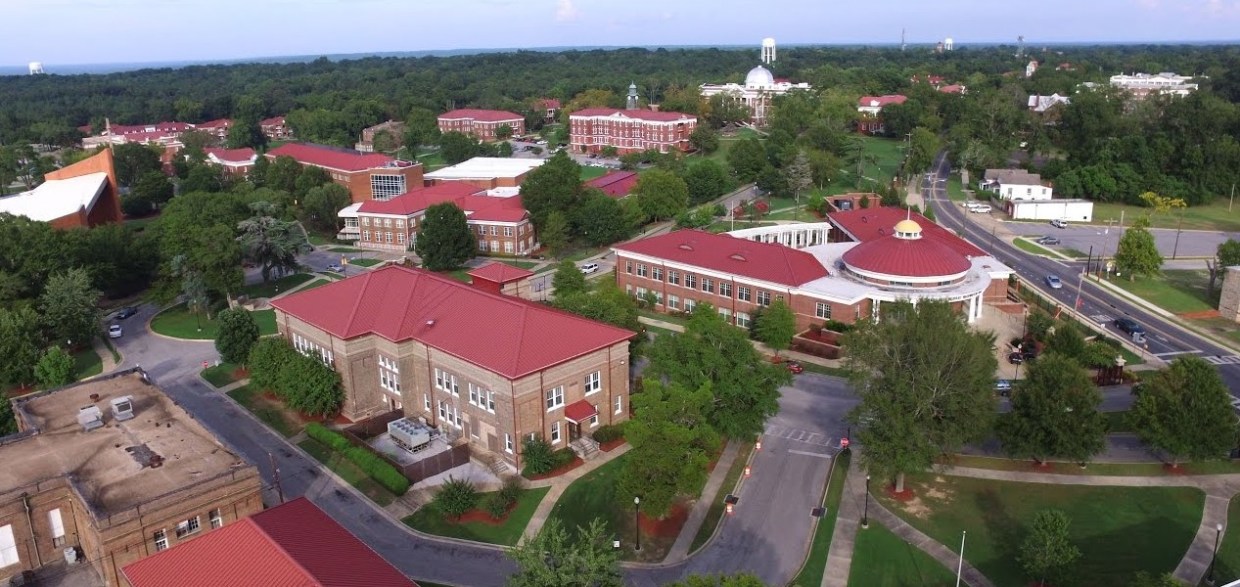
Tuskegee University’s dress code has dominated public discussion in HBCU circles and beyond. But a student leader at the private HBCU says the controversy has obscured deeper concerns about housing, communication and administrative support.
Rayne Caldwell contacted HBCU Gameday to offer further insight into why students have been speaking out. She identified herself as Tuskegee’s sophomore class president. Caldwell said the conversation has centered almost entirely on the dress code. She does not view clothing as the root of the frustration.
“The issue isn’t simply about clothing. It’s about priorities,” Caldwell wrote in an email to HBCU Gameday.
Her message adds a student-government perspective to a debate that has spread well beyond the Tuskegee campus. Much of the online reaction has focused on rules involving bonnets, pajamas and other clothing. Caldwell, however, said students are questioning why appearance-related policies appear to be receiving attention while longstanding campus concerns remain unresolved.
“Students are frustrated because, while the administration has moved quickly to announce and enforce policies regarding dress code, cell phone use, and attendance, many long standing issues that directly affect students’ education and well being remain unresolved,” Caldwell wrote.
Housing and communication at center of concerns
Caldwell pointed first to housing. She said freshmen and sophomores have faced uncertainty. Some students were placed in off-campus housing farther from Tuskegee than they expected. According to Caldwell, students had been told those class years would receive priority for on-campus housing.
Her email did not include a count of affected students or identify the off-campus properties. It also did not specify what transportation the HBCU is providing.
Caldwell also described difficulty reaching administrative offices. She said students and families have struggled to receive answers to urgent questions involving housing, financial aid and enrollment. Her message did not provide individual cases or response times. But it framed communication as part of a wider student-support problem rather than an isolated complaint.
She also referenced ongoing concerns involving campus infrastructure and student services. Caldwell said students have raised those issues for months.
Caldwell’s account offers direct insight into concerns circulating among students. But the scope of the housing and infrastructure issues still requires supporting records and accounts from additional students or families.
Student leader challenges public narrative
The sophomore class president also pushed back against the image of Tuskegee students that has emerged through social media commentary. She said critics have reduced the dispute to bonnets, scarves or pajamas. The resulting comments, she said, portray the student body as unprofessional.
Caldwell said that characterization does not reflect what she sees on campus. She wrote that students already attend class dressed appropriately. Caldwell also said she has not observed students wearing pajamas during lunch, when campus visitors are often present. Sweats, she noted, may be visible, but students generally dress casually.
The distinction is central to her argument. Caldwell is not asking news outlets to ignore the dress code. Instead, she wants coverage to place the policy beside other concerns. Those housing, communication and support issues affect students’ daily lives, she said.
“As students, we want accountability, transparency, and solutions,” Caldwell wrote. “We love our university, and that’s exactly why we’re speaking up. We are advocating because we want to see our institution succeed, not because we want to damage its reputation.”
That perspective adds a layer often lost when an HBCU controversy moves from campus discussion to a national social-media debate. A policy that generates attention can become the entire story. Less visible concerns involving enrollment, financial aid or housing may receive less scrutiny.
Caldwell said students want the complete story told. For her, that means acknowledging Tuskegee’s dress code. It also means asking whether the university is communicating effectively and addressing the needs students consider more urgent.
HBCU Gameday has asked Caldwell for more specific examples and documentation. It also requested connections to students or families directly affected by the concerns she described. Until those details are available, her email remains a student leader’s account. It explains why she believes the Tuskegee debate extends beyond what students wear.
While I typically follow these types of discussions on Facebook I welcomed the discussion here from an intelligent student who loves Tuskegee. She is willing to have the difficult discussions that can easily point to a strive for excellence (is what I will call it). The black community has been dumbed down so badly and K-12 is largely responsible, it is time to be elevated by any means necessary. Our children are losing because of the school to pipeline mentality that has taken place. The issues she mentioned are the same issues that we experience in the public schools phones, hoodies, Rags on the head and Defiance that comes with it. Overall I believe this is a well thought out discussion, she presents; the points she made are relevant. I believe with the elevated energy happening as we speak, these points will make a difference, when overall things are corrected.
Always start with self. Those bad behaviors picked up in White schools MUST GO. If a Black person dresses like a White person you will not get away with it. Build your wardrobe in college so you are ready for your work place.
I’m almost certain, most college students know the difference between casual attire and professional work place attire. I understand building good habits but I don’t think the dress code was necessary. Especially with all the more urgent problems facing HBCU’s
I 1000% agree with this young lady my daughter is an incoming freshman and her start is uncertain. She and her father went to ask for help with questions about her FA and the female they spoke with was past rude. I call her a female because the way she talked to and tried to handle them was ridiculous. I was on the phone the entire time and I tried to hold my composure to keep from jumping through the phone. When they were asking questions all she told her was check her email in a tone that is meant for someone that made her mad. She should not have been talking to an incoming freshman who knows nothing about what’s going on like that. She should’ve been sitting her down educating her. Yet instead I was disgusted and so was her father. Her dorm room was already assigned but it took weeks to get that done. We could not get anyone in the phone when we called up there. When we called the phone would just ring. I’m so confused at how they operate. The gate is always closed. When we went to open house we had to take an alternate route to even get to the campus. I’m just wondering if this is even where my daughter should go.
Signed,
A concerned mother
My mom and a friend from Florida State attended TU in the day. I was born back in the 70’s at the hospital back at TU. Later TU changed and bigger things began to surfaced. TU ‘s housing changed and nearest housing was near Auburn, Al. Or AUM Montgomery or Students moved on. TU a historically a Black College , but a lot of Vet students mostly Foreigners attended and possibly saw the program as a Excellent ? Choice but Delayed Federal Aide, Housing, Financial Aide has gone down hill. Financial Aide is a problem at most of the All predominant Black Schools. Alabama A N M my old college Friend attended A&M and struggled with the back n forth with the College often. I promise I did not choose either because mostly you have old heads that run things and sorry to say, you will have a better opportunities at either Auburn n perhaps Alabama State, Montgomery.
My mom and a friend from Florida State attended TU in the day. I was born back in the 70’s at the hospital back at TU. Later TU changed and bigger things began to surfaced. TU ‘s housing changed and nearest housing was near Auburn, Al. Or AUM Montgomery or Students moved on. TU a historically a Black College , but a lot of Vet students mostly Foreigners attended and possibly saw the program as a Excellent ? Choice but Delayed Federal Aide, Housing, Financial Aide has gone down hill. Financial Aide is a problem at most of the All predominant Black Schools. Alabama A N M my old college Friend attended A&M and struggled with the back n forth with the College often. I promise I did not choose either because mostly you have old heads that run things and sorry to say, you will have a better opportunities at either Auburn n perhaps Alabama State, Montgomery.