
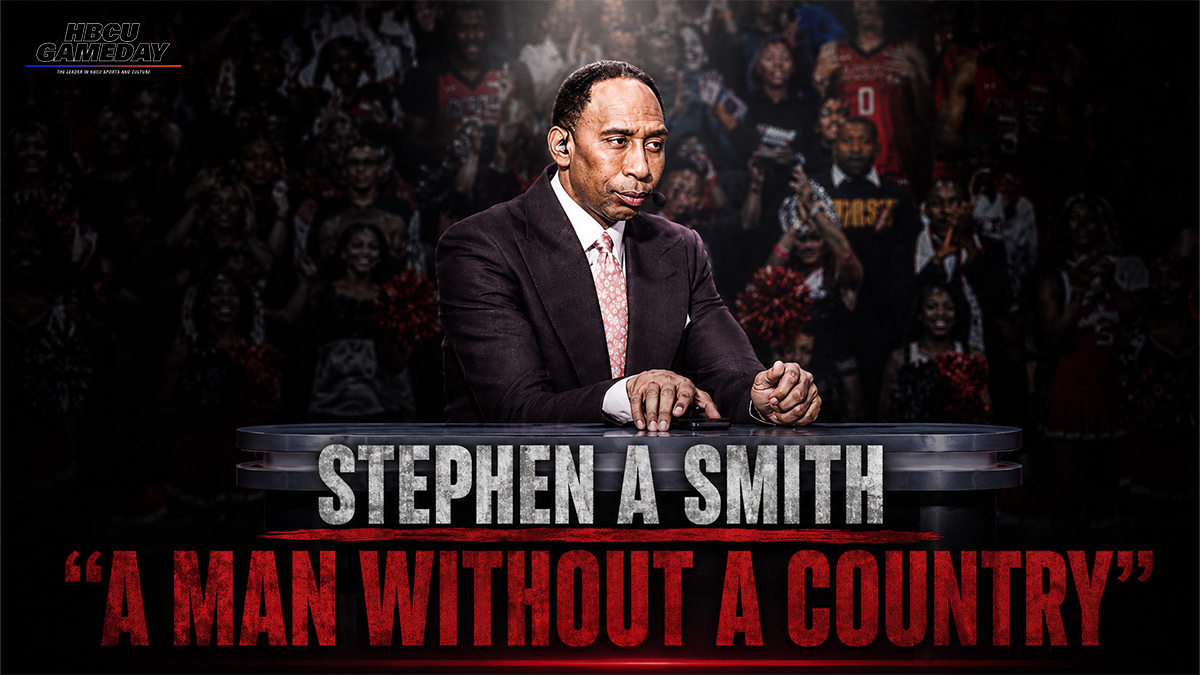
Just when I thought Stephen A. Smith couldn’t fall any more in my eyes, Donald Trump showed us what could be the floor. God, I hope it is.
The sitting US President exposed the sad state of Stephen A. Smith.
For years, Stephen A. has built his brand on confrontation. He has challenged NBA stars and questioned NFL players. He has gone after coaches, executives, politicians and public figures with volume and confidence.
But when Donald Trump questioned his intelligence after Stephen A. criticized his appearance at Game 3 of the NBA Finals, the ESPN star did not meet the moment with the same force he has often used against Black athletes.
That was painfully clear.
Trump did not merely disagree with him. He dismissed him. He called him “dumb as a rock” and attacked the intelligence of a Black man who prides himself on being educated, prepared and sharp.
Stephen A. responded, but it did not feel like the response of the man who has made millions by refusing to back down. It felt careful and mild. It felt like a man measuring how much truth he could tell without losing hope of access.
Instead, it exposed him as a man without a country.
Stephen A. Failed To Meet His Own Standard
Stephen A. has every right to call himself a centrist. He has every right to criticize Democrats, Republicans or anyone else.
But fairness has to be consistent — and that is where this gets complicated.
The same Stephen A. who often demands accountability from Black athletes seemed far more restrained when Donald Trump aimed an ugly direct insult. The same ESPN personality who can turn a player’s mistake into a national debate suddenly chose caution when the attack came from the White House.
https://hbcugameday.com/2025/10/14/stephen-a-smith-black-women-and-the-truth/
Then, within days, Stephen A. went on Fox News and praised Trump as being more responsive than Joe Biden. He also praised Trump’s White House UFC event.
Why is he so forgiving to Trump, but never to black athletes?
Where is that same grace when Black athletes make mistakes? That same context when Black causes need defending? Where is that same patience when Black women in politics become the target of his commentary?
Too often, Stephen A. seems to reserve his sharpest edge for people with less power than Donald Trump.
The Island He Built
This is what made the week so revealing.
There was a time when many people in the Black community would have rushed to defend Stephen A. Smith. He was loud, proud, Black, and impossible to ignore. A sports media voice who got there because of his work off the field.
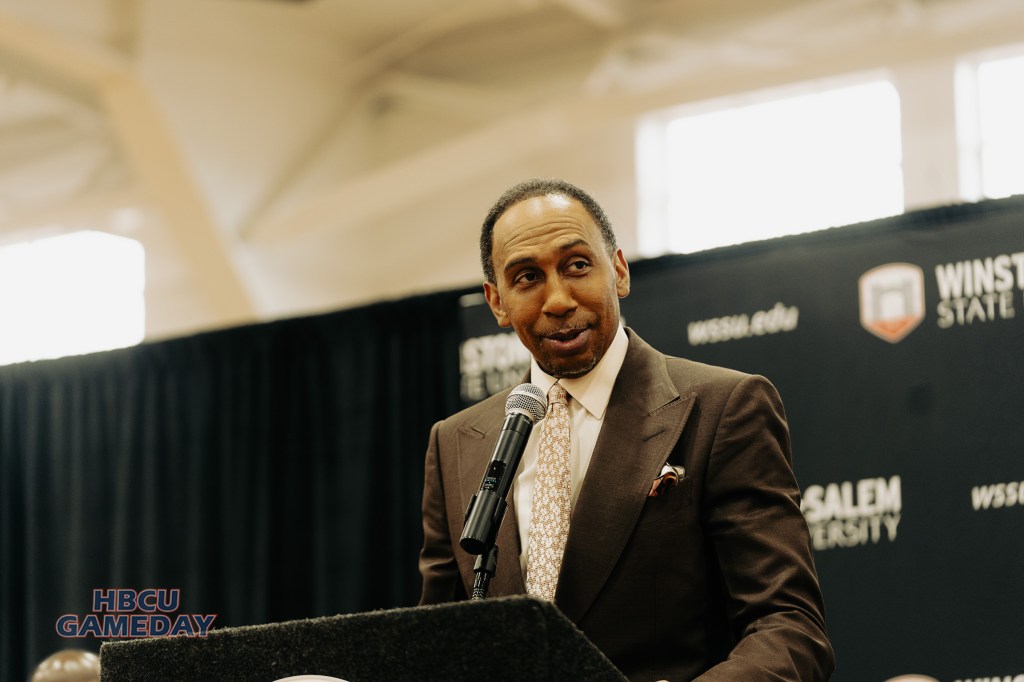
A product of Winston-Salem State University. He played (briefly) for Clarence “Big House” Gaines, a coach who believed his players needed more than basketball. He was shaped by an HBCU. He was raised by Black women. He was nurtured by Black educators.
Yet over the last 15 years, Stephen A. has burned too many bridges with the same community that once saw him as proof of possibility.
So when Donald Trump insulted him, the silence was loud.
Plenty of people watched. Some laughed. Others shrugged. Many simply moved on. That may be the saddest part of all.
Stephen A. has built a massive platform. He has become one of the most powerful figures ESPN has ever had. He has money, reach and influence that few Black journalists have ever touched. But influence is not the same thing as community. Power is not the same thing as protection.
And success is not the same thing as respect.
Stephen A. Smith may live on a $100 million island. But after last week, it looked like an island all the same.
Donald Trump revealed the truth
I learned a lot from Stephen A. Smith.
As a student journalist at Winston-Salem State University, I once heard him say that no good journalist is liked by everyone because good journalists tell the truth. That lesson has stuck with me.
So here is the truth.
Donald Trump did not create this moment for Stephen A. Smith. ESPN did not create it either. Stephen A. created it by building a brand so invested in being heard that it often forgets to be accountable.
He created it by demanding toughness from others, then offering restraint when the insult came from someone more powerful. He created it by calling his approach fairness while too often denying that same fairness to Black athletes, Black women and Black causes.
But last week showed how far he has drifted from the figure who once inspired young Black journalists like me. He wanted to be respected as fearless.
Instead, when Donald Trump called his intelligence into question, Stephen A. looked timid.
And for a man who built his empire on never backing down, that may be the lowest point — yet.
Perfect. No notes
Great Article
Chin Check!!!
I wouldn’t say he’s a man without a country cause that’s the way many of us feel today. He is a man without a community, and that I think is far more devastating. No support or protection, or defending from the community and definitely no more invitations to the cookout.