

Before March Madness was a thing, HBCU basketball had it in the inaugural CIAA Tournament. America had proven it was willing to let black men (reluctantly) defend it on the battle field in World War II. But it was not ready to allow them to represent its university’s (especially in the South). So the Colored Intercollegiate Athletic Association was flooded with talent between high schoolers and veterans returning home.
By March 1946, the CIAA proved it could turn a weekend of basketball into a full-on destination tournament. With bracket drama, regional bragging rights, and a championship game that flat-out refused to end.
The league’s first postseason “cage” tournament landed in Washington, D.C., staged at Turner’s Arena at Howard University. It wasn’t just a neutral-floor experiment. It was the CIAA making a statement: bring the best teams to one city, put the title on the line, and let the whole conference argue it out in public.
The stage: Washington, D.C., and a bracket with teeth
A preview column by longtime writer Lem Graves Jr. framed the week like a cultural collision. Tournament season was “upon us again,” he wrote, and the CIAA’s collegiate tournament in Washington was set to run alongside Virginia’s major high school postseason events—meaning coaches, scouts, and fans would have to pick where to spend their weekend. In his eyes, D.C. could absolutely hold its share of attention.
But Graves’ bigger point wasn’t about traffic or timing—it was about structure. He pressed the league on scheduling and fairness, arguing that a 16-team conference created too much “leeway for funny business.” That the scramble for tournament berths would only get messier if the CIAA didn’t rein in how teams built their schedules. He also underlined the core math of the moment: sixteen teams in the league, but only eight tickets to the tournament. That detail matters because it shows the tournament wasn’t designed as a participation ribbon. It was designed as a separator.
Then he dropped a warning that feels like classic March: don’t be shocked if a sleeper makes noise. His “watch this team” pick? The Winston-Salem Teachers College Rams.
The first round: eight enter, pressure starts immediately
The inaugural bracket gave the CIAA exactly what it wanted: recognizable names, tight scores, and quick turnarounds that punished any team that wasn’t built for tournament basketball.
Among the opening-round results reported in Washington coverage:
- Lincoln beat Winston-Salem Teachers 43–33.
- Virginia Union edged Virginia State 45–42.
- North Carolina College (Durham) defeated West Virginia State 60–56.
- Morgan State handled Johnson C. Smith 49–29.
Those scores read like a snapshot of the league’s footprint at the time—North Carolina, Virginia, D.C./Maryland, plus regional heavyweights from West Virginia—meeting in one building to decide who got to claim the conference on the court.
The semifinals: the bracket starts acting like March
By the time the tournament hit the semis, it had already started producing the kind of storyline fuel that turns a conference event into an annual tradition.
Virginia Union advanced by beating Morgan State, 42–37, in a grinder. On the other side, North Carolina College knocked out Lincoln 55–46, a result framed as an upset in contemporary reporting. The high individual scorer noted in that semifinal round was Aubrey Stanley of North Carolina College with 17 points, a detail that signals how different the era was. 17 could headline a night because games were slower, possessions were precious, and every basket felt like a swing.
Now the tournament had what every inaugural event dreams of: a clean, compelling final. Richmond vs. Durham. Virginia Union vs. North Carolina College. Two survivors standing after a week of pressure.
The championship: three overtimes and a tournament “myth” is born
The title game became the kind of story you can’t help but retell, because it wasn’t simply close—it was exhausting, chaotic, and historic.
North Carolina College outlasted Virginia Union 64–56 in three overtime periods, winning what the New Journal and Guide called an “all-time thriller.” The same coverage emphasized just how wild the flow was: the teams were tied repeatedly and the lead kept flipping, the kind of back-and-forth that makes a crowd feel like it’s watching something bigger than a normal game.
And if you’re looking for proof that the CIAA tournament immediately created individual legend to go with the team trophy: Virginia Union’s Jimmy Dilworth was recognized as the tournament’s most valuable player. Even in defeat, the tournament was already doing what great postseason events do—elevating stars, producing names that stick, and giving the league a new layer of identity.
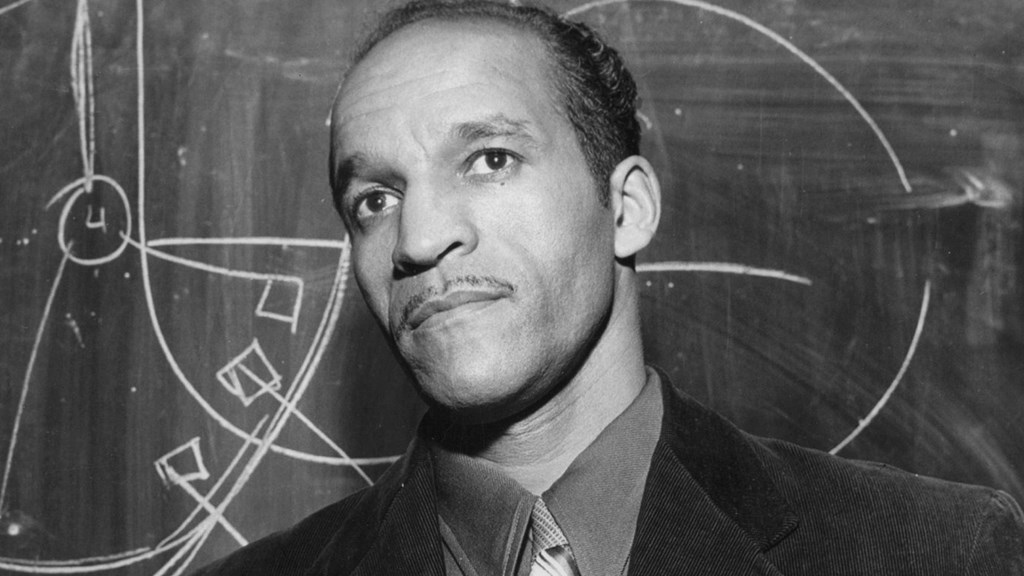
North Carolina College’s win also fit the philosophy of its coach, John B. McLendon, a figure synonymous with tempo, innovation, and defensive pressure. A tournament setting rewards that kind of edge: short rest, quick scouting, legs getting heavy—then a team that can still push pace and force mistakes late becomes a nightmare.
Why the first CIAA tournament still matters
This wasn’t just the beginning of a bracket. It was the beginning of a HBCU basketball piercing the mainstream.
The CIAA brought its schools to a major Black cultural hub, staged the games in a prominent arena, and created a championship experience that felt bigger than campus ball. It also created instant arguments—about scheduling, access, fairness, and who really deserved to be there—which is another way of saying it created investment. People only fight over things they care about.
And the best part? The inaugural title wasn’t decided by a routine win. It was decided by a triple-overtime classic that basically forced the tournament into memory on Day 1. For the next 20 years, many of the best black ball players in the east would play HBCU basketball in the CIAA.
That’s how traditions get built at an HBCU conference level: one city, one week, eight teams, and a final so dramatic you couldn’t ignore what the CIAA had just created.
Read more about HBCU basketball and the CIAA Tournament here.