
The NCAA scored an important legal victory Friday in the ongoing battle over fifth-year eligibility, a decision that could have immediate consequences for HBCU football players who believed they were headed back to the field this fall.
The U.S. Court of Appeals for the Tenth Circuit granted the NCAA’s request to stay a preliminary injunction that had allowed qualifying athletes from the 2022 high school class to compete for a fifth season in 2026-27.
That means athletes whose eligibility depended solely on the nationwide injunction in Wisne v. NCAA are once again ineligible while the appeal continues.
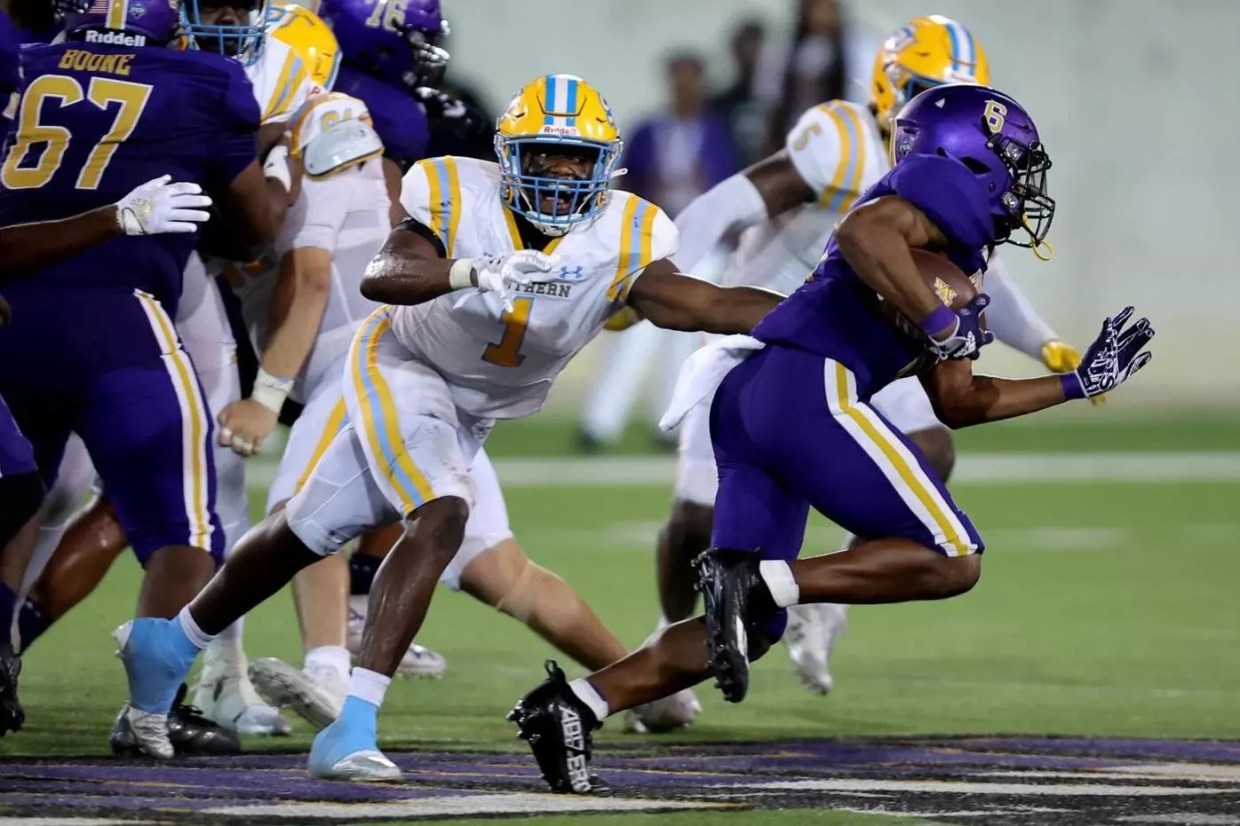
For HBCU football, Southern University star Ckelby Givens provides a striking example of just how quickly the legal landscape has changed.
NCAA eligibility rules are back in effect
The dispute stems from new NCAA eligibility rules adopted this summer.
The new model allows athletes to compete for five seasons during a five-year window based on their age or initial college enrollment. However, the NCAA decided the rule would not retroactively provide another season to outgoing seniors who had already competed in four consecutive seasons.
That left a group of athletes who began college in 2022 caught between the old and new systems.
On July 31, a Colorado federal judge issued a class-wide preliminary injunction that opened a path for qualifying athletes to return for another season.
Friday’s appellate ruling temporarily closes that path.
“The Tenth Circuit’s decision to stay the preliminary injunction issued by a Colorado federal district court judge in Wisne permits Division I to return to the status quo before the district court intervened,” NCAA chief legal officer Scott Bearby said.
The NCAA said the ruling means class members who were eligible only because of the Wisne injunction can no longer compete.
Southern star Ckelby Givens caught in eligibility reversal
Few players illustrate the impact better than Givens.
The 6-foot-2, 245-pound Southern defensive end had already returned to practice this week after the previous ruling appeared to provide another season of eligibility.
Now he’s back on the sideline.
According to The Advocate, Givens is not publicly named in a separate lawsuit that has produced an individual restraining order. That made his return dependent upon the class-wide Colorado injunction.
With that protection stayed, Givens is currently unable to compete in Southern’s Aug. 29 season opener against Alabama State in Birmingham.
It’s the latest twist in an unusual offseason for one of the SWAC’s most accomplished defensive players.
Givens exhausted four seasons at Southern before going undrafted in the 2026 NFL Draft. After receiving an invitation to Buffalo Bills training camp, he returned to Baton Rouge and joined Marshall Faulk’s staff as a graduate assistant working primarily with the defensive line.
Then the court ruling changed everything.
Givens announced that he was returning as a player and officially rejoined Southern’s practice.
Weeks later, his eligibility disappeared again.
Southern was preparing for either outcome
Southern’s coaching staff understood that Givens’ return wasn’t guaranteed.
Defensive coordinator Todd Lyght told The Advocate earlier this month that Givens would remain valuable regardless of whether the courts allowed him to play.
“If we can get him on the field, that’ll be wonderful,” Lyght told The Advocate. “But if not, we’ll make it happen, and we’ll win without him.”
What Southern could be losing is significant.
Givens earned HBCU Defensive Player of the Year and SWAC co-Defensive Player of the Year honors in 2024, along with second-team FCS All-America recognition. He was also a Buck Buchanan Award finalist after leading the FCS with 27.5 tackles for loss and recording 12 sacks.
Despite Southern’s struggles in 2025, Givens again led the SWAC with 18.5 tackles for loss and 9.5 sacks.
Some fifth-year players can still play
Friday’s decision doesn’t automatically make every fifth-year player ineligible.
Athletes who filed separate lawsuits and secured their own temporary restraining orders or injunctions remain protected by those orders unless the NCAA successfully challenges them. Courts in several states have already issued such relief.
That creates an unusual situation as the season approaches: two athletes with nearly identical eligibility circumstances could have completely different playing statuses depending on which court orders protect them.
The NCAA says it intends to continue challenging those cases.
HBCU rosters caught in legal uncertainty
The Tenth Circuit’s ruling is a stay, not a final resolution of the underlying eligibility dispute. But the timing makes the temporary decision particularly consequential.
College football is beginning, and coaches have already constructed rosters around players whose eligibility appeared settled only weeks ago.
For Southern, the sequence demonstrates the chaos.
Givens went from graduate assistant, to potentially eligible player, to practicing with the Jaguars, and now back to being unable to compete — all before Southern has played a game.
Unless another court intervenes or the stay is reversed, Marshall Faulk will open his first season as Southern’s head coach without the star HBCU defender who only days ago appeared headed back onto the field.