
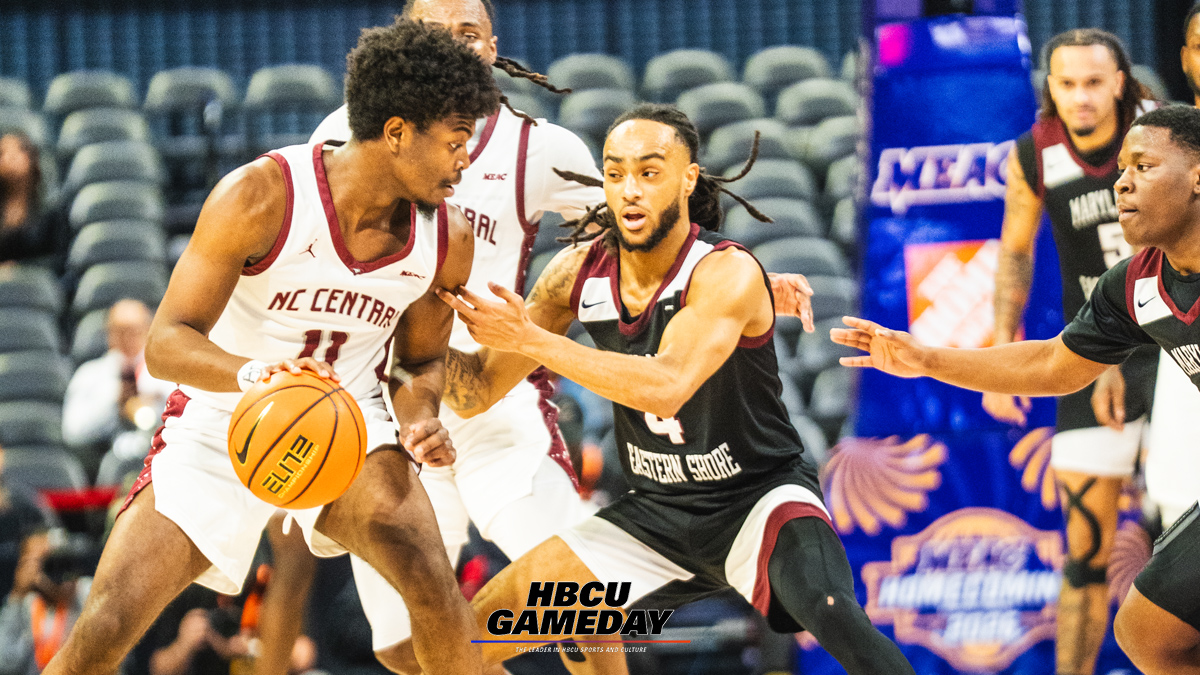
In this transfer portal/NIL era of college basketball, the ladder never stops moving — even amongst HBCU programs.
A player breaks out at an HBCU. A better-resourced Division I program notices. The player leaves through the transfer portal. The school he leaves behind goes looking for help, often in Division II. Then the same thing happens there.
That is the new ecosystem. It is not just the Power Four pulling from everybody else. It is everybody pulling from somebody. And for many HBCU programs, especially at the low-major level, that means living in a constant state of replacement.
At the MEAC Tournament, that reality hung over the event even when nobody said it directly. Coaches were talking about late-game execution, about poise, about pressure, about roster turnover. But beneath all of it was the same truth: building a team is no longer about getting old together. It is about fitting pieces together fast enough to survive.
The transfer portal is not a wrinkle in modern HBCU basketball. It is the weather.
A game of musical chairs
There was a time when low-major coaches could at least dream on continuity. Recruit a freshman, develop him, keep him for three or four years, and hope that by the end he had become the kind of veteran who could carry a program through March.
That model has cracked like the icy floor of the Norfolk Scope.
Now, if a player develops too well, he can leave. If he does not fit, he can leave. If he wants a different role, a new school, more money, more exposure, or a different style, he can leave. Coaches have adapted because they have no choice, but adaptation does not mean comfort.
Virginia State head coach Lonnie Blow Jr. gave one of the most honest descriptions of the moment during the CIAA Tournament.
“This is a hard job, man,” Blow said. “I’ve been coaching a long time and this era of coaching — not just because of the portal, you know, because of a lot of other different variables as well — but with the portal situation, you’ve just got to embrace it.”
That word — embrace — is probably the only one that makes sense now. Not like it. Not control it. Not wait for it to pass. Embrace it. Because there is no going back.
The truth coaches do not always say out loud
Blow went a step further than most coaches are willing to go publicly, and that is what made his comments stand out.
“I don’t mind having to put a team together every year,” he said. “A lot of coaches are upset that they don’t get to keep the same players year after year after year. Well, this day we’re living in now, I’m not sure I want some of these guys year after year after year!”
He said it half in jest, half in truth, which is usually where the most revealing coaching commentary lives.
Because the transfer portal is usually framed one way: coaches losing players they want to keep. And that certainly happens. But Blow pointed to the other side of it too. Some departures hurt. Some departures help. Some players are worth building around. Others are not the right fit, not the right personality, not the right response to coaching, not the right long-term piece.
“So at some point, the portal is a good deal,” Blow said. “Some guys you want — some guys you want to be around forever — and some other guys, you know, it’s a tough deal.”
That does not make the system easy. It just makes it more honest.
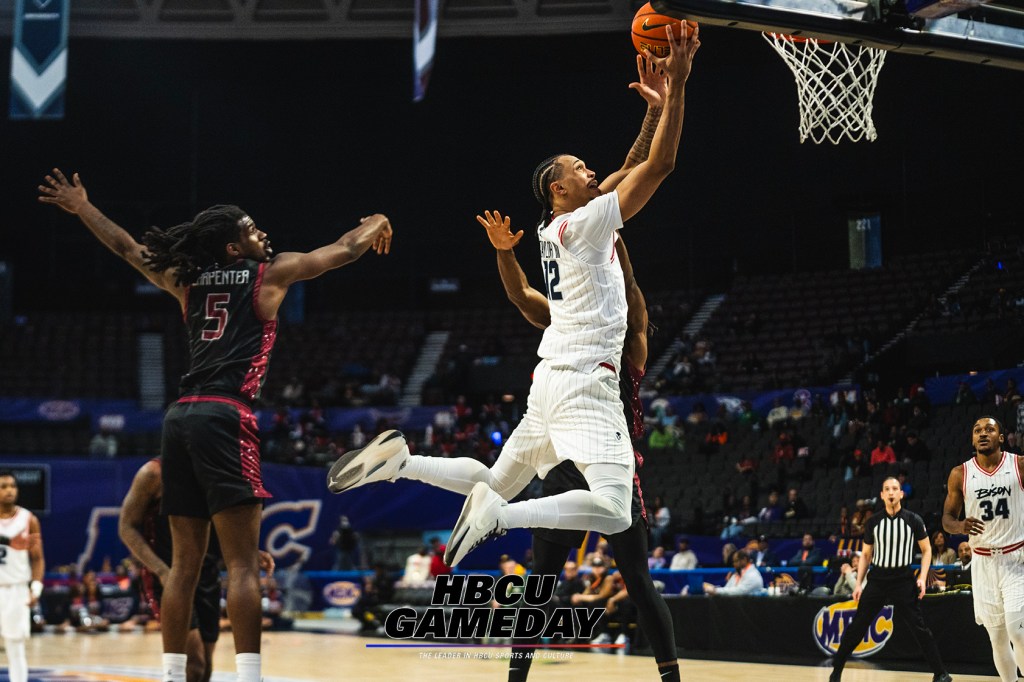
The squeeze on HBCU programs
Still, for many HBCU programs, the bigger issue is not simply roster churn. It is where the churn flows.
Talent usually moves upward. Resources usually move upward. Visibility usually moves upward.
So a D1 HBCU coach may spend a year or two helping a player grow into a featured scorer, a lead guard, a first-team all-conference player. Then the market responds. A school with more money, more infrastructure, or more name recognition shows up. The player leaves. The coach starts over.
South Carolina State coach Erik Martin did not sound bitter about that reality. He sounded like someone who understands the economics of the sport.
“Go get your money, man. Go get your money,” Martin said. “I’m glad this generation is getting the money.”
That perspective matters. It is easy to reduce this conversation to coaches versus players. But many coaches understand exactly why players leave. Their frustration is less about the choice itself and more about the cycle it creates. Every breakout season can become another recruiting loss.
Which is why the response for many low-major HBCU programs has been clear: if you are losing upward, you better know how to reload from below.
D2 is no longer a side door
That is where Division II, especially leagues like the CIAA and SIAC, has become central to modern roster-building.
Maryland Eastern Shore coach Cleo Hill Jr. said it plainly after his team’s season ended.
“We kind of dipped into the CIAA with Zion OBlana and the SIAC with Dorian Staples,” Hill said. “I thought those were some big keys for us to go into those leagues and get some Division II guys that I think can play at this level.”|
That is not desperation. That is strategy.
And it is working. North Carolina Central’s Gage Lattimore, a transfer from Seton Hill, earned first-team All-MEAC honors. Howard’s Cedric Taylor III, who came from Morehouse, also landed on the first team. Maryland Eastern Shore’s Zion Oblana, from Claflin, and Morgan State’s Elijah Davis, from Bowie State, made the second team.
Those are not developmental pieces. Those are impact players.
The message is hard to miss: Division II talent, including talent from HBCU Division II leagues, is helping shape Division I basketball through the transfer portal.

Ketron Shaw shows the whole ladder
No player illustrates that better than Ketron “KC” Shaw.
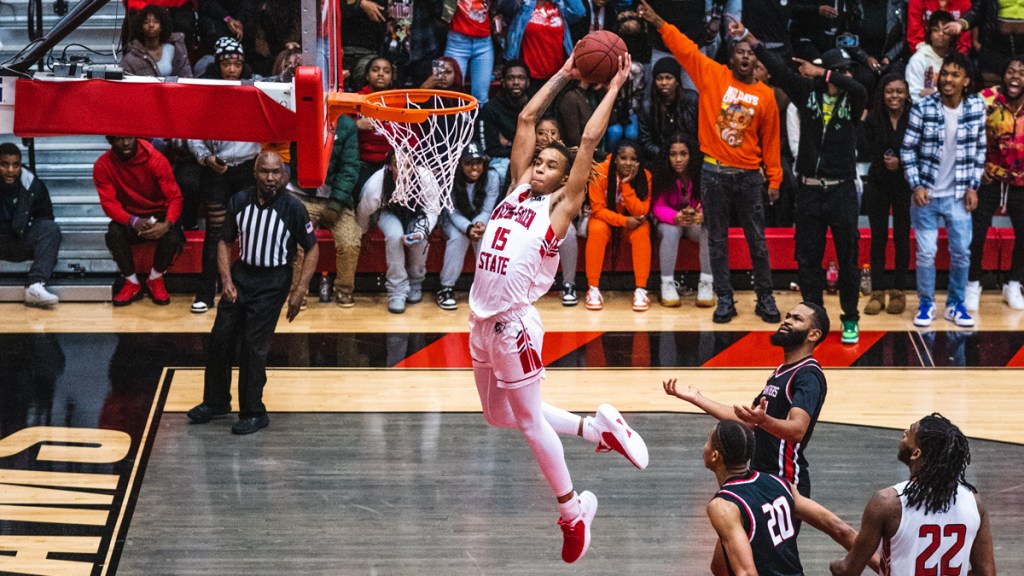
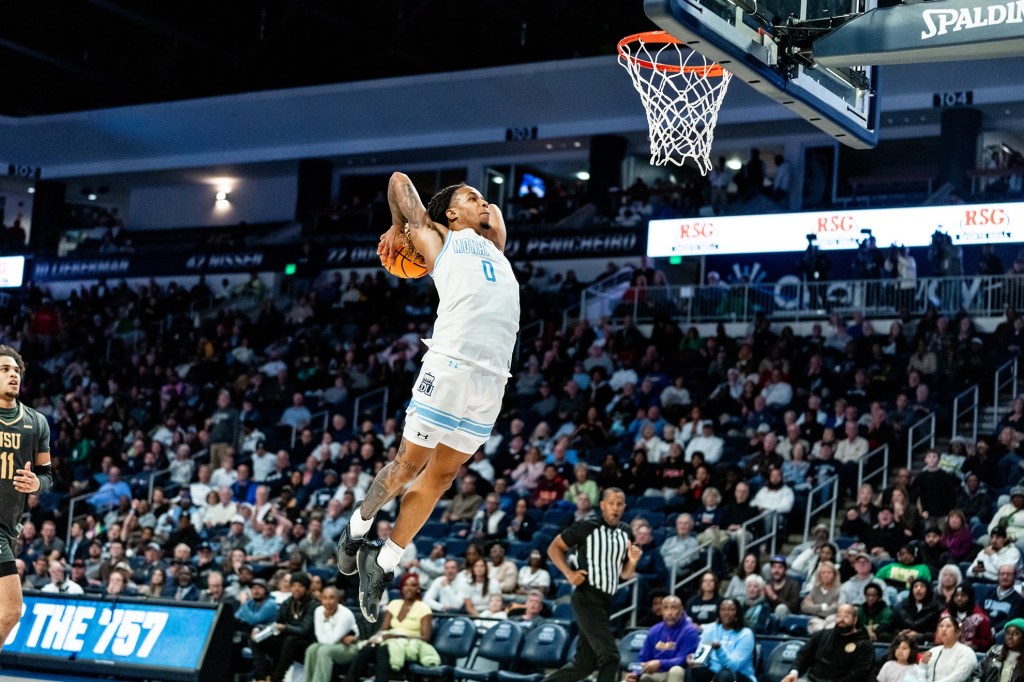
Shaw started his college career at Winston-Salem State, where he helped the Rams win the CIAA title as a freshman starter in 2023. As a sophomore, he grew into a larger role and averaged 10.8 points and 4.8 rebounds per game, looking every bit like a player on the rise. When Cleo Hill left WSSU for Maryland Eastern Shore, Shaw followed him to the MEAC. There, he made the leap from promising CIAA talent to one of the most dynamic players in HBCU basketball, averaging 18.0 points, 5.9 rebounds, and 3.1 assists while earning third-team All-MEAC honors. He scored 20 or more points in 14 of his 28 games, including a 30-point outing against Old Dominion. Months later, he transferred again — this time to ODU. Shaw averaged 16.8 points and 4.3 rebounds in the 2025-26 season at ODU. (HBCU Gameday)
That is the whole modern map in one career.
CIAA to MEAC.
MEAC to a better-resourced Division I program.
Development, breakout, departure.
For coaches, Shaw’s path is both validation and warning. It validates the strength of the talent in Division II HBCU basketball. It also warns that once a player proves he can scale upward, someone higher on the ladder is likely to come calling. (HBCU Gameday)
Players feel the difference — but not a huge one
The players themselves do not always describe the jump as dramatic.
UMES forward Dorian Staples, who transferred from Miles, said the adjustment from the SIAC to the MEAC was real, but manageable.
“These leagues are really similar, the SIAC and the MEAC,” Staples said. “It’s just like, maybe the wings were maybe a little quicker, a little more athletic.”
That kind of comment should get coaches’ attention. It suggests that for many programs, the talent gap between strong Division II HBCU leagues and low-major Division I is not some canyon. It is a bridge.
And in a sport now defined by movement, a bridge is enough.
What HBCU roster-building looks like now
Hill offered maybe the most vivid line of all when talking about what comes next. Minutes after his season finished with a loss on Thursday night, his mind was already on what treasures awaited him in the portal.
“The transfer portal has already started,” he said. “A lot of Division II guys are jumping in there like popcorn and then the Division Is will start coming in.”
That is the rhythm now. One season ends, the sorting begins. Coaches watch film, call contacts, evaluate fit, check on retention, and try to guess which players are ready for this level and which current players may be gone by the time summer arrives.
It is exhausting and constant. It is also the job.
And that may be the clearest way to understand modern HBCU basketball. It is no longer built around stability. It is built around movement. Around replacement. Around trying to find tomorrow’s answer before today’s best player walks out the door.
The transfer portal did not just change recruiting. It changed the emotional rhythm of the sport.
For HBCU programs, coaches are not simply building teams anymore. They are rebuilding them in public, over and over again, hoping each new mix can hold long enough to matter.