
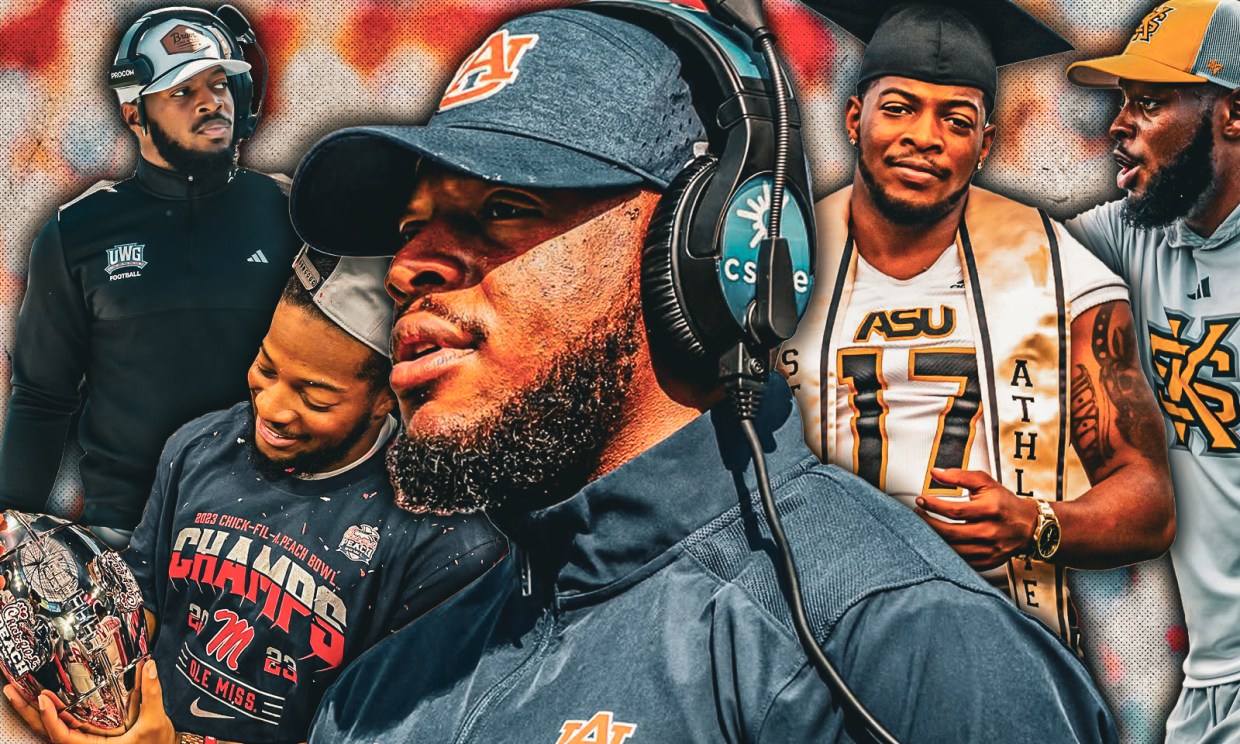
You won’t find David Whitlow’s name in Alabama State’s record book. Instead, you’ll now find it inside the quarterback room at the University of Georgia football. Kirby Smart’s Bulldogs are reportedly adding the former HBCU football quarterback to the offensive staff.
Whitlow is expected to work with Georgia signal callers alongside offensive coordinator and quarterbacks coach Mike Bobo and offensive analyst Brandon Streeter.
At first glance, it looks like a routine support-staff hire. However, this move represents another layer of the evolving HBCU-to-Power Four pipeline — one most of the college football world won’t see coming.
The HBCU Roots: A Student Of The Game
Whitlow arrived at Alabama State in 2015 as a quarterback out of Montgomery, Alabama. Statistically, his college career was modest.
During the 2016 season, he appeared in just three games. He rushed seven times for 55 yards and two touchdowns while completing four of five passes for 25 yards. After that year, he moved to defensive back and did not see further action.
Although the numbers were limited, the experience was not.
Rather than transferring or stepping away, Whitlow stayed and learned the game from multiple angles. He earned his undergraduate degree at Alabama State and later completed a master’s degree in adult education at Auburn.
Because of that foundation, his football journey shifted from playing to teaching.
A Fast-Rising Young Coach With SEC Credibility
While his playing career lacked headlines, his coaching résumé has accelerated quickly.
At just 28 years old, Whitlow earned a spot on 247Sports’ “30 Under 30” list of top rising coaches in Division I FBS. That recognition followed real production on the field.
In 2025 at Kennesaw State, Whitlow became one of the youngest wide receivers coaches in FBS. As a result, the Owls posted a 10-4 record, won Conference USA, and made their first-ever bowl game.
Under his guidance, Gabriel Benyard earned first-team All-Conference honors with more than 900 receiving yards and nine touchdowns. Meanwhile, Clayton Coppock received All-Conference USA Freshman recognition, and Christian Moss added nearly 700 yards of his own.
Prior to that season, Whitlow helped elevate West Georgia’s offense into a top-20 passing attack nationally. Before West Georgia, he sharpened his coaching foundation in the SEC.
At Ole Miss, he studied under Lane Kiffin while the Rebels ranked third in the SEC in passing offense. Earlier still, he worked at Auburn under Bryan Harsin and Cadillac Williams, gaining experience in both strength and conditioning and offensive development.
Consequently, what began as a graduate assistant role quickly evolved into a championship-level coaching résumé.
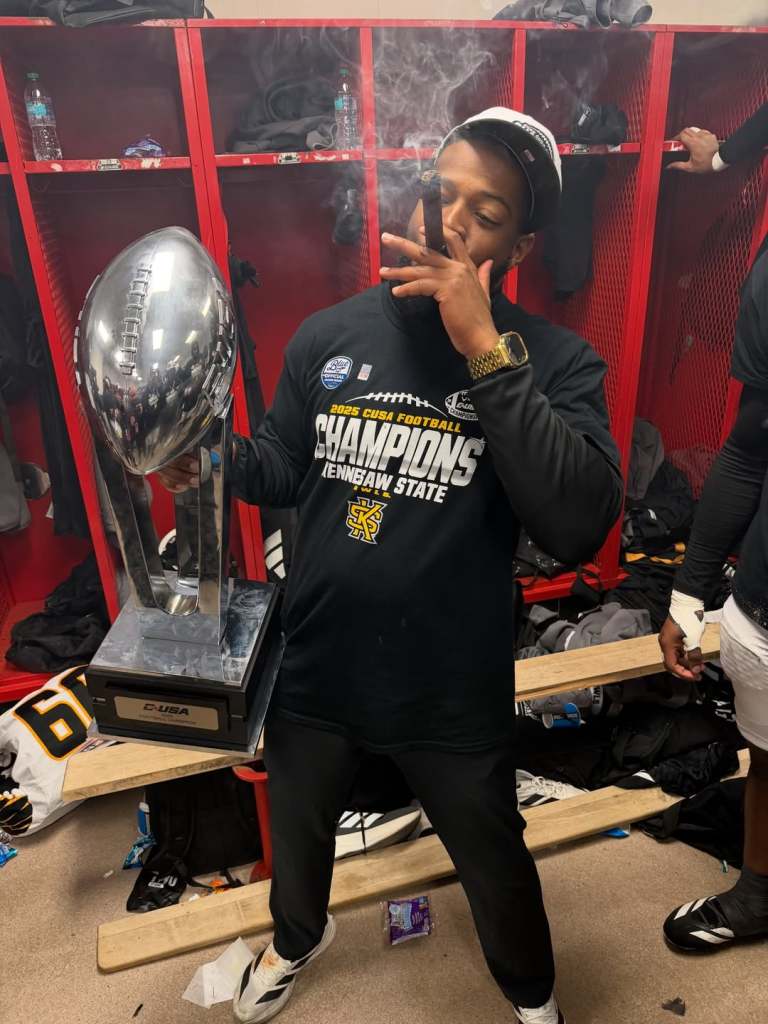
Georgia’s Quarterback Room Gets an HBCU Perspective
Now, Whitlow returns to the SEC at Georgia.
The Bulldogs enter the 2026 season following back-to-back SEC championships under Kirby Smart. Within that structure, Whitlow will work alongside Mike Bobo — a former Georgia football quarterback — and Brandon Streeter, a former Clemson quarterback and offensive coordinator.
Unlike many coaches in that room, Whitlow’s path did not include Power Four stardom as a player.
Instead, his experience reflects resilience, adaptability, and long-term development. Because he fought for reps and changed positions, he understands the mindset of players competing for opportunity.
That perspective matters inside a quarterback room. After all, not every signal caller will start. Not every recruit will arrive as a five-star. However, every quarterback needs development.
Whitlow has lived that reality firsthand.
The Expanding HBCU-to-Power Four Pipeline
Typically, conversations about the HBCU pipeline focus on star transfers or NFL Draft prospects. Yet this hire tells a different story.
Whitlow’s impact was never defined by passing totals or award lists. Instead, it has been defined by growth, study, and mentorship.
HBCU football develops more than athletes. It develops coaches, teachers, and strategic thinkers. As a result, programs across the country increasingly recognize that value.
Georgia did not hire Whitlow because of his college stat line. Rather, the Bulldogs hired him because of what he has already proven on the sidelines.
His résumé includes conference championships, All-Conference player development, SEC experience, and national recognition as a rising coach. Therefore, this move signals both trust and trajectory.
Why This Move Matters
On the surface, the title reads “assistant.” Beneath that title sits upward momentum.
Whitlow’s journey demonstrates that development within HBCU football extends beyond the playing field. Although he saw limited action as a quarterback, he built a knowledge base that now carries weight in the SEC.
From backup quarterback at Alabama State to quarterback assistant with Georgia football, David Whitlow’s path reflects the evolving reach of HBCU football — and the next layer of influence heading into the Power Four landscape.