
When the NFL released its list of 319 players invited to the 2026 NFL Scouting Combine, one detail stood out in HBCU football circles.
No current HBCU player made the list.
The combine will take place in Indianapolis from February 23 through March 2. Live coverage begins February 26. For programs with deep NFL history, the absence feels significant.
But the full story requires context. The numbers tell one story. The evolution of college football tells another.
HBCU Football and the NFL Combine: A Historical Context
HBCU football holds a foundational place in professional football history.
Before the full integration of major college programs, HBCUs served as the primary pipeline for Black athletes. Between 1960 and 1970, HBCUs produced 31 percent of all professional draft picks. The NFL still includes 35 Pro Football Hall of Famers from HBCU programs.
However, HBCU football representation at the NFL Scouting Combine has declined over the last three decades.
In recent years, invitations for current HBCU players have remained limited. Some seasons included one or two players. A few reached three or four. Now in 2026, that number sits at zero.
The Transfer Portal Pipeline
While no current HBCU players received combine invitations, two invitees have direct HBCU roots.
Virginia running back J’Mari Taylor began his career at North Carolina Central. Missouri wide receiver Kevin Coleman Jr. started at Jackson State.
Their paths highlight a major shift in how elite HBCU talent navigates the system.
J’Mari Taylor: From NCCU to the ACC
Taylor built his résumé at North Carolina Central. He rushed for 1,146 yards and 15 touchdowns in 2024. He earned First Team All-MEAC honors and finished as a Walter Payton Award finalist.
After transferring to Virginia, he elevated his profile even further. First Team All-ACC honors. Multiple 100-yard rushing games. Senior Bowl invitation.
His production translated. His exposure expanded.
Kevin Coleman Jr.: From the SWAC to the SEC
Coleman opened his career at Jackson State and won SWAC Freshman of the Year. He later moved through Louisville and Mississippi State before landing at Missouri.
At Missouri, he became the Tigers’ leading receiver. He recorded 63 receptions and 715 receiving yards. He graded among the top wide receivers nationally, according to Pro Football Focus.
His talent existed before the transfer. The SEC stage amplified it.
School of Thought One: Exposure Drives Invitations
One argument centers on exposure.
Supporters of this view believe the combine reflects where players finish, not where they develop. The transfer portal now provides elite HBCU players with access to Power Four competition, national television, and expanded scouting visibility.
Under this lens, the talent has not disappeared. It has relocated.
If a player wants maximum draft exposure, transferring may offer the clearest path. The combine list may simply reflect modern roster economics.
School of Thought Two: Scouting Remains Systemic
Others, like Rasheeda Liberty, Founder and CEO of Lady Lib Sports & Entertainment sees the situation differently.
Liberty is a certified sports agent who represents multiple professional athletes, including several from HBCU programs. Her agency has represented 11 players across four draft classes from the HBCU pipeline.
In response to the 2026 NFL combine list, Liberty stated:
“HBCUs are full of talented players coached by some of the best in the business, as demonstrated by the players currently in the league. The issue of discovering talent is systemic. Teams will need to properly invest and require their designated scouts to actually make multiple visits to schools, speak with coaches and actually view games in person vs behind the desk in April late in the draft process. There has to be an intentional effort to discover the talent from all 32.”
Liberty’s argument focuses on investment and intention. She believes teams must commit real resources to on-campus evaluation. She argues that late-cycle film review cannot replace consistent in-person scouting.
Her position does not dismiss the portal. Instead, it questions whether the process treats HBCU programs with equal urgency.
Two Realities Can Exist at Once
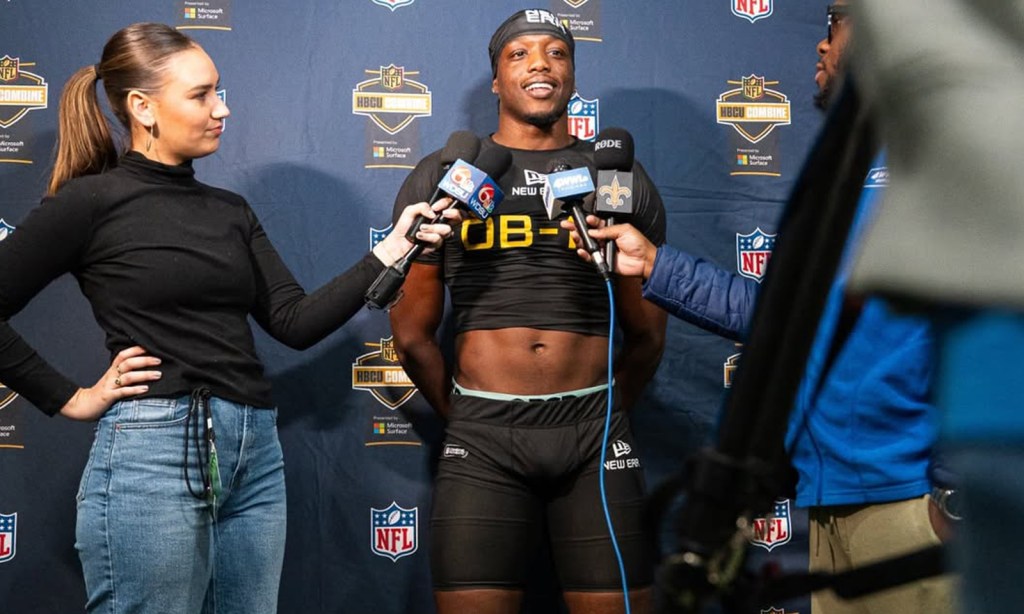
The transfer portal has changed the scouting landscape. At the same time, the NFL launched the HBCU Combine and continues to support the HBCU Legacy Bowl. Those initiatives exist because league stakeholders recognized the gaps in visibility.
Both dynamics shape today’s reality.
Some top HBCU players now view Power Four transfers as a strategic move. Others remain at their HBCU programs and rely on specialized showcases for exposure.
The absence of current HBCU players at the 2026 NFL Combine does not erase HBCU talent. It highlights how modern football economics, scouting habits, and player mobility intersect.
But the portal should not be the only dependable gateway between HBCU performance and NFL validation.
If elite production at an HBCU requires relocation to generate combine interest, then the issue extends beyond mobility. It becomes a question of evaluation infrastructure. It raises a broader concern about which schools receive attention and why.
Two former HBCU players will take the field at the NFL Scouting Combine in Indianapolis this year. No current HBCU players will.
That contrast does not prove a lack of ability. It suggests that access often follows exposure, and exposure often follows the systemic institutional priorities that created the need for HBCUs in the first place.
History shows that HBCUs can produce NFL greatness. The modern question is whether the scouting system will consistently invest enough to find it before it transfers elsewhere.