

After being one of the most consistent HBCU programs in recent years, Fayetteville State men’s basketball entered the season with expectations firmly in place.
Under first-year head coach Devin Hoehn, the Broncos maintain that standard while introducing a faster, more aggressive identity on the floor.
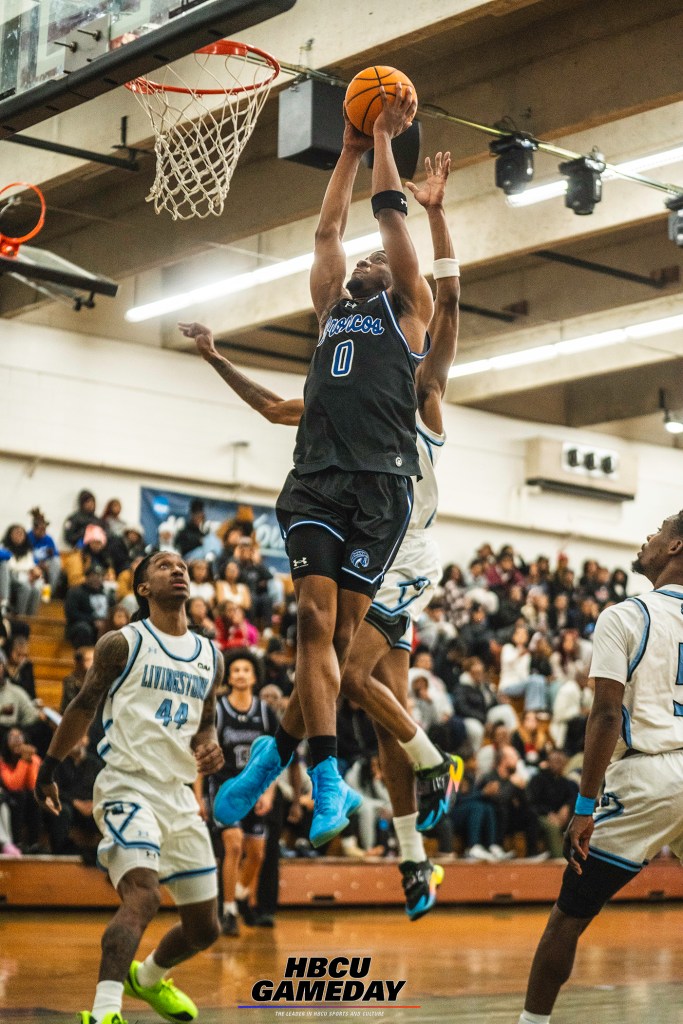
That identity has shown itself quickly. Fayetteville State rides a six-game winning streak and averages 100.8 points per game. They also lead the CIAA in points per game at 89.1, which ranks in the Top 25 of all Division II basketball. The Broncos retain their program identity; however, they now pressure opponents in new ways.
A Familiar League, a New Look
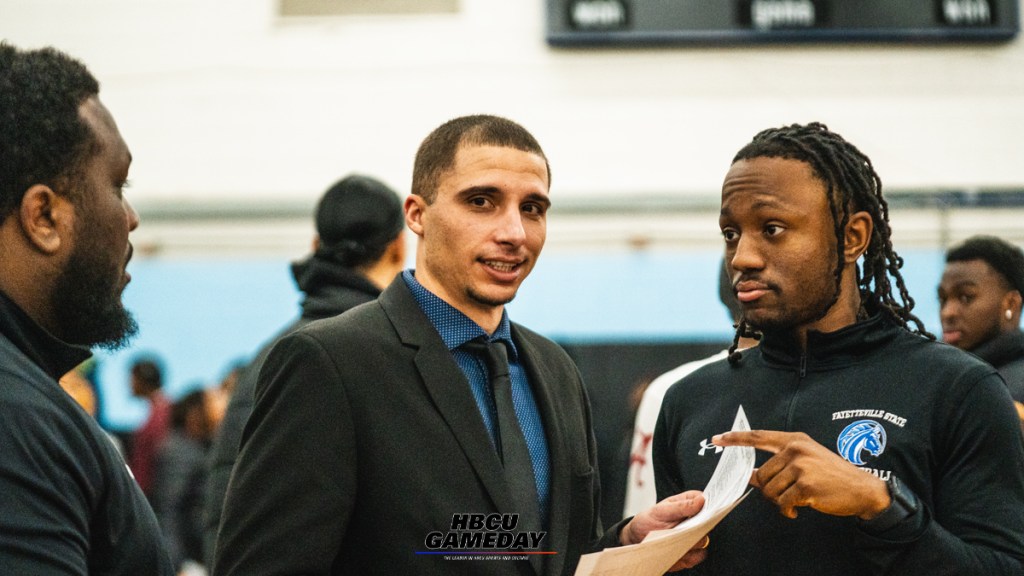
Hoehn brings a style that contrasts with much of what is traditionally seen in the CIAA over recent years. After leading Bluefield State to a historic NCAA Division II Tournament appearance, he made the uncommon move of changing programs within the same conference. Consequently, he faces familiar opponents with a fresh approach.
“The only thing that really changes is the color of blue and the name,” Hoehn said. “I’m still trying to win basketball games.”
This contrast shows nightly in a league known for physical play, half-court execution, and grind-it-out possessions. At Fayetteville State, the team pairs those realities with pace and pressure.
“At Fayetteville, you’re expected to win. That’s pressure, but you want pressure. If there’s no pressure, you can get complacent.”
Hoehn took over the program on the heels of its most successful stint in history. Luke D’Alessio led FSU to a 103-52 record in his five seasons, including the first CIAA championship in nearly 50 years. Ironically, D’Alessio was hired to take Hoehn’s place at BSU.
Hoehn introduced a style rarely seen in the CIAA while in West Virginia. And it has followed him to North Carolina. Fayetteville State plays with relentless pace, early offense, and defensive pressure that fuels scoring runs. Moreover, this system pushes players to think quickly and stay aggressive throughout each possession.
Bringing a Different Style to an Established HBCU Program
To the untrained eye, the system may appear chaotic. However, Hoehn designs it deliberately.
“If one of our shooters has a good look in the first five seconds and we don’t take it, we might not get that same look again,” he said. “Our defense creates our offense.”
The Broncos rank among the top 25 scoring teams nationally, a product of a system Hoehn developed under Jim Crutchfield and refined throughout his coaching career. In fact, he calls it organized chaos.
“Everything we do, from practice to game night, supports this style,” Hoehn said.
Implementing a new system presented challenges. Injuries, limited practice time, and early road trips slowed Fayetteville State’s ability to fully settle into its identity. Nevertheless, the team has adapted and grown stronger.
“When we play the right way, we’re hard to beat,” Hoehn said. “When we don’t, anybody can beat us.”
Since returning from break healthier and more settled, the Broncos have looked increasingly connected. Consequently, the team moves faster, rotations flow more smoothly, and decision-making has improved on both ends of the floor. As Hoehn told his players.
“Let’s not forget who we are. This is how we play.”
Trust, Talent, and CIAA Star Power
At the heart of Fayetteville State’s success lies trust in personnel and players built to thrive in a high-tempo system. For example, the Broncos rely on Larry Howell, the current leading scorer in the CIAA and all of Division II HBCU basketball at 20.6 ppg.
“He’s earned everything he’s gotten,” Hoehn said. “He works, and he brings it every day.”
Howell’s production is supported by Ezekiel Cannedy, whose emergence as one of the CIAA’s top scorers (18.0 ppg) gives Fayetteville State multiple offensive threats each night. As a result, the Broncos can maintain pace without relying on a single option.
Competing in the Present, Building Forward
Hoehn intentionally keeps the team grounded in the moment. At a program with high expectations, he focuses on daily improvement rather than long-term projections. Still, he envisions raising the visibility of the CIAA and HBCU basketball nationally.
“I feel like HBCUs have been overlooked,” Hoehn said. “But it can be done.”
With Fayetteville State sitting at 12–6 overall and 6–2 in CIAA play, the Broncos remain firmly in the conference race, blending consistency with a distinct new rhythm.
Fayetteville State isn’t searching for relevance or identity. Hoehn adds tempo, pressure, and a system designed to challenge opponents for forty minutes.
In a league defined by tradition, evolution requires precision. At Fayetteville State, the team executes it one possession at a time.