
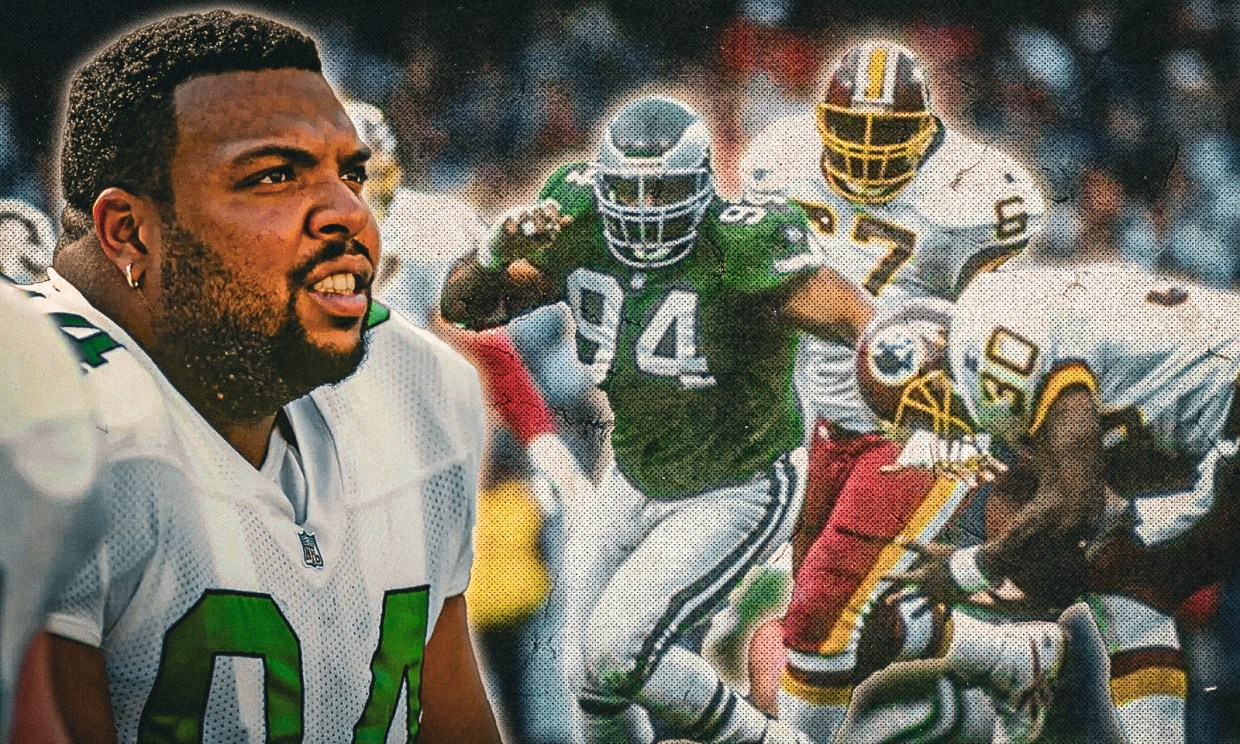
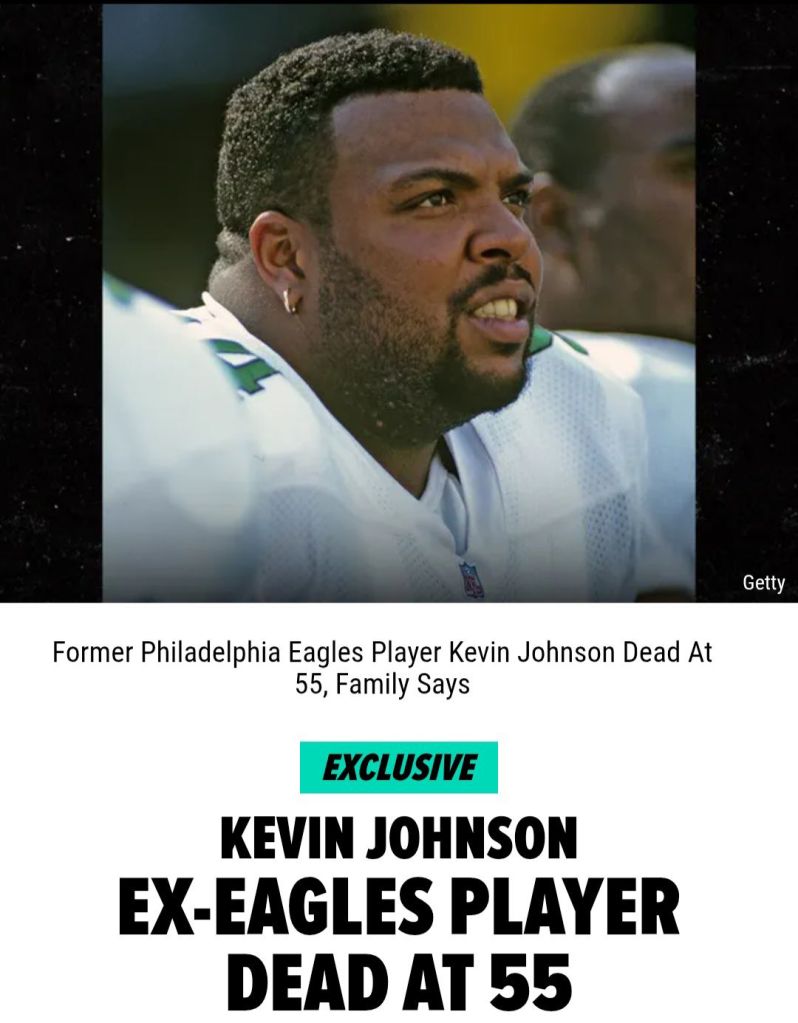
The sports world is processing troubling news surrounding the death of former Philadelphia Eagles defensive lineman and one-time HBCU football player Kevin Johnson. His passing is now being investigated as a homicide by authorities in Los Angeles.
Johnson, 55, was found dead Tuesday near a homeless encampment in Los Angeles County. According to records from the Los Angeles County Medical Examiner, the cause of death was listed as blunt head trauma and stab wounds. The Los Angeles County Sheriff’s Department has confirmed the case is being treated as a homicide.
While the story has drawn national attention due to Johnson’s time in the NFL, his football journey also included time at Texas Southern University.
From Junior College to HBCU Football
A Southern California native, Johnson began his college career at Los Angeles Harbor College. He later transferred to Texas Southern, where he became a key piece of the Tigers’ defensive front in the early 1990s.
At TSU, Johnson played alongside future Pro Football Hall of Famer Michael Strahan. The two were teammates during the 1991 and 1992 seasons. They anchored a defensive line that drew steady attention from NFL scouts.
Johnson lined up at defensive tackle, while Strahan emerged as a dominant edge rusher. During the 1992 season, Strahan recorded a school-record 19 sacks.
Their shared time at an HBCU later became a footnote in draft history. Both players entered the 1993 NFL Draft from Texas Southern. Johnson was selected in the fourth round by the New England Patriots, while Strahan went in the second round to the New York Giants.
NFL Career and Life After Football
Johnson was released by New England before the 1993 season began. He later carved out an NFL role after being claimed by the Philadelphia Eagles in 1995.
Over parts of three seasons in the league, Johnson appeared in 38 NFL games. Most of that time came with the Eagles, followed by a brief stint with the Oakland Raiders.
His most productive stretch came in Philadelphia. Johnson recorded seven career sacks, 54 tackles, and returned a fumble for a touchdown. He also appeared in two playoff games during the Philadelphia Eagles’ 1995 postseason run.
After his NFL career, Johnson continued playing professionally in the Arena Football League. He won an ArenaBowl championship with the Orlando Predators in 1998.
CTE Concerns Raised, But No Diagnosis Confirmed
In the days following his death, friends and former teammates have spoken publicly about Johnson’s struggles later in life. Those accounts include ongoing health challenges they believe may have been linked to Chronic Traumatic Encephalopathy, or CTE.
There has been no official diagnosis of CTE. The condition can only be confirmed through posthumous examination of brain tissue, and no such findings have been publicly reported.
Friends told ABC7 that Johnson experienced significant health issues after football. They believe those challenges contributed to him becoming unhoused later in life.
Chris Nowinski, a neuroscientist and CEO of the Concussion Legacy Foundation, commented publicly on the matter. He stated it was “most likely correct” that Johnson suffered from CTE based on his playing history. He also emphasized that confirmation would require a formal neuropathological study.
The Los Angeles County Medical Examiner’s report focused solely on Johnson’s cause of death. Neurological conditions were not addressed in the findings.
Community Remembers a Teammate and Friend
Authorities have indicated that Johnson appeared to be living at the encampment where he was found.
“Unfortunately, it appears he was homeless,” Los Angeles County Sheriff’s Lt. Steve De Jong told Newsweek. “It looks like he was probably living there.”
Those who knew Kevin Johnson remember him beyond his football résumé.
“He was my best friend,” longtime friend Bruce Todd told ABC7. “I was best man at his wedding. Great guy, fun-loving. The community is going to miss him.”
Why This Story Matters to the HBCU Community
Johnson’s passing is not being framed as an HBCU story because of the tragedy. It is being acknowledged because his football journey ran through an HBCU program that helped launch him to the professional level.
Texas Southern, like many HBCUs, has a long history of developing NFL talent under circumstances different from those of Power Four programs. Johnson’s career, his later struggles, and the questions surrounding player health all intersect with ongoing conversations about post-career support, brain health, and long-term outcomes for former football players.
Those conversations remain relevant, particularly for players who entered the league decades ago.
As investigators continue their work, the focus remains on accountability, answers, and remembering Kevin Johnson as more than a headline.