
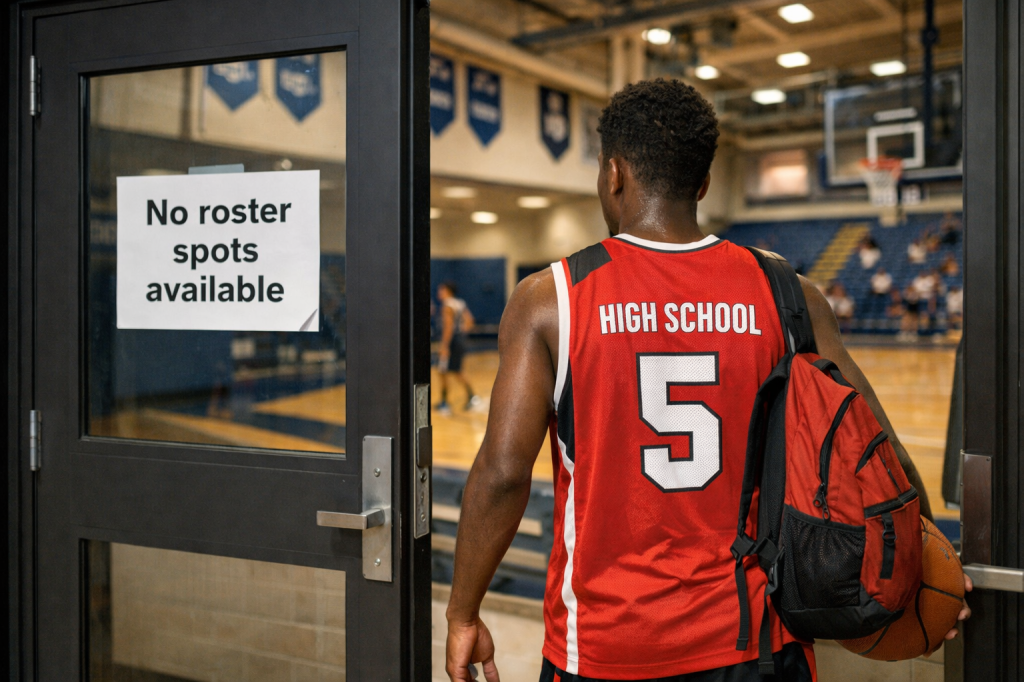
If the road to college basketball scholarships was not already difficult for high school players, the NCAA’s decision to allow NBA G League athletes to enter or re-enter college basketball has created another obstacle. One of the most impactful rulings of 2025, the policy arrives at a moment when NIL and the transfer portal have already reduced access to scholarships and roster spots. By granting G League players immediate eligibility, the NCAA further dilutes opportunities for first-time college athletes.
G League to College: The Precedent Is Already Set
The first notable example of this shift was Thierry Darlan. Darlan spent two seasons in the G League, appearing in 58 games. He suited up for Ignite during the 2023–2024 season and later joined the Delaware Blue Coats in 2024–2025. He was not on the fringe of the league. Instead, he emerged as a legitimate contributor and started roughly half of his games.
Despite that professional experience, Santa Clara granted Darlan eligibility for the West Coast Conference. Because Santa Clara carries a limited national profile, his return to college basketball drew little attention.
That changed when the NCAA restored eligibility for London Johnson at a true “blue blood,” the University of Louisville. Johnson’s case sparked national outrage and forced the college basketball world to confront a new reality. Players could now return to NCAA competition after playing in the NBA G League. The trend continued in November when BYU signed Abdullah Ahmed, a former player for the G League’s Westchester Knicks.
James Nnaji Pushes the Boundary Even Further
Baylor’s signing of James Nnaji brought the issue into sharper focus. Nnaji was selected 31st overall in the 2023 NBA Draft and later became part of an NBA trade in 2025. His move back to college basketball showed just how far the boundaries had shifted.
NCAA Responds as Backlash Grows
As concerns mounted, NCAA President Charlie Baker addressed the issue publicly.
“The NCAA has not and will not grant eligibility to any prospective or returning student-athletes who have signed an NBA contract,” Baker said. “As schools increasingly recruit individuals with international league experience, the NCAA is exercising discretion in applying the actual and necessary expenses bylaw. This ensures that prospective student-athletes with experience in American basketball leagues are not at a disadvantage compared to their international counterparts. Rules have long permitted schools to enroll and play individuals with no prior collegiate experience midyear.”
High School Players Were Already Losing Ground
Even before these rulings, opportunities for high school athletes were shrinking. The transfer portal now functions like free agency. As a result, Division I coaches—including those at HBCUs—often prioritize experienced transfers over developing high school talent. A brief review of HBCU Division I rosters highlights the impact.
Transfer Numbers Tell the Story
According to Real GM, a basketball tracking service, 99 MEAC players transferred from other institutions. In the SWAC, that number rises to 161. Together, those 260 roster spots no longer exist for high school athletes. Football numbers paint an even starker picture.
NIL Is the Driving Force
So what draws these players back to college? NIL.
The financial landscape has changed dramatically. In many cases, college athletes now earn more through NIL than NBA G League players earn through salaries. High-profile exceptions exist, such as Bronny James, whose endorsement portfolio—often linked to his father, NBA legend LeBron James—sets him apart.
BYU star AJ Dybantsa reportedly earns $4 million this season. Texas Tech’s JT Toppin is also positioned for a $4 million payday. When combined with what Duke’s Cooper Flagg earned last season, NIL compensation now exceeds typical NBA rookie salaries and far surpasses G League pay.
The Illusion of a Safety Net
NIL rumors have also fueled speculation about college athletics as a financial safety net. One widely circulated but unconfirmed report suggested Ohio State supporters planned to offer wide receiver Marvin Harrison Jr. more money than he would earn as a first-year NFL player. The goal was to keep him in school.
Harrison ultimately declared for the 2023 NFL Draft and was selected fourth overall by the Arizona Cardinals in 2024.
HBCUs Feel the Same Pressure
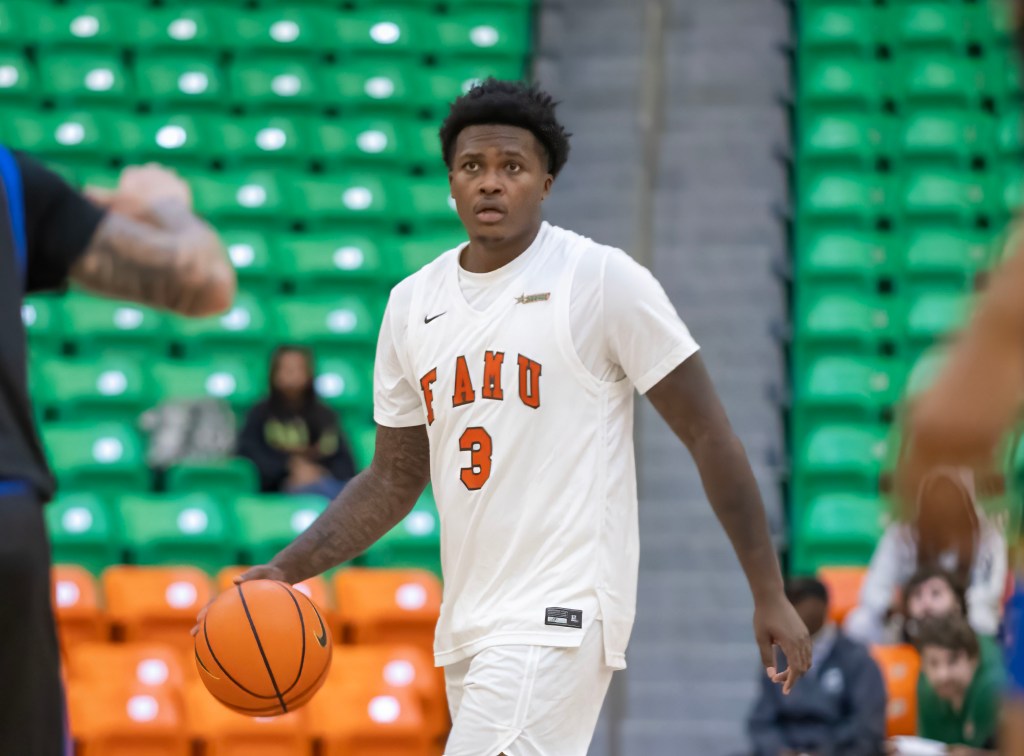
HBCUs face the same challenges and must “keep up with the Joneses.” The first nationally televised SWAC matchup of the season illustrated that reality. Bethune-Cookman defeated Florida A&M 87–83 in a high-level contest loaded with transfers.
Bethune-Cookman’s Arterio Morris, a transfer from Texas, scored 20 points. Florida A&M’s Jaquan Sanders, a transfer from Hofstra, led all scorers with 22. Most key contributors in the game came from the transfer portal.
Of the 28 total players on both rosters, only eight came directly from high school. That number even includes prep school players, who are not always truly straight out of high school. Florida A&M’s roster consists of roughly one-third high school players. Bethune-Cookman’s roster sits closer to one-quarter.
A Broader Concern Across College Sports
Across all sports, coaches increasingly worry that athletes prioritize NIL opportunities over skill development. Many cite this shift as a factor in the retirement of one of college football’s greatest coaches, Nick Saban.
After a historic run at Alabama, Saban stepped away from the program. During a roundtable discussion in Washington, D.C., led by U.S. Senator Ted Cruz, Saban explained his frustration.
“All the things that I believed in for all these years, 50 years of coaching, no longer exist in college athletics,” Saban said. “It was always about developing players. It was always about helping people be more successful in life.”
What Comes Next?
Baker closed by emphasizing that while the NCAA has lost control in several legal battles, it does not plan to concede this one.
“I will be working with DI leaders in the weeks ahead to protect college basketball from these misguided attempts to destroy this American institution.”
So what’s next? Perhaps LeBron James—who never played college basketball—and Bronny James—who left early and spent time in the G League—will enroll at the University of Arizona to play alongside Bryce.
At this point, what would stop them?