
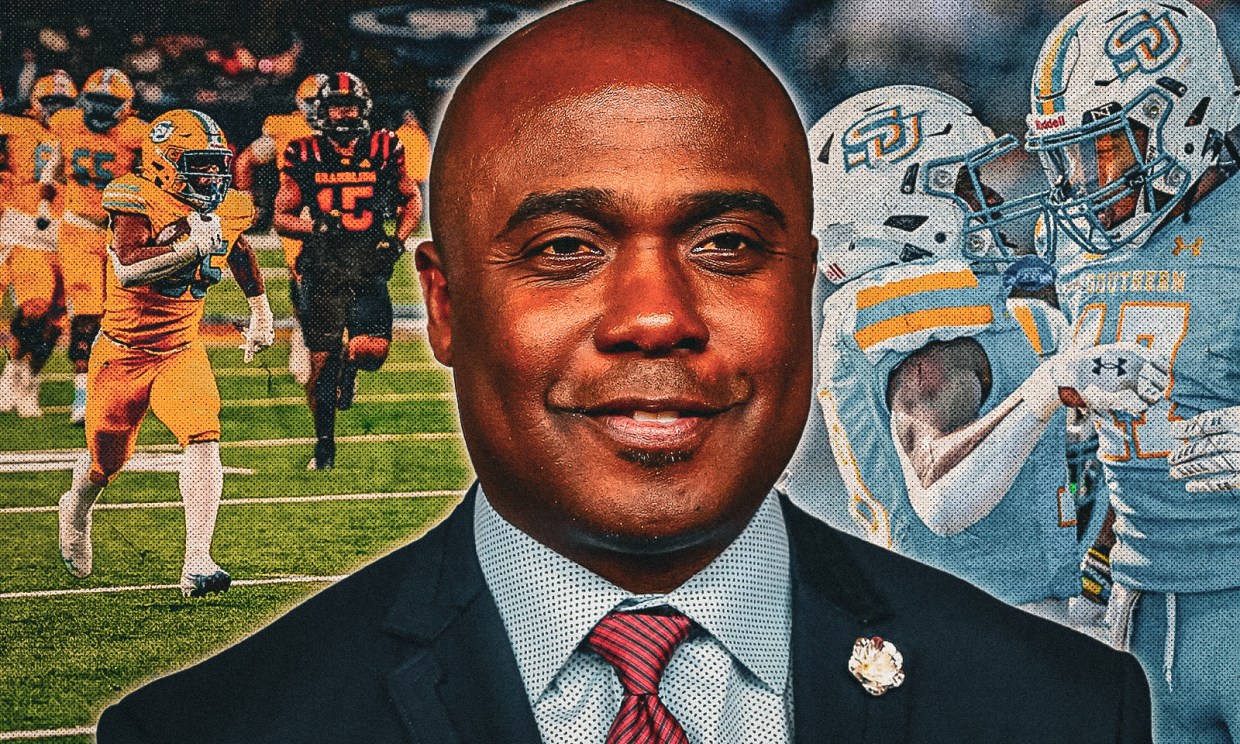
Southern University made a statement the moment it hired Marshall Faulk — one that quickly reshaped the financial conversation around HBCU football.
According to a report by WBRZ in Baton Rouge, Southern’s new head football coach will earn $1.2 million over three years. The contract pays Faulk $400,000 per season, placing him among the highest-paid head coaches in HBCU football.
The deal also includes a $950,000 assistant coach salary pool, signaling a significant institutional investment beyond the head coach alone. In a landscape where many HBCU programs still fight for resources, Southern’s commitment stands out.
A Salary That Puts Faulk in Elite HBCU Company
Faulk’s $400,000 annual salary ties him with Norfolk State head coach Michael Vick for the highest publicly reported salary in HBCU football. That figure also puts Faulk $100,000 ahead of South Carolina State head coach Chennis Berry, the reigning Celebration Bowl champion.
That difference adds fuel to a growing discussion across HBCU football circles. The debate centers on how programs value celebrity appeal versus proven winning resumes.
Berry addressed that tension directly after winning the Celebration Bowl. Sitting at the podium, wearing his championship hat, he spoke candidly about what he felt was limited media attention during his championship run. His comments resonated across the HBCU coaching community, especially among coaches who climbed through the HBCU and Division II ranks without the benefit of national fame.
Faulk’s contract does not settle that debate. However, it clearly puts the conversation into sharper focus.
Why Southern Was Willing to Pay the Price
Southern University did not hire Marshall Faulk quietly. The school also did not pay him like a typical first-time head coach.
Introduced as the 22nd head football coach in program history, Faulk’s press conference felt more like a celebration than a routine announcement. NFL Hall of Famers, NBA champions, and national figures filled the room. Their presence reflected exactly what Southern believes it secured.
Southern Athletic Director Roman Banks explained the strategy clearly.
“Times aren’t the same,” Banks said. He emphasized that recruiting in 2025 depends on facilities, NIL opportunities, and perception. In that environment, Faulk’s résumé becomes a powerful recruiting and fundraising tool.
Faulk brings NFL MVP honors, a Super Bowl ring, Hall of Fame credentials, and recent Power Five coaching experience from Colorado. Southern views that profile as an extension of its brand.
Faulk Frames the Job as a Calling, Not a Spotlight
Faulk presented a different perspective when he took the podium.
“This isn’t a dream — it’s a calling,” he said while reflecting on returning home to Louisiana. A New Orleans native and Carver High School graduate, Faulk repeatedly emphasized purpose, development, and accountability.
He promised toughness, consistency, and a program that plays with intensity for four quarters. More importantly, he spoke about responsibility — not celebrity.
Celebrity Coaches vs. Traditional Paths in HBCU Football
Faulk’s salary arrives during a broader trend across HBCU football.
High-profile hires have become more common. Results, however, have varied. Michael Vick endured a difficult first season at Norfolk State, serving as a reminder that name recognition alone does not guarantee wins.
Meanwhile, DeSean Jackson made history at Delaware State, showing tangible improvement with the same level of spotlight. At the same time, Chennis Berry and Tremaine Jackson of Prairie View A&M met in the Celebration Bowl after rising through the HBCU and Division II coaching ranks.
Their success reinforced a simple truth: there is more than one blueprint for winning in HBCU football. Faulk now enters that ecosystem without attempting to redefine it. Instead, he adds another path to the equation.

The Financial Context Behind Southern’s Splash
Southern’s investment in Faulk also comes with a financial context.
The university is still managing previous coaching buyouts. Those include a $460,000 settlement tied to Eric Dooley and an estimated $500,000 obligation connected to the midseason dismissal of Terrence Graves.
By the time those commitments conclude, Southern will have spent close to $1 million on coaching severance since 2023. That reality makes Faulk’s hire both bold and consequential.
Southern is not simply betting on a coach. The program is betting on visibility, expansion, and long-term relevance in modern college football.
Perspective, Not a Verdict
Marshall Faulk’s $400,000 salary does not diminish the accomplishments of coaches like Berry or Jackson. It also does not guarantee success.
What it does reflect is where HBCU football stands in 2025. Programs now balance tradition with transformation, results with recognition, and development with visibility.
For Southern University, the message is clear. The Bluff is willing to pay to compete.
What happens next will determine whether this investment becomes a turning point — or simply another chapter in the evolving HBCU football coaching conversation.