
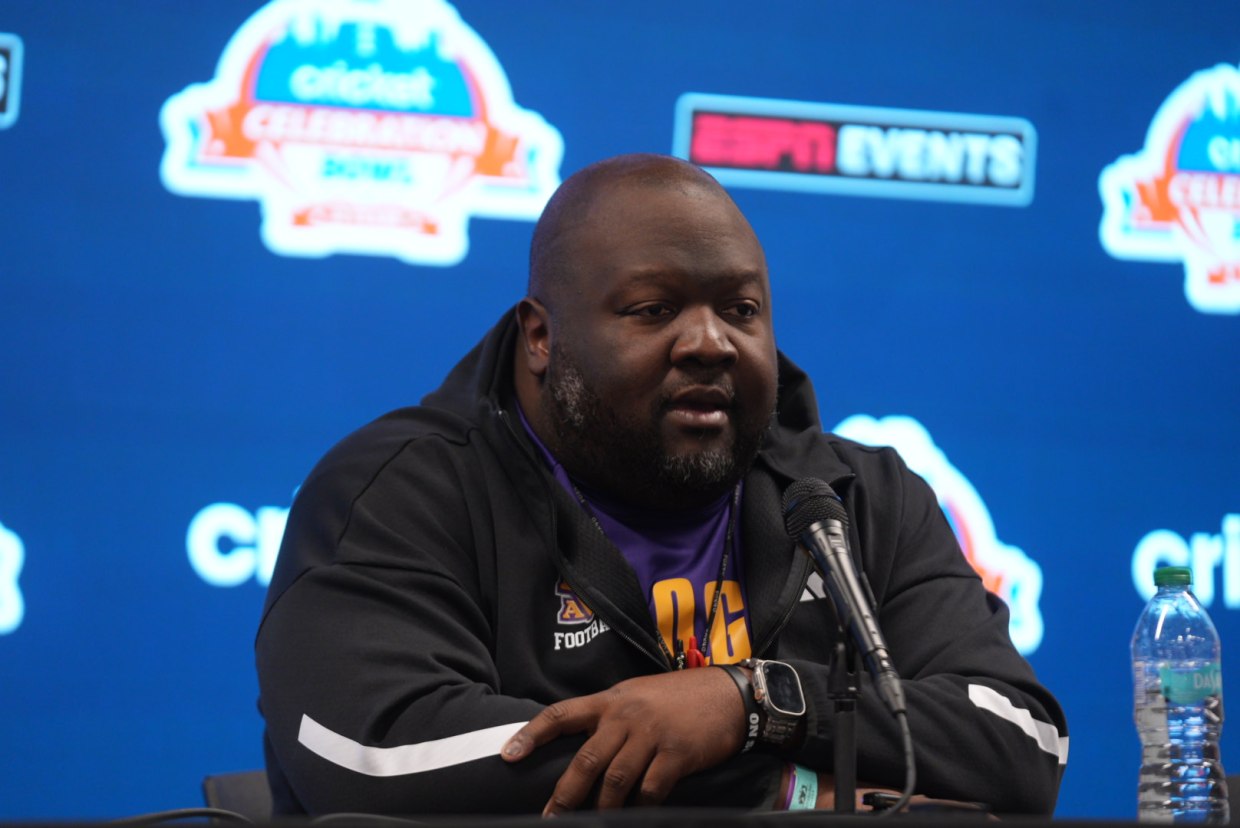
ATLANTA — Prairie View A&M head coach Tremaine Jackson didn’t sugarcoat the journey, the lessons, or the urgency as his HBCU squad prepared to face South Carolina State in the Celebration Bowl.
Offensive evolution and finding identity
Jackson acknowledged that Prairie View’s offense did not start the season where it needed to be. While the Panthers moved the ball early, penalties, turnovers, and inconsistency — particularly at quarterback — stalled drives.
“We weren’t scoring. We were moving the ball, but we were being penalized. We had a lot of drive killers,” Jackson said.
That led to what he described as “musical chairs” at quarterback. The breakthrough came late in October, when Jackson and his staff made a key adjustment — listening to the players.
“The players came to us and suggested some things that would help them,” Jackson said. “As a coach, you’ve got to listen to your young people.”
Those changes, combined with steady in-game adjustments from offensive coordinator Buckman and the staff, helped Prairie View stabilize offensively. Jackson emphasized flexibility over rigidity.
“We’re going to do whatever is required on that day to win,” he said. “Sometimes you feel great about a game plan, then you get in the game and things change.”
Cameron Peters, accountability, and growth
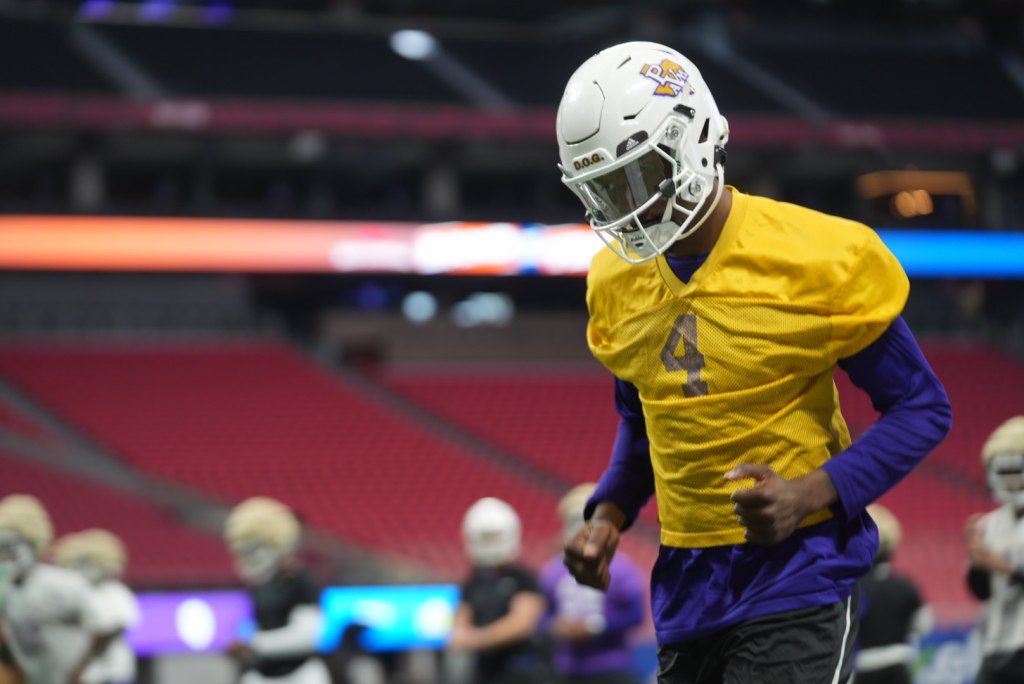
Jackson was candid — even blunt — when asked about quarterback Cameron Peters and the turning point after the Alabama State game.
“I benched him,” Jackson said plainly.
The decision wasn’t punitive, but instructional. Jackson explained that early success, including a big rivalry win, led to changes in Peters’ preparation as outside praise mounted.
“When people start telling you how good you are, you can get diluted,” Jackson said.
By sitting Peters down, Prairie View proved it could win without him — a moment that reset the quarterback’s mindset. Jackson emphasized recovery over mistakes.
“We don’t judge men by the mistakes they make. We judge them by how they recover,” he said.
Since returning to the lineup, Peters has steadied the offense, earned full buy-in from teammates, and positioned himself for a historic finale.
“It’s his last game as a Panther,” Jackson said. “He’s got a chance to go down as the greatest quarterback to ever play at Prairie View A&M.”
Championship lessons and business-like approach
Jackson also reflected on last season, when his previous program reached a national championship game and fell short. That experience shaped this week’s approach.
“All you can think about for a year is losing the last game,” he said of Valdosta State’s loss in the D2 championship game last year.
There would be no distractions this time.
“Ain’t no bowling going on this week. Ain’t no laser tag,” Jackson said. “The hoopla can be destructive.”
Instead, Prairie View treated the HBCU bowl week like a normal game week, beginning film study immediately after the SWAC Championship — even breaking down South Carolina State on the bus ride home.
HBCU culture, cohesion, and roster turnover
Jackson addressed the challenge of molding more than 70 new players into a HBCU championship-contending team, calling roster turnover the new normal in college football.
“If you’re not doing that, chances are you’re probably getting fired,” he said.
His philosophy centers on shared adversity and collective purpose.
“You’ve got to put people through something to get them on the same page,” Jackson said, referencing lessons rooted in family history and resilience.
Perhaps most striking was Jackson’s emphasis on what Prairie View is not built on. The HBCU isn’t paying any of its players.
“Our team is free,” he said. “Nobody’s getting paid. These guys are playing for the love of each other and the opportunity Prairie View A&M gave them.”