
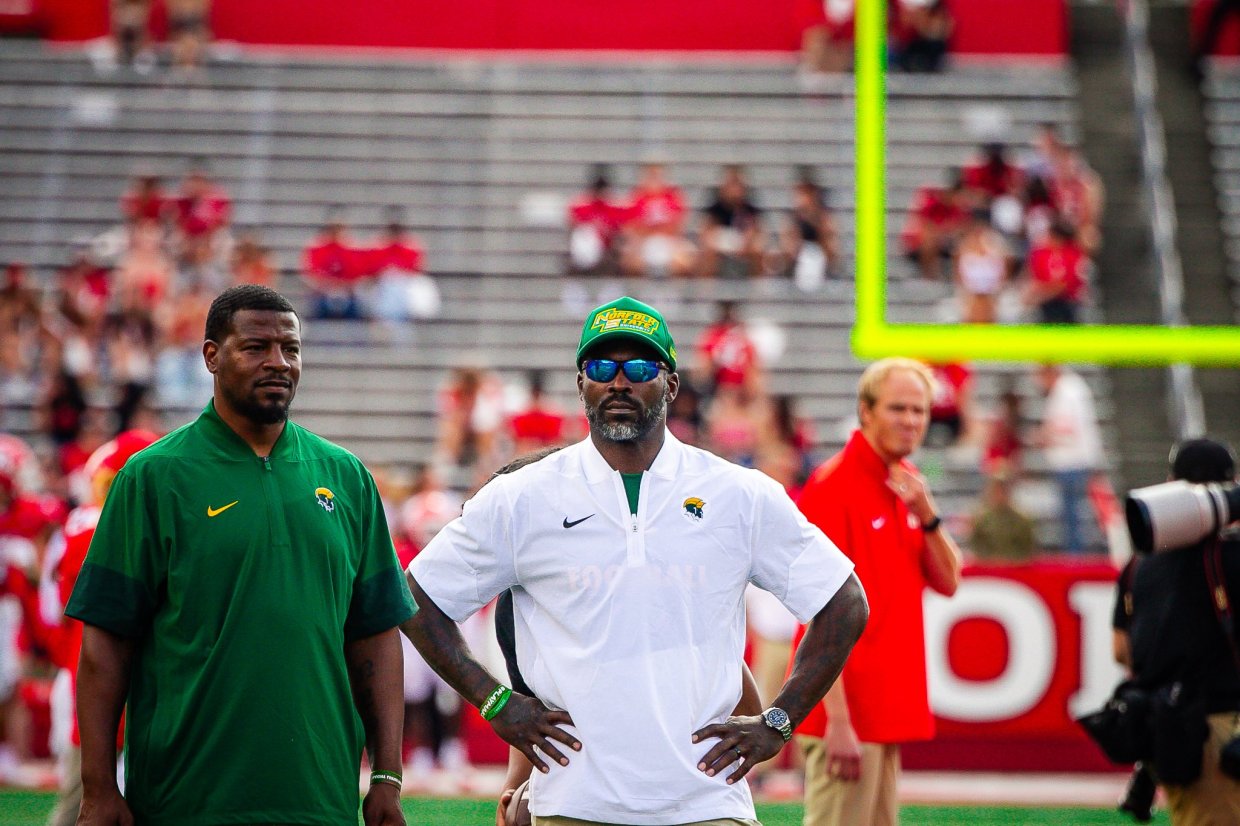
Michael Vick and Norfolk State, fresh off a win over a Division II HBCU rival went on the road Saturday for a high-profile money game against Rutgers. The Spartans were overmatched in a 60-10 loss at SHI Stadium before more than 41,000 fans.
Michael Vick Faces Harsh Reality
For Michael Vick, still in the early stages of his head-coaching career, the game offered a lesson in the steep gap between HBCU programs at the FCS level and Power Five opponents. Norfolk State surrendered two punt return touchdowns in the opening quarter, setting the tone for a long afternoon. Rutgers finished with 563 yards of offense, while the Spartans managed just 220.
Norfolk State’s bright spot came in the third quarter when Kevon King broke free for a 25-yard touchdown run, cutting the margin to 32-10. King led the Spartans with 56 rushing yards, while X’Zavion Evans chipped in 52. Quarterback Otto Kuhns threw for 90 yards but was intercepted once as the Scarlet Knights’ defense dominated throughout.

Why HBCU Programs Play Money Games
The term “money game” reflects the financial agreements behind these matchups. FBS programs, particularly in conferences like the Big Ten, pay FCS opponents large guarantees to play. For many athletic departments—especially at resource-strapped HBCU institutions—these payouts are critical to balancing budgets. They help cover scholarships, staff salaries, and the costs of maintaining multiple sports.
While the competitive balance often results in lopsided scores like Saturday’s, the financial return can be hundreds of thousands or even millions of dollars. Without these deals, many HBCU athletic programs would struggle to sustain themselves.
The HBCU Balancing Act
The tradeoff is complex. Critics of money games argue that exposing HBCU players to physically mismatched opponents risks morale and health. Supporters note that the games provide exposure on national stages, test players against elite talent, and, most importantly, supply the funding needed to keep entire athletic departments running.
For Norfolk State, the 60-10 defeat will sting, but the financial impact of the trip to Rutgers could ripple through the program for months to come. In the ever-shifting landscape of college sports, these contests remain a double-edged sword—one that many HBCU programs cannot afford to put down.