
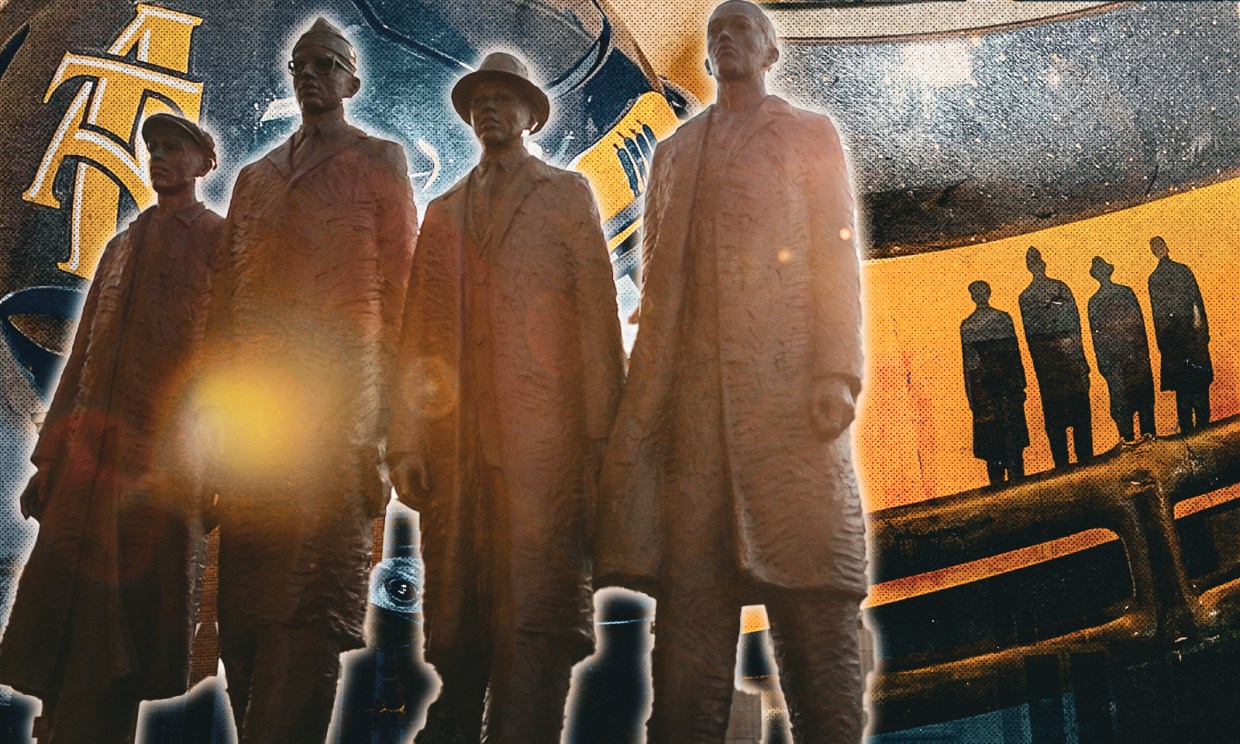
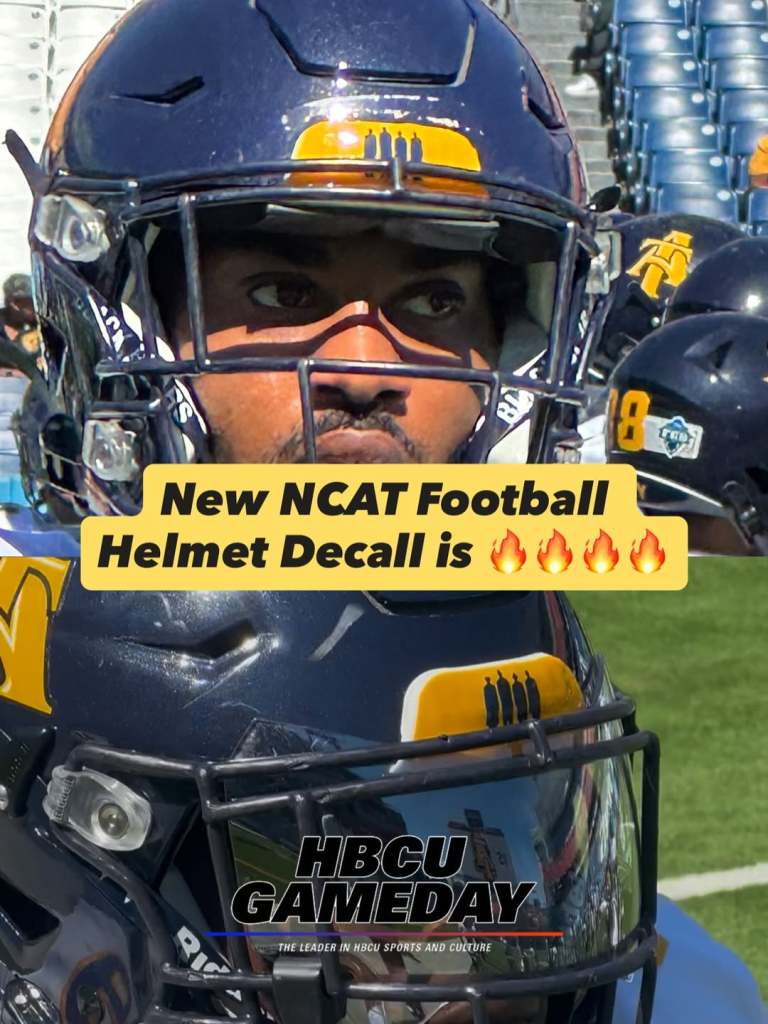
This season, North Carolina A&T (NC A&T) has added more than just a new look to its helmets. The Aggies are wearing a front-bumper decal honoring the A&T Four—freshmen David Richmond, Franklin McCain, Joseph McNeil, and Ezell Blair Jr. (now Jibreel Khazan). Their 1960 sit-in at Greensboro’s F.W. Woolworth lunch counter helped ignite a national Civil Rights movement. The gesture connects HBCU football to a defining chapter of American history and the university’s identity.
A Legacy Worn on the Helmet
NC A&T Head coach Sean Gibbs discussed the decal’s importance at Monday’s press conference, following A&T’s nail-biting loss to Tennessee State in the John Merritt Classic, a showcase steeped in HBCU history. “We wanted to show respect to the A&T Four… honoring the A&T Four would be something that nobody else in the country can have on the front of their helmets because we’re the only ones. So we want to honor their legacy,” he said at the presser.
“The A&T Four were four young freshmen who changed the world. And that’s what I’m trying to get our guys to understand. We’re trying to change this program. And it doesn’t matter what classification you are. You’ve got to step out on faith, go to work, and if we do that, we can change the trajectory of this program,” Gibbs added.
The A&T Four’s story is still central on campus. The February One Monument stands at the heart of the university, depicting the students in bronze as they appeared on the day of the protest. Their decision to remain seated despite being denied service sparked a movement that spread to more than 250 cities within a month. By July 1960, Greensboro’s Woolworth counter was desegregated. Residence halls now bear the names Richmond, McCain, Blair, and McNeil in honor of the moment that became a movement.
Players Embrace the Symbol
For the Aggies, the decal is not simply design. It is responsibility. Linebacker Joshua Isaiah spoke passionately about its meaning after the Tennessee State game. “That decal is just another representation of what we need to do,” he said. “They put the hard work in, the sacrifice for the civil rights movement. So we need to put the hard work and the sacrifice to win games for our school.”
Quarterback Braxton Thomas also weighed in. “It means a lot just knowing the history that not only they bring to this university but the country, just the impact they were able to have and just what it means to be an Aggie and living off of Aggie Pride,” Thomas said. “This staff has done a great job… teaching us the history of A&T, like legends, single-season record holders. It just means a lot too that we have alumni on the staff who have done it, who have been here, who have won Celebration Bowls, and who have just been successful.”
Family Ties to History
The football program’s connection to the movement is personal. Former North Carolina A&T cornerback Franklin “Mac” McCain III—who signed with the Denver Broncos in 2021 and later played for the Philadelphia Eagles—is the grandson of Franklin McCain, one of the original A&T Four. Mac’s journey from A&T to the NFL continues that tradition. His success links modern HBCU football achievement to the courage and determination that helped spark the civil rights movement.
More Than a Decal
Coach Gibbs made it clear that the symbol is not just about history. It is a reestablishment of the standard. “We’re trying to change this program,” he said. “Step out on faith, go to work, and change the trajectory.”
The decal now appears on the front of every Aggie helmet. For players and fans, it reminds them that North Carolina A&T’s story is bigger than football. It is about carrying forward the legacy of four HBCU students who took a seat and, in doing so, stood up for change.