
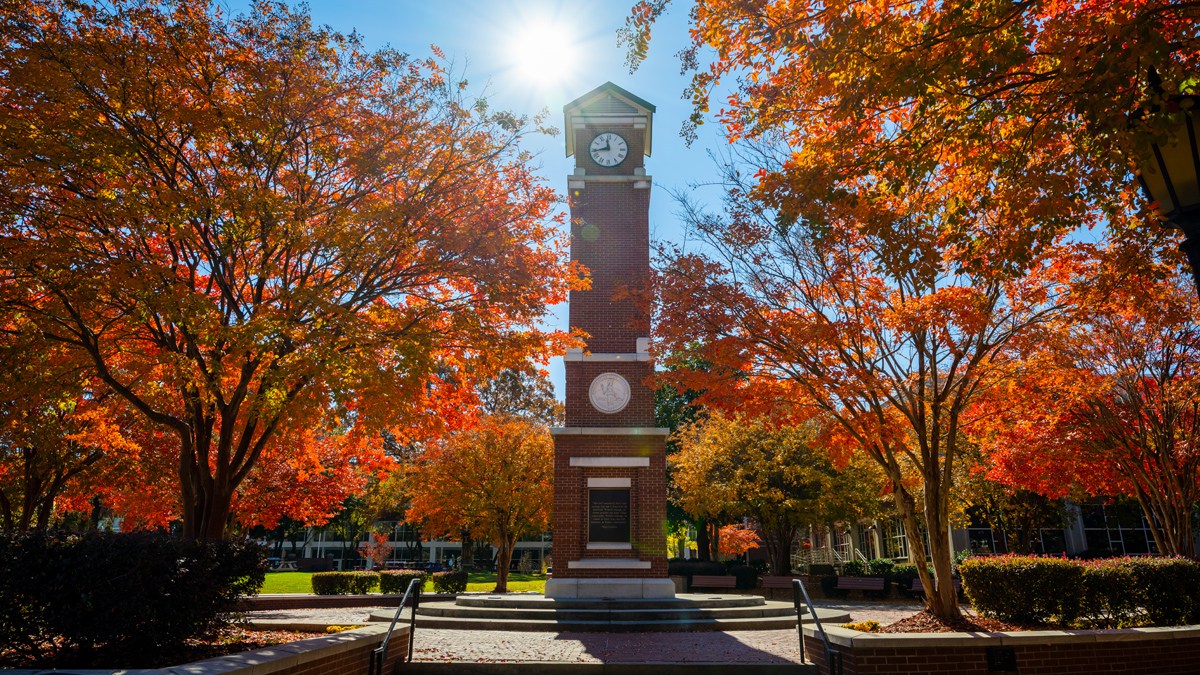
For more than 20 years, I’ve told the stories of tragedies that have struck HBCU communities. On November 7, 2026, I found myself telling that story about my Winston-Salem State University.
As the founder and publisher of HBCU Gameday, I’ve spent years covering the celebrations, accomplishments and challenges of HBCUs.
Unfortunately, that responsibility has increasingly included reporting on violence that has taken lives on or near HBCU campuses. What once seemed like isolated tragedies has become an all-too-familiar part of the news cycle.
Last year, I found myself covering homicides connected to homecoming weekends at institutions including South Carolina State, Alcorn State and Lincoln University of Pennsylvania. At times, it seemed like every weekend brought another tragedy, another family grieving and another HBCU community searching for answers.
Every time I write one of those stories, there’s a somberness that comes with knowing someone’s child isn’t coming home.
But there’s also a degree of professional distance that comes with the responsibility of being a journalist. You have to gather the facts, verify the information and tell the story.
That distance becomes much harder to maintain when the tragedy happens at home.
And Winston-Salem State University is home.
A familiar walk through Winston-Salem State
Saturday started like so many homecoming Saturdays I’ve experienced over the years.
After Winston-Salem State’s football game against Fayetteville State, I made the long, winding walk from Bowman Gray Stadium, across the bridge, along Martin Luther King Jr. Drive and up the hill toward the Donald J. Reaves Student Activities Center.
Eventually, I made my way toward the Breezeway, near the fraternity and sorority plots.
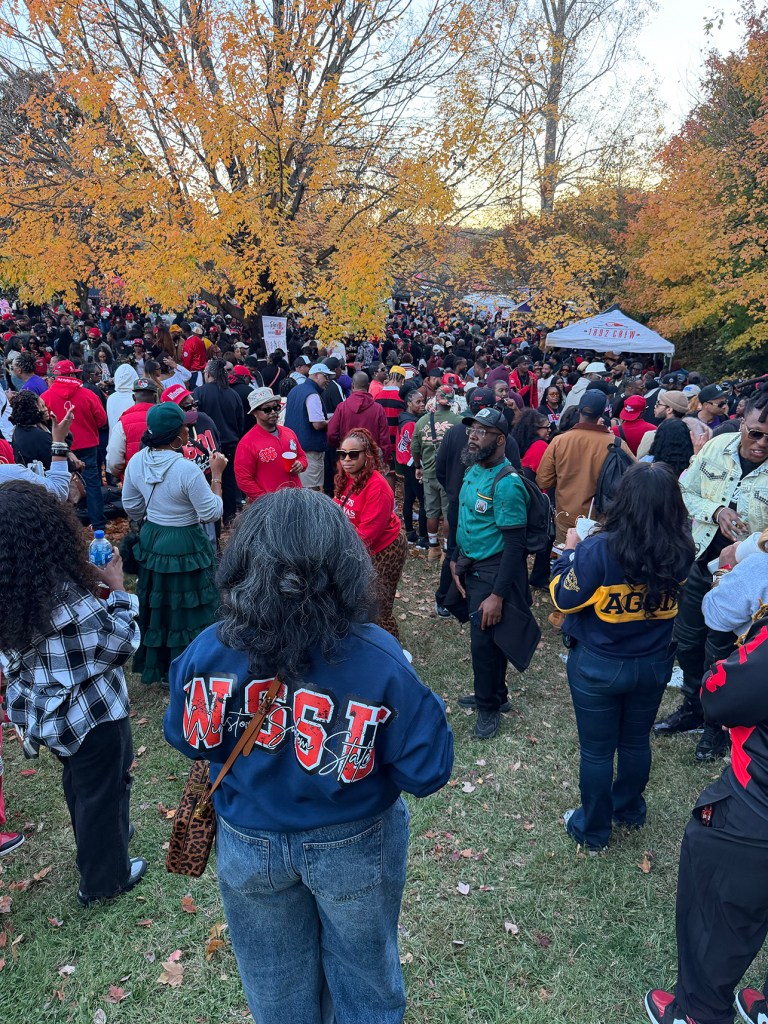
It was a familiar scene. Former classmates, friends and alumni were enjoying the opportunity to reconnect. Some people I hadn’t seen in years. Others I may have seen recently but hadn’t had an opportunity to speak with face-to-face.
That’s one of the beautiful things about HBCU homecoming. Sometimes it’s a long conversation. Sometimes it’s an embrace or simply making eye contact with someone you haven’t seen in a year and acknowledging that you’re both still here. Those moments mean something.
But as Saturday evening progressed, I noticed the atmosphere changing. The crowd grew thicker and noticeably younger. Now, this is a college campus, and I’m 41 years old. Naturally, most students are going to be significantly younger than me. But something else stood out.
I began encountering people asking for directions to buildings that I would expect Winston-Salem State students to know. It became increasingly apparent to me that a substantial number of people gathering on campus were not students.
That concerned me.
Students and alumni have a vested interest in protecting their university. While outsiders can certainly have that same respect, they don’t necessarily share the same relationship or sense of responsibility toward the institution.
I also recognized that the police presence, while visible, was dealing with an enormous number of people.
Winston-Salem State’s geography and infrastructure present challenges. Unlike some HBCU campuses with gates and controlled entry points, WSSU doesn’t have the same ability to easily regulate pedestrian traffic during an event of this magnitude.
At one point, I witnessed people running in response to some type of disturbance. Things eventually settled down, but the experience reinforced a feeling I’d already had. It was time for me to leave.
Around 7:45 p.m., I departed campus, went to dinner with friends and eventually returned home.
I was looking forward to continuing the celebration Sunday, including the Fourth Quarter event organized by WSSU alumnus Oscar Ball to help raise scholarship money for students.
Instead, the weekend took a devastating turn.
Tragedy strikes an HBCU homecoming
Later that evening, reports of a shooting began circulating on social media. As a journalist, I knew better than to immediately repeat information without verification. I waited for confirmation from authorities.
Unfortunately, the reports were true.
Two separate shootings occurred on the Winston-Salem State campus Saturday night. The first, shortly after 9:45 p.m., claimed the life of 19-year-old Peyton Patterson and injured Alyssa Ellerbee. Authorities charged 20-year-old Ziyaire Spinks with murder and other offenses. Another individual, Cequan Brower, was charged with misdemeanor affray.
According to information presented during Monday’s court proceedings, the confrontation allegedly began after a group of young men approached several women seeking their social media information. An argument escalated into a physical confrontation and ultimately gunfire.
Patterson, Spinks and Brower were not Winston-Salem State students.
Less than an hour later, another shooting occurred elsewhere on campus, injuring Najir Pearsall and Makyiah Ward. Ward was identified in reporting as a member of the Winston-Salem State women’s basketball program.
As of Monday, authorities had not announced an arrest in connection with the second shooting. The details of these cases will continue to emerge through the investigative and judicial processes.
But what we already know is devastating enough.
One young man lost his life. Three other people were injured. Countless others witnessed or experienced moments of fear that may remain with them long after the physical evidence has been collected.
And a university community that had spent days celebrating was suddenly grieving.
The complicated reality of being a journalist and an alumnus
Sunday brought another challenge that I deal with frequently, but rarely talk about.
I was simultaneously a journalist responsible for reporting the facts and an alumnus watching my university become the subject of national headlines for something tragic. Those are two very different responsibilities, and sometimes they don’t fit comfortably together.
As a journalist, I have to ask questions. I have to pursue information, even when the answers may be uncomfortable. I have to distinguish between what has been confirmed, what has been alleged and what remains unknown.
As an alumnus, I feel protective of WSSU.
I understand what those four letters mean to the people who attended this university. I understand how much pride we take in our institution and how painful it can be to see its name associated with violence.
The university now finds itself dealing with the consequences of a fatal shooting involving individuals who were not enrolled at Winston-Salem State. That distinction is important, but it doesn’t make the tragedy any less real.
It doesn’t erase what happened on our campus.
And it doesn’t remove the responsibility to examine how something like this can be prevented in the future.
There is no journalism class that can fully prepare you for that kind of professional and personal conflict. Some lessons you learn only through experience. Others you learn through fire.
The questions extend beyond Winston-Salem State
As the investigations continue, there are questions that Winston-Salem State University must answer about campus access, crowd management, security procedures and the safety of students during major events.
Those questions are necessary.
But the questions cannot stop at 601 South Martin Luther King Jr. Drive.
Winston-Salem State University Police and Public Safety played an important role in responding to the events of Saturday night, alongside other law enforcement agencies.
The criminal investigations now involve the Winston-Salem Police Department and the broader criminal justice system.
That means accountability and responsibility extend beyond the university’s boundaries.
Winston-Salem State is the institution that bears the city’s name. We are part of the fabric of Winston-Salem, just as other colleges, universities, neighborhoods and community organizations are.
The city must also examine what role it can play in protecting the people who attend, work at and visit our institution.
What additional coordination is needed between university police and city law enforcement? What resources are necessary during major events that attract thousands of visitors? How can the university, city and surrounding community work together to reduce the likelihood of violence?
And what broader conversations must take place about how easily everyday disagreements can escalate into deadly encounters?
These are not questions for Winston-Salem State alone. They are questions for the city, the courts, law enforcement, community leaders and society as a whole.
We cannot pretend that the problems contributing to gun violence begin or end at the entrance to an HBCU campus. At the same time, recognizing the larger societal problem cannot become an excuse for avoiding difficult conversations about security and prevention.
I’ve heard alumni express that, for the first time, they felt unsafe at Winston-Salem State homecoming.
That’s painful to hear. It’s also something we cannot dismiss. The conversations that follow will be uncomfortable. They will require honesty, accountability and a willingness to examine decisions and policies without immediately becoming defensive.
But those conversations must happen.
And they must continue long after the national headlines fade.
The fragility of peace and the meaning of homecoming
One observation has stayed with me throughout my years covering HBCU homecomings.
Think about the hundreds of thousands of positive interactions that occur across these celebrations. People embrace. Families reunite. Friendships are renewed. Former classmates share stories about their children, careers and lives. Most of those encounters happen without incident.
And yet, one or two negative interactions — often from those with no such affiliation — can change the entire narrative.
That’s how fragile peace can be.
A weekend that was filled with laughter, fellowship and beautiful reunions can suddenly become something else entirely. That’s what happened at Winston-Salem State.
Our homecoming wasn’t perfect, but it was sweet. It brought together people who share an enduring bond with a place that helped shape who we are. And then it ended bitterly.
Students are returning to classrooms carrying the weight of what happened. Some witnessed violence firsthand. Others are processing the knowledge that something so tragic happened in a place where they should feel safe.
Alumni are returning to their everyday lives carrying heavy hearts. Families are dealing with circumstances they never imagined when the weekend began.
And one family is mourning a 19-year-old who will never come home.
That’s the part I cannot get away from. Every year, people attend homecomings without knowing it will be their last. We make plans to see each other next year. We say we’ll catch up later and assume there will be another opportunity. But life doesn’t make those promises.
There is no age requirement for tragedy. No guarantee that the people we embrace today will be here tomorrow.
The events of November 7 were a sobering reminder of the fragility of life and the uncertainty that accompanies every moment we are fortunate enough to experience.
My heart goes out to Peyton Patterson’s family, to the people who were injured, to the students who witnessed these events and to the entire Winston-Salem State community.
My heart also goes out to the alumni who came home to celebrate but left with a sense of heaviness. We have difficult work ahead.
Moving forward
Winston-Salem State must find ways to preserve the traditions, fellowship and openness that make homecoming special while prioritizing the safety of its students, alumni and visitors.
The city and broader community must be part of that work.
And those of us who love this university must be willing to have the difficult conversations necessary to move forward. Because WSSU is more than four letters.
Those letters represent our experiences, relationships, memories and identities. They represent a place we carry with us long after we’ve left campus.
For more than two decades, I’ve reported on HBCU communities facing tragedy. This time, I didn’t have to imagine what it felt like to see an HBCU shaken by violence at homecoming. I felt it first hand and in real time.
And as we move forward, my hope is that we can honor those affected, confront the difficult questions and ensure that future generations can return to Winston-Salem State feeling what an HBCU homecoming is supposed to feel like.
Home.