
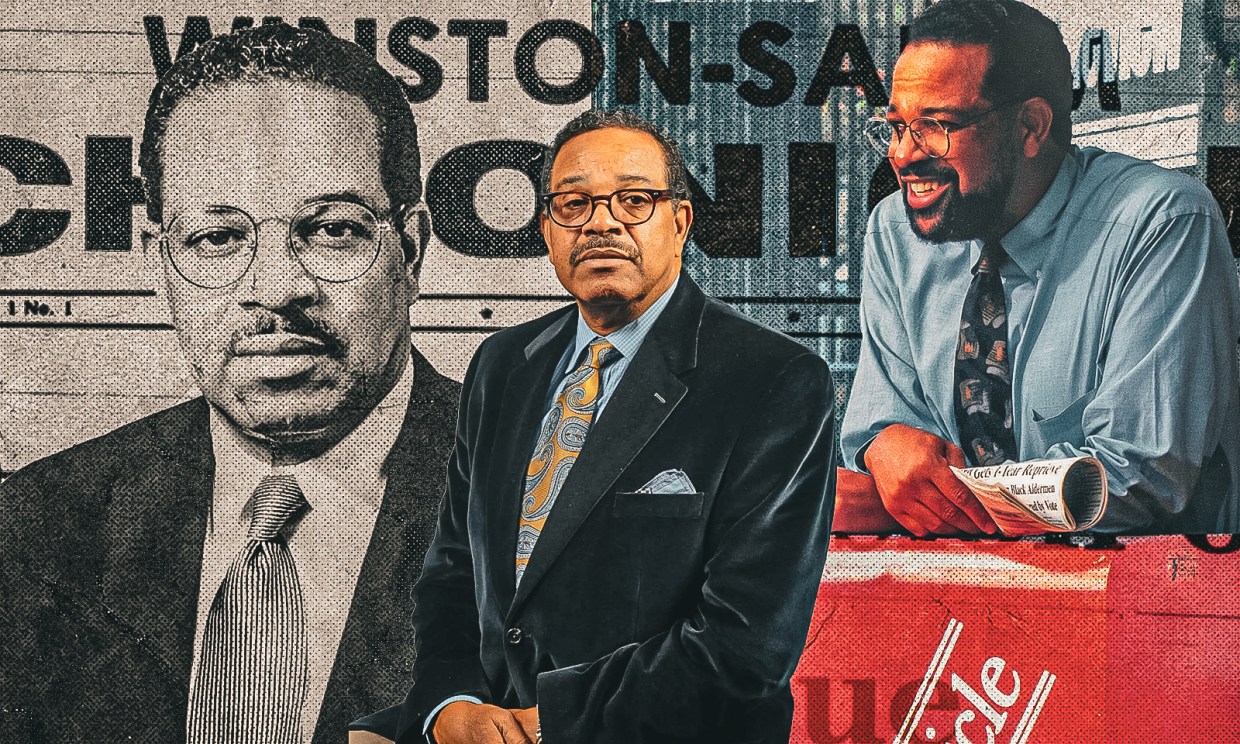
My father built a newspaper that made room for our stories. It took me years—and a journey through filmmaking—to understand how I would carry that work forward.
For the last 10 years, introducing myself at an HBCU football game or the CIAA Tournament has sometimes come with a second introduction.
I’ll tell someone my name. We’ll talk about HBCU Gameday, what we’re covering, or where I’m headed next. Somewhere in the conversation, the connection gets made.
I’m Ernie Pitt’s son.
Then come the stories.
They worked for him. They knew him through The Chronicle. He covered their team, supported their event, or gave them an opportunity. A sideline conversation becomes a trip back to Winston-Salem, back to my childhood, back to a world where being Ernie Pitt’s son was the introduction I was proudest to give.
My father, Ernest Harold “Ernie” Pitt, passed away October 23 at 80 years old.
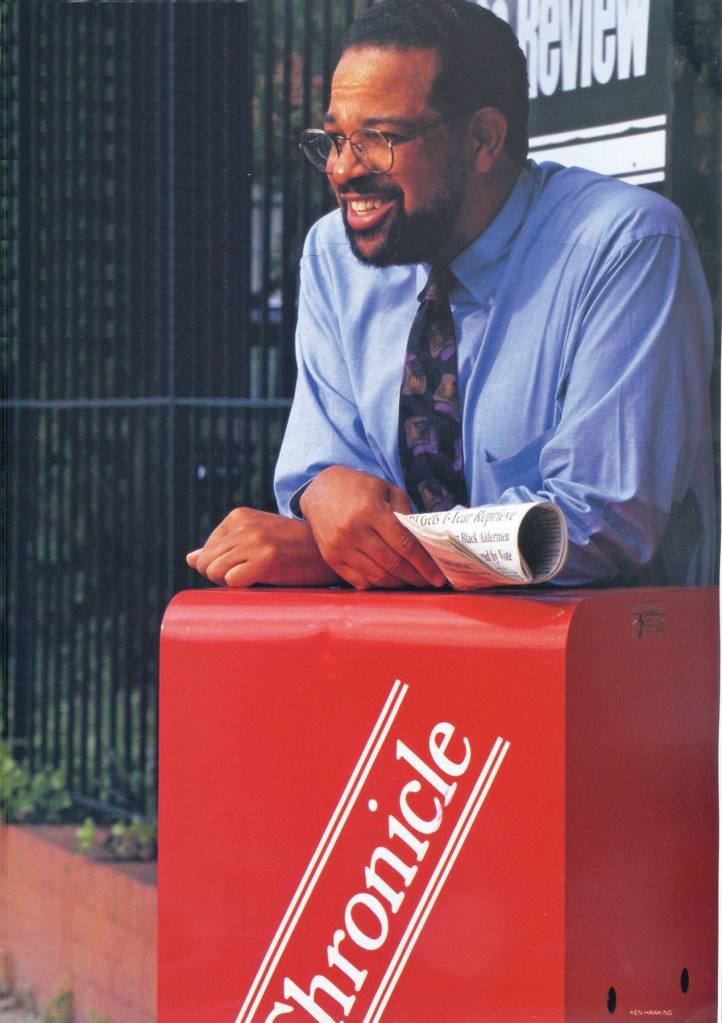
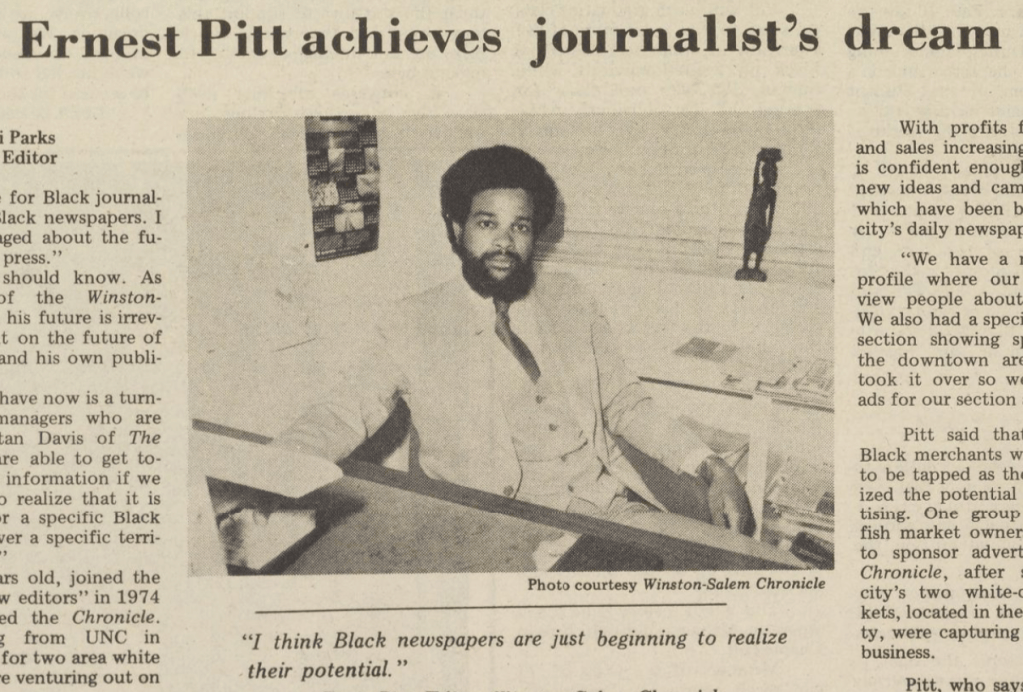
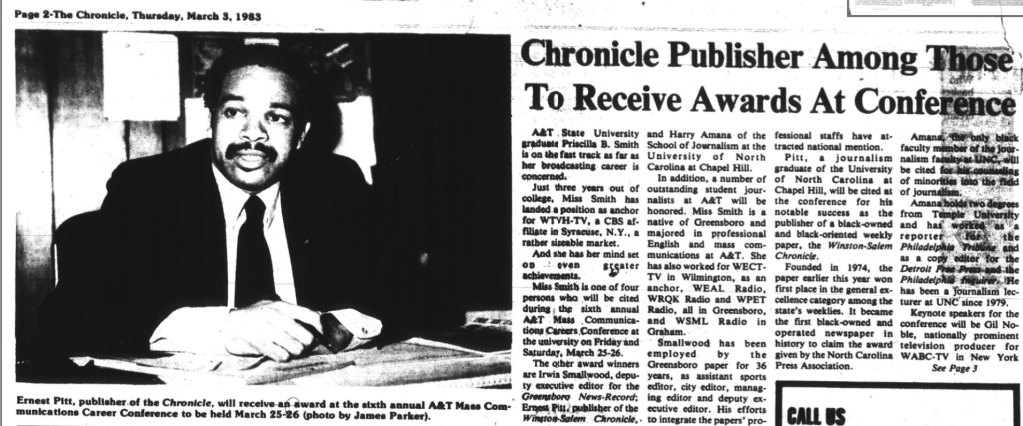
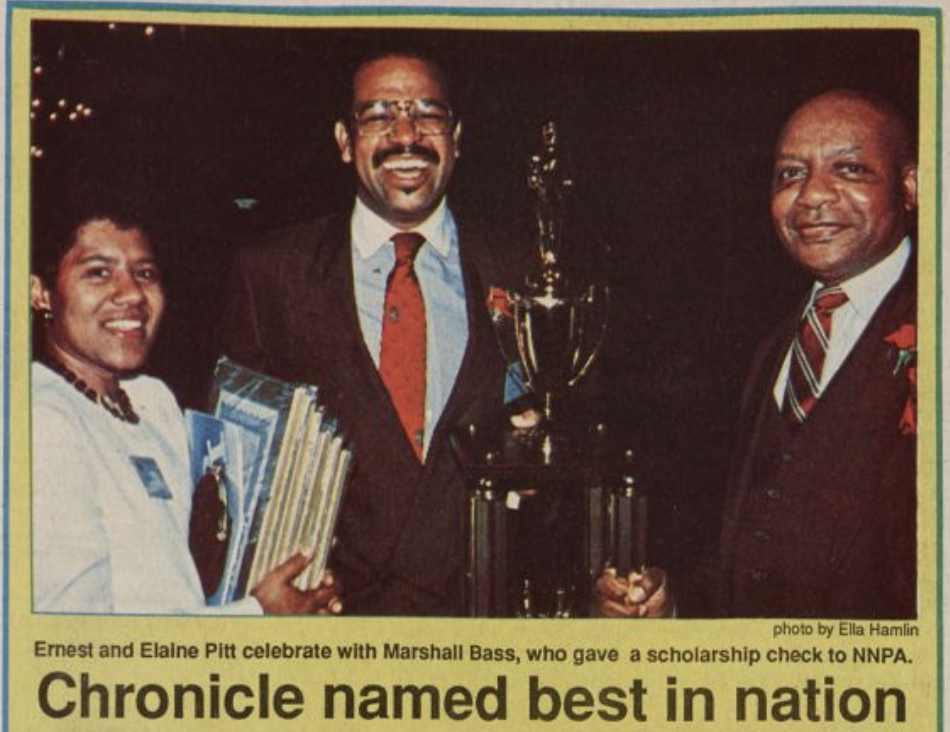
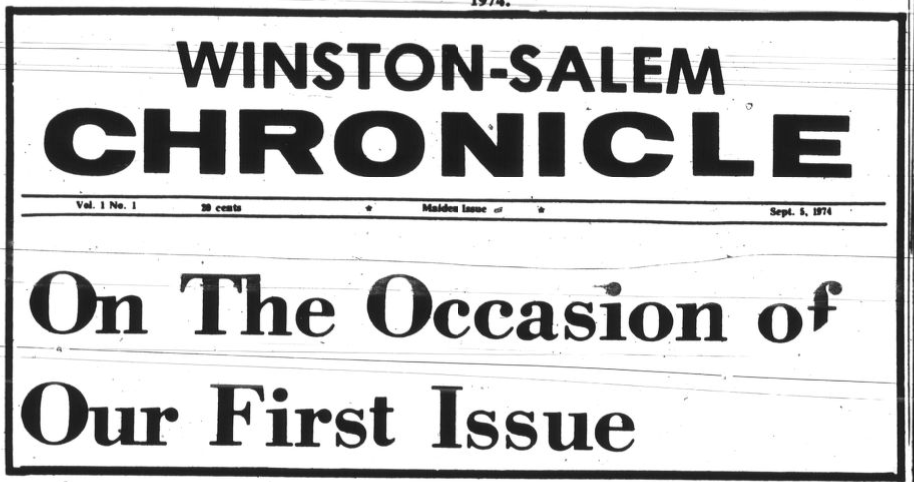
He was a pioneering publisher, a Vietnam veteran, a community leader, and a member of the North Carolina Media & Journalism Hall of Fame. For 43 years, he led The Winston-Salem Chronicle, the Black newspaper he co-founded in 1974.
To me, he was Dad.
Before I understood the scope of what he had built, his newspaper was where I grew up.
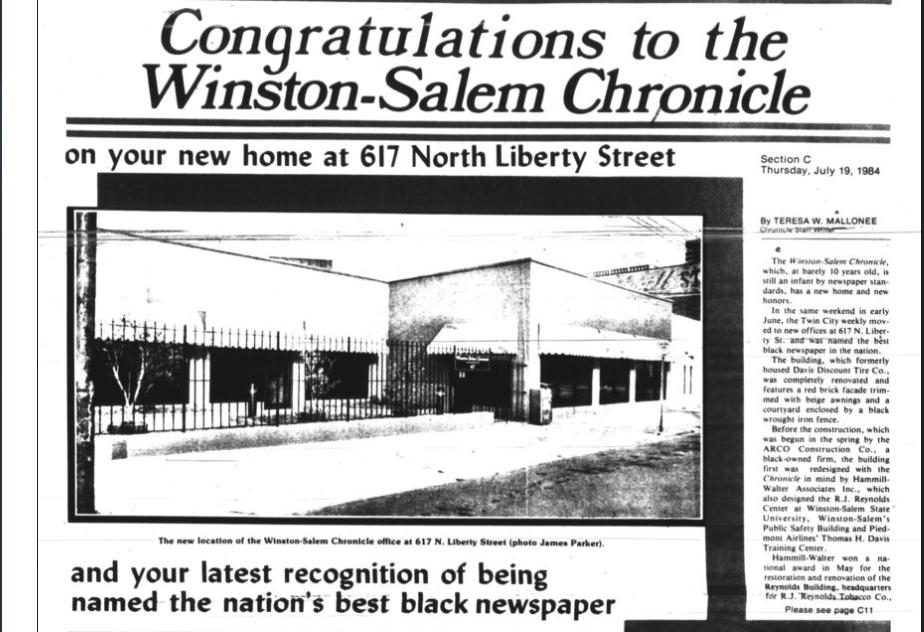
Growing up at 617 North Liberty Street
The Chronicle was our family business in the fullest sense.
Both of my parents worked there full time. My mother, Elaine Lynch Pitt, worked behind the scenes throughout my father’s career, helping build and sustain the newspaper. Their work shaped our family’s rhythms.
I spent my childhood in and around the conference room at 617 North Liberty Street in Winston-Salem. Downstairs, a dark, dungeon-like basement housed an industrial printing press.
That was part of my childhood playground.
I grew up around the machinery that turned the work happening upstairs into something people could hold. I read newspapers with the ink still wet. Long before I understood publishing as a profession, I knew what a newspaper looked like before it reached somebody’s doorstep.
Eventually, I helped get it there.
I was one of the early kids in The Chronicle’s youth hawker program, selling newspapers and earning a percentage of the day’s sales. We were learning how to approach people, handle money, and take responsibility for what we earned.
At the time, I understood it as a way to make some money.
Looking back, I can see my father giving us an early education in ownership. He built a business around serving his community, and he made room for young people to learn from it.
HBCU sports were woven through that world, too.
My first courtside assignment did not go well
Growing up in Winston-Salem in the 1990s, the CIAA Tournament felt like an entire season of its own.
There was the basketball, of course. But there were also the vendors, the step shows, and the feeling that everybody had somewhere to be and somebody to see.
One year, when I was about 10 or 11, I got to be a ball boy.
For a kid who loved basketball, getting stationed under the basket at the CIAA Tournament was about as good as it could get. My assignment was simple: When a player fell, wipe the sweat off the floor.
Unfortunately, I was much better at watching basketball than at doing my job.
I cheered the three-pointers. Jumped at the dunks. I got so caught up in the game that I forgot I had a job until somebody yelled, “PITT!”
I ran onto the court, wiped the wettest-looking spot I could find, and hurried back, hoping nobody had noticed that I had no idea where the player had fallen.
The referee noticed.
He took my towel and cleaned the correct spot himself. The kid beside me got promoted to sweat duty.
My ball-boy career was over.
In 2016, I wrote about returning to the tournament with a camera, getting another chance to work courtside.
This time, the assignment was to pay close attention to the basketball.
The summer I thought I was leaving the family business
There was a time when I thought pursuing my own career meant stepping away from my father’s.
In the summer of 2006, after my sophomore year studying mass communication at North Carolina Central University, Dad sent me to Tallahassee for an eight-week reporting internship at the Capitol Outlook.
Its publisher, Roosevelt Wilson, also had a connection to The Chronicle. Years earlier, he had chosen my father’s newspaper for a fellowship. He later returned to Florida and, with his wife, bought the Capitol Outlook.
Now my father was sending his son to learn from him.
The surroundings felt familiar immediately: a Black-owned weekly newspaper where the staff and the family were often the same people. Mr. Wilson welcomed me with humor and encouragement. His sons, Van and Vaughn, talked football with me. His wife, Cather, made sure I knew where to eat.
But I was struggling with the work.
I grew up writing community newspaper stories. By then, I could turn in a short article about a school opening or neighborhood event without much trouble. What I couldn’t figure out was whether that was the life I wanted.
Exit Interview
During my exit interview, Mr. Wilson saw through it.
“I don’t think you really like doing this,” he told me. “What do you really want to do?”
I told him I wanted to go to film school. I also told him I worried that choosing something else would let my father down.
His answer changed my life.
“Do your thing, your pops will understand.”
Before leaving Tallahassee, I had transferred to Cape Fear Community College’s Film and Video Production program.
I wrote about that conversation after Mr. Wilson passed away in 2018. What stays with me now is that a relationship my father had built gave me the freedom to find my own direction.
Even my departure from the newspaper business happened through the community he had helped create.
The idea that brought me home
After five years working in the film industry in Wilmington, North Carolina, I started thinking about something my father had published years earlier.
The Black College Sports Review.
In the late 1970s and 1980s, The Chronicle published a national sports insert devoted to Black college athletics. Distributed through Black newspapers nationwide, it brought HBCU sports to readers far beyond Winston-Salem.
Dad had understood the value of those stories long before I picked up a camera.
I wanted to bring that idea back through video—to combine the HBCU sports I grew up loving with the filmmaking I went away to learn.
When I talked to him about it, he said it reminded him of a recent conversation with Tolly Carr.
He connected the dots.
In 2016, I connected with HBCU Gameday and began finding my place in sports media.
What followed has been 10 years of walking in my father’s footsteps in my own way.
I had spent years wondering whether choosing film meant leaving his work behind. Once I started filming HBCU games, interviewing players and telling stories from these campuses, the connection became clear.
The tools were different. The communities were familiar. So was the belief that their stories deserved our time and attention.
A familiar face on the sideline
During my first season with HBCU Gameday, I was covering Florida A&M against Coastal Carolina when I spotted someone familiar.
It was Vaughn Wilson.
We looked at each other for a moment, each trying to place the other. Then we made the connection: Tallahassee. The Capitol Outlook. That summer in 2006.
The son of the man who encouraged me to pursue filmmaking was standing across from me while I was putting that advice to work.
Vaughn later became my colleague at HBCU Gameday.
Our fathers’ relationship had brought me to his family’s newspaper. Years later, our work brought us together again.
That is one of the things I want people to understand about my father’s legacy. It lives in a newspaper and its archives, but it also lives in relationships that keep creating opportunities long after the original introduction.
I’ve been fortunate enough to experience that over and over.
Carrying it forward, brick by brick
Recently, my documentary series Brick x Brick, following Johnson C. Smith University football, has been picked up for global distribution and is now available on Tubi and Prime Video.
I’m proud of that accomplishment as a filmmaker. In the days since losing my father, I’ve also been thinking about where the work began.
I grew up watching him build a way for stories about our community to reach people. The Black College Sports Review carried HBCU athletics into newspapers across the country. Today, I get to bring viewers inside an HBCU football program through a documentary series they can watch at home.
There is a direct line between those efforts.
I can trace it through the basement at The Chronicle, the papers I sold as a kid, a summer internship in Tallahassee, film school in Wilmington, and a conversation with Dad that led me to HBCU Gameday.
He gave me a place to begin. The people around him helped me find my way. He also connected me to the work where those parts of my life finally came together.
I’ll miss so much beyond the career lessons: time with him, his humor, healthy debate, and the chance to tell him what I’m working on next.
He loved his children, his grandchildren, and journalism.
He gave us a great life.
When I walk onto the next sideline, I’ll be carrying all of that with me.
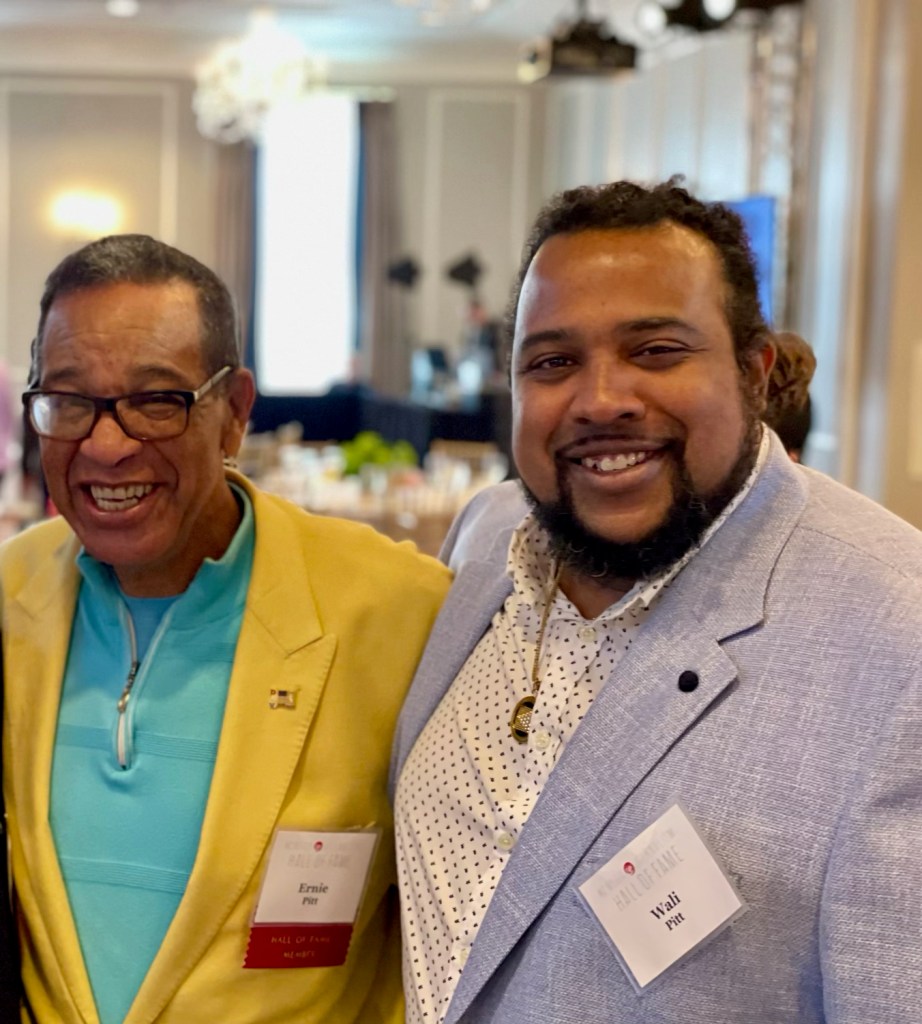
My name is Wali Pitt.
I’m Ernie Pitt’s son.
I always will be.