
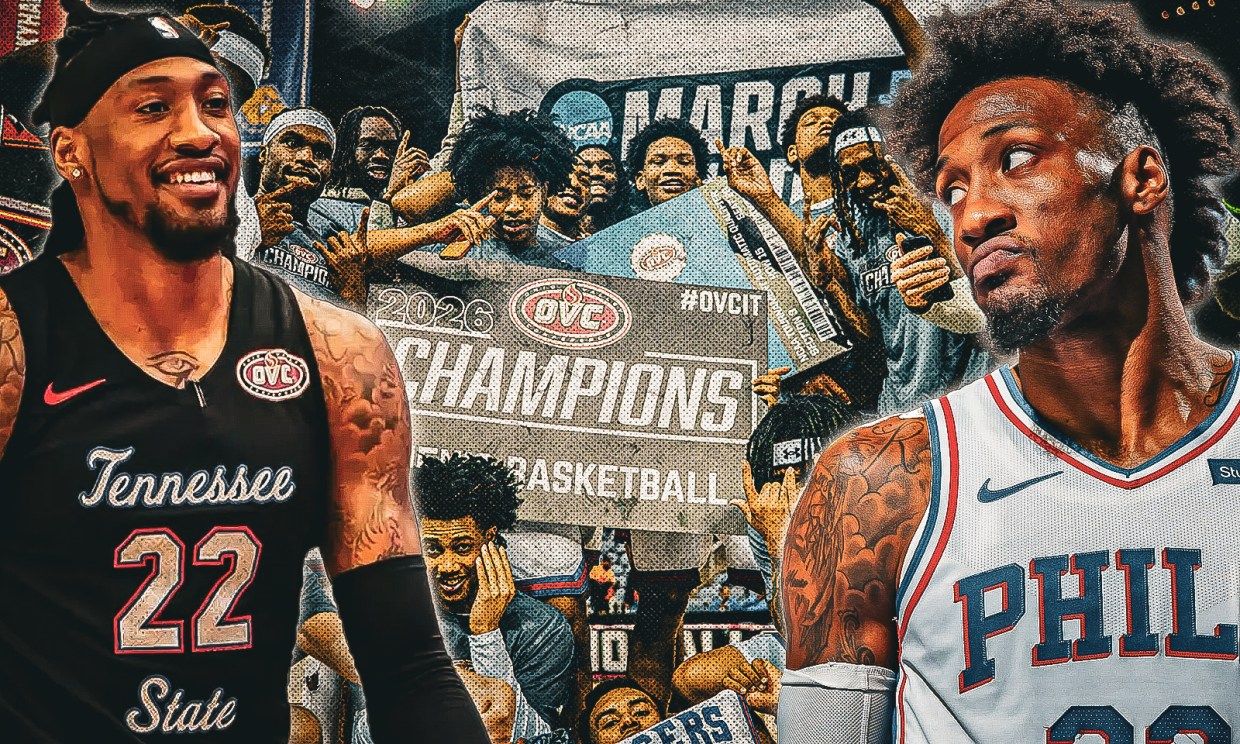
Robert Covington’s relationship with Tennessee State University has already taken him from an overlooked high school prospect to a decorated NBA career—and from alumnus to one of the largest donors in the history of the HBCU basketball program.
Now the former NBA standout is coming all the way home.
Tennessee State announced that Covington has joined head coach Nolan Smith’s staff as the program’s new Chief Basketball Officer. The position will place the TSU Athletics Hall of Famer at the center of player relations, team activities, and campus and community engagement.
But the move is bigger than another famous name joining a college basketball staff.
Covington is the latest former NBA player to accept a specialized leadership position inside an HBCU basketball program, joining a growing list that includes Kendrick Perkins at Jackson State, Monta Ellis at Alcorn State and John Wall at Howard.
In an era shaped by NIL, the transfer portal, and the constant fight for visibility, HBCUs are finding new ways to turn professional basketball experience into institutional access.
Covington may be one of the most natural fits yet.
Robert Covington comes home to Tennessee State
Covington played at Tennessee State from 2009 through 2013, developing from an unranked prospect out of Proviso West High School near Chicago into one of the most accomplished players in program history.
The versatile forward appeared in 118 games and made 112 starts for the Tigers, averaging 14.8 points, 7.4 rebounds, 1.5 steals, and 1.3 blocks. He was a three-time All-Ohio Valley Conference selection, a two-time BOXTOROW HBCU All-American and the CollegeInsider.com OVC co-MVP following his breakout junior season.
Covington finished his TSU career with 1,749 points and 875 rebounds before going undrafted in the 2013 NBA Draft.
What followed became one of the modern era’s great HBCU-to-NBA development stories.
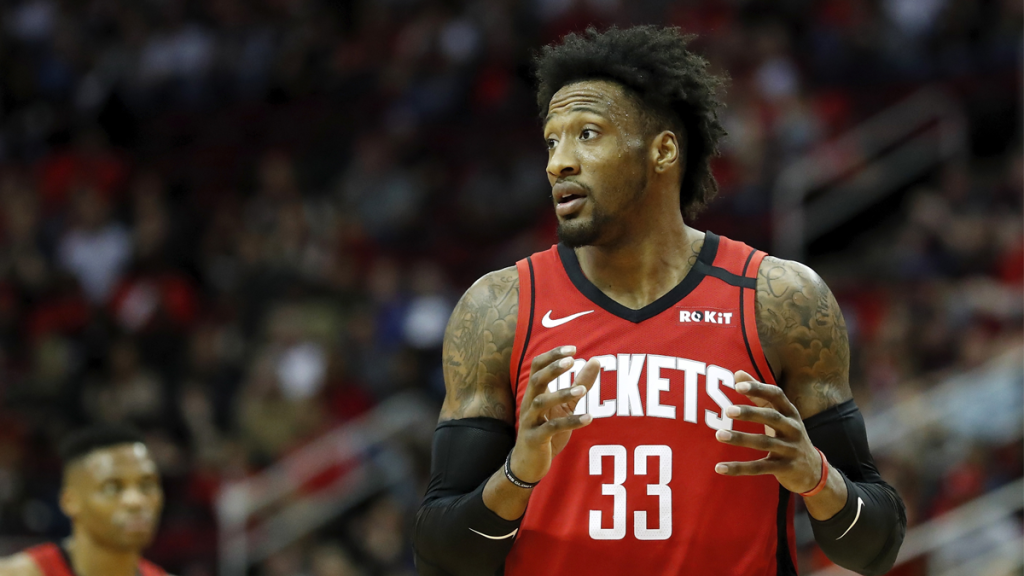
Covington fought his way into the league through the NBA Development League, earning Rookie of the Year and All-Star Game MVP honors with the Rio Grande Valley Vipers. He eventually established himself as one of the NBA’s premier defensive wings, playing 614 regular-season games and earning NBA All-Defensive First Team honors in 2018.
His professional journey included stops with the Houston Rockets, Philadelphia 76ers, Minnesota Timberwolves, Portland Trail Blazers and Los Angeles Clippers.
Long before accepting a formal position at TSU, however, Covington had already invested in the place that helped launch his career.
In 2020, he made a major financial commitment toward the construction of the Covington Pavilion, a basketball practice facility designed to serve both the Tennessee State men’s and women’s programs. His latest move brings more than his money or name recognition back to Nashville. It brings his daily presence.
“I bleed TSU, and I always have,” Covington said in the university’s announcement. “This is bigger than basketball. This is about TSU, our people and our program, and building something special that lasts.”
Nolan Smith adds another powerful connection
As Chief Basketball Officer, Covington will assist with the professional, social and personal development of Tennessee State’s student-athletes. He will also serve as a liaison between the program, its players and their families while working with basketball operations and external relations to develop strategic partnerships.
That makes the position different from the general manager roles being created elsewhere in HBCU basketball.
Covington is not being presented strictly as a roster builder or transfer portal evaluator. Tennessee State is positioning him as a connector between its players, campus, community, and the professional basketball world.
It is a role built around relationships—which begins with the one Covington has developed with Smith.
“Rob Covington is a major pillar in TSU basketball history and HBCU basketball history,” Smith said. “He will wear many hats and will be an important part of where we are going.”
Smith added that Covington had “become family” during his first year in Nashville.
The partnership gives Tennessee State two different basketball journeys under one roof. Smith was a celebrated Duke guard, national champion and first-round NBA Draft pick before moving into coaching at Duke and Louisville. Covington was overlooked, developed at an HBCU, went undrafted and built a long professional career through persistence and elite defensive work.
Together, they can speak to almost every version of the modern player’s journey.


NBA veterans are finding a new lane at HBCUs
Covington’s appointment also adds more evidence that a new HBCU basketball model is beginning to take shape.
Jackson State started drawing attention to that model in June when it added NBA champion and ESPN analyst Kendrick Perkins as the volunteer general manager of its men’s basketball program. Perkins was brought in to assist with fundraising and use his relationships and visibility to create opportunities around the program.
In August, Alcorn State hired former NBA guard Monta Ellis as its general manager. Ellis’ responsibilities include roster construction, player evaluation, recruiting strategy, transfer portal decisions, NIL opportunities, and relationships with alumni and donors.
Howard University has taken a similar approach with former Washington Wizards star John Wall, who serves as its President of Basketball Operations. Wall has described the role as a hands-on opportunity to study film, evaluate players, participate in personnel conversations, and learn the financial side of roster construction in the NIL era.
The titles and responsibilities are not identical. The idea behind them is.
HBCU basketball programs are finding ways to involve former professional players without requiring them to become traditional coaches.
Those veterans can mentor players, evaluate talent, raise money, cultivate donors, build NIL opportunities, and enter rooms that may be difficult for an under-resourced athletic department to reach on its own.
Their names attract attention. Their experience can create substance behind it.
More than a ceremonial title
The rise of these positions comes at a time when college basketball programs must manage responsibilities that once existed almost exclusively at the professional level.
Coaches are no longer merely recruiting high school players and preparing teams for games. Programs must constantly evaluate the transfer portal, help build NIL resources, retain current players, cultivate corporate partners, and manage rosters that can change dramatically from one season to the next.
That requires more infrastructure.
Power conference programs can answer that challenge by expanding staffs and increasing budgets. HBCUs must often find more creative ways to build their own basketball operations.
Former NBA players can become part of that solution, but the value has to extend beyond an introductory press conference. The real measure will be whether their relationships produce stronger recruiting, better player development, new partnerships and a more complete student-athlete experience.
Covington enters that challenge with something particularly valuable: an existing record of investment.
He did not discover Tennessee State after becoming an NBA player. Tennessee State helped him become one.
He has already put his resources behind the program. Now he is putting his experience, relationships and time behind it as well.
That makes his return more than another high-profile HBCU basketball hire.
It is the latest sign that former NBA players are beginning to see Black college basketball not merely as a place to give back—but as a place to build the next chapter of their careers.