
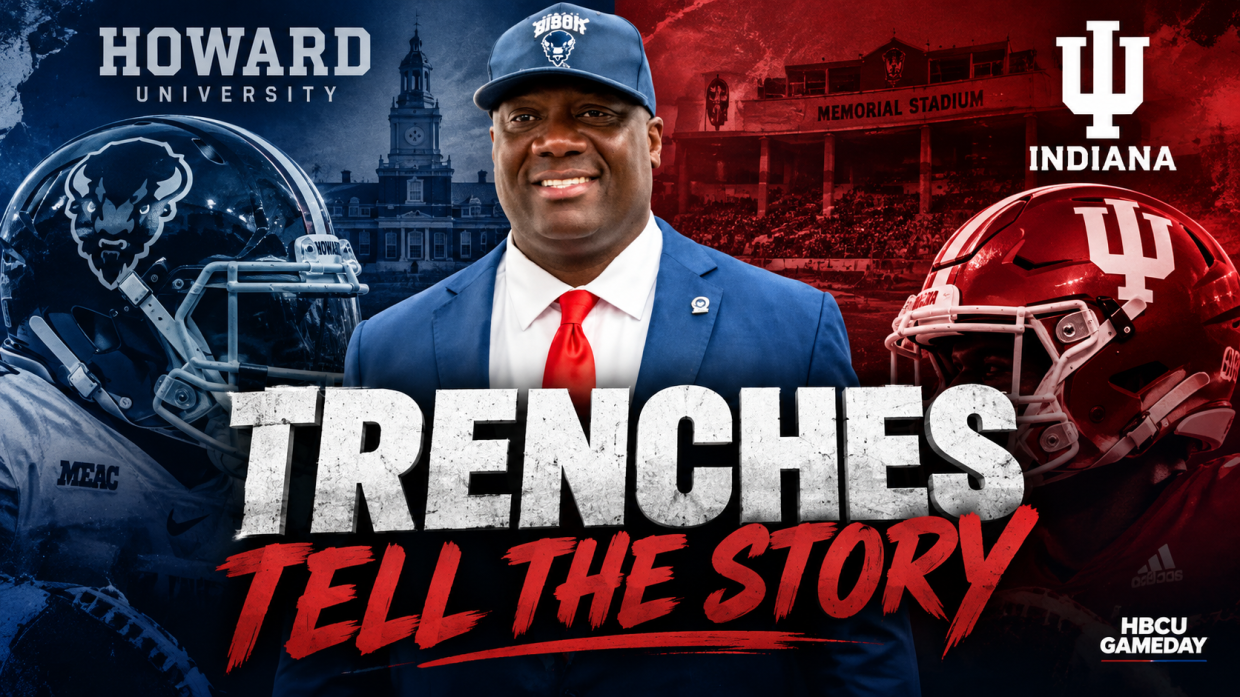
Howard University is preparing to play the defending national champion, but Ted White sees a bigger HBCU football conversation inside Saturday’s trip to Indiana. When White was asked about the personnel difference between HBCU football and Power Four programs during this week’s MEAC coaches call, the Howard head coach did not start with quarterbacks, receivers or defensive backs. He went directly to the line of scrimmage and the depth available behind the starters.
For White, that is where the separation becomes most noticeable. Power Four programs can have multiple capable players ready at the same position, while an HBCU football program may have one proven option and another player still developing behind him. That makes Indiana an interesting measuring stick for a Howard team still developing under its first-year head coach.
Ted White sees the biggest HBCU football gap up front
“Absolutely. It’s a big difference,” White said during the MEAC coaches call when asked specifically about the line of scrimmage. His explanation went deeper than simply saying Power Four players are better. White focused on the number of players a program can trust when substitutions, injuries or fatigue force coaches deeper into the roster.
White said a Power Four team can have three capable players available at a position, while an HBCU program may have one and possibly two. That difference affects how coaches rotate defensive linemen, replace injured starters and maintain their level of play late in games. Having a talented starting lineup helps, but four quarters can expose what exists behind it.
Howard has already encountered that problem this season. White said the Bison played without a starting offensive tackle against Richmond and had to use multiple linemen without much playing experience. The Bison responded by using unbalanced formations and other adjustments while searching for ways to establish the running game.
That challenge came one week after Howard opened White’s tenure with a 31-24 victory over Alabama A&M. Howard produced an 83-yard fourth-quarter touchdown drive after surrendering the lead in Atlanta. The response offered an early look at the composure White wants his program to develop, but Indiana presents a considerably different personnel test.
Howard’s skill talent changes the conversation
White does not believe the personnel difference looks the same everywhere on the field. “From a skill standpoint, I wouldn’t say it’s different at all,” White said during the MEAC coaches call. That distinction provides the most interesting part of his assessment because it separates athletic talent from overall roster depth.
HBCU football programs can have receivers, running backs and defensive backs with the size, speed and athleticism to compete against Power Four players. White believes those matchups can be much closer than the broader perception of the two levels suggests. The more difficult roster-building problem comes closer to the football, where finding one quality lineman is different from having several prepared to play.
Howard has shown a willingness to look beyond traditional recruiting paths while building its roster. The program has international players contributing to Howard’s broader recruiting footprint, giving the Bison another avenue for finding size and athletic ability. Developing enough