
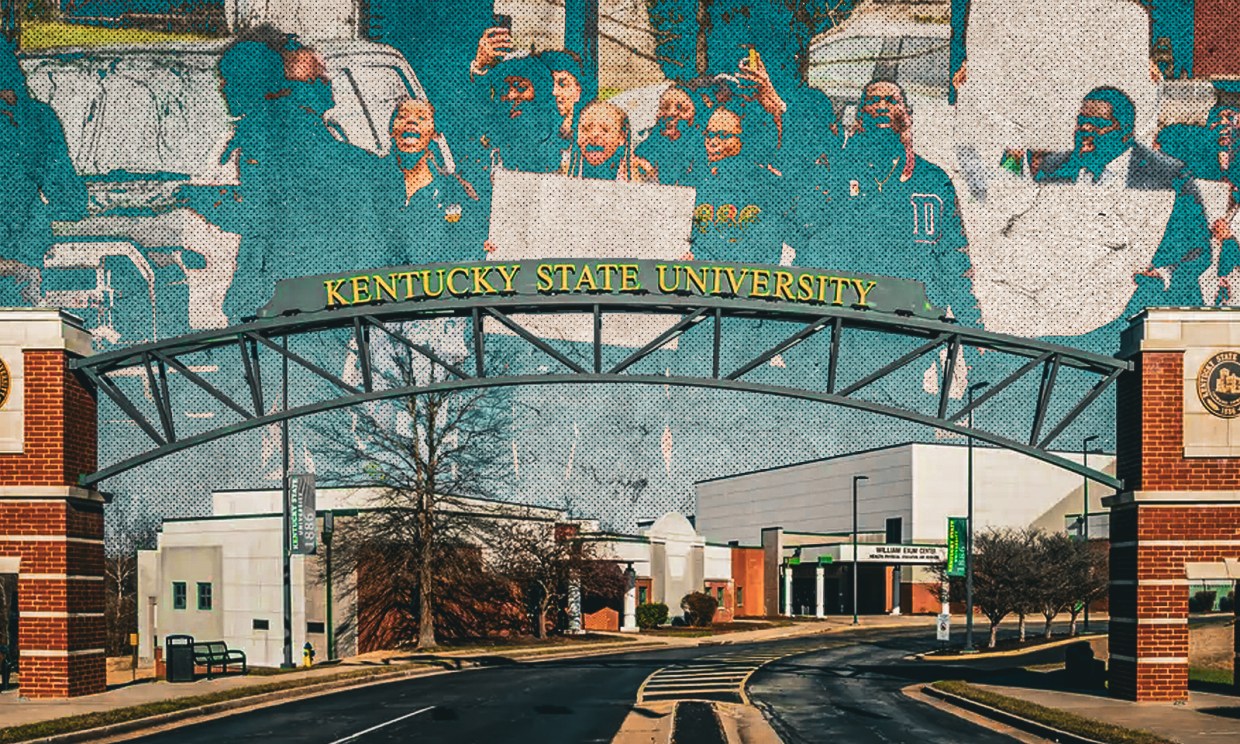
A unanimous vote on Senate Bill 185 just changed the direction of a historic HBCU.
Kentucky State University is no longer on the brink of closure.
Instead, lawmakers are redefining it.
This week, the Kentucky Senate approved Senate Bill 185 in a unanimous 38-0 vote. As a result, the plan would transition the state’s only public HBCU into a polytechnic institution over the next five years. Now, the legislation moves to the House.
Lawmakers describe the move as a lifeline.
However, on campus—and beyond—it is sparking a different conversation.
A Plan Built on Survival
At its core, the bill presents a clear choice: Kentucky State must change to survive.
According to reporting from McKenna Horsley of the Kentucky Lantern, lawmakers had privately discussed closing the HBCU, but they ultimately chose this proposal as an alternative path forward.
“This was not the time to close Kentucky State, but rather to be a partner in the redefinition of this institution,” Sen. Chris McDaniel said on the Senate floor.
That redefinition reaches nearly every part of the university.
First, the bill shifts Kentucky State toward a polytechnic, workforce-driven model centered on technical and applied learning.
Next, it limits the university to 10 in-person academic programs. As a result, many traditional liberal arts offerings would move online.
In addition, the legislation triggers a five-year financial exigency. During that time, leadership could cut staff—including tenured faculty—while reducing in-person enrollment to 1,000 students.
At the same time, admission standards would rise to a 2.5 GPA and an ACT score of 18. Meanwhile, stricter rules would apply to students with unpaid balances.
Supporters argue these changes are necessary. They point to years of financial strain, leadership turnover, and campus safety concerns.
For that reason, lawmakers frame the plan as an investment—not a shutdown.
“We are putting an investment into the university, calculated for it to obtain success,” said Sen. Gerald Neal, a Kentucky State alumnus, in comments reported by Horsley.
The University’s Vision: Evolution, Not Erasure
Kentucky State President Dr. Koffi Akakpo supports the shift. He frames it as part of a longer institutional arc.
In a letter to the campus community, Akakpo described the transition as a continuation—not a break—from the university’s identity.
“A polytechnic focus… pairs strong academics with hands-on and applied learning,” he wrote. “This moment should be understood not as a break from who we are, but as another chapter in who we are becoming.”
He also pointed to existing strengths in agriculture, STEM, and research. In addition, he highlighted growth in fields like cybersecurity, artificial intelligence, and geospatial technology.
From that perspective, the move is not a reinvention.
Instead, it is a realignment.
The Pushback: “Don’t Destroy Our HBCU”
Still, not everyone agrees.
Within hours of the Senate vote, students and supporters marched to the state Capitol. Many held signs reading “Don’t destroy our HBCU” and “Education should empower, not stress.”
For many, the concern goes beyond academics.
Instead, it centers on identity.
“It is going to take away a culture that people for past times built here at KSU,” student Michael Bowden said to WKYT during the protest.
At the same time, alumni have raised similar concerns.
Another Kentucky State graduate told WKYT that evolution should not come at the expense of the university’s foundation.
“When you evolve, you enhance and grow,” he said. “The concern is that we may preserve the university but redefine what it is in the process.”
The Core Tension: Preservation vs. Transformation
At the center of the debate is a broader question.
What does it mean to “save” an HBCU?
On one hand, supporters argue that aligning Kentucky State with workforce needs strengthens its future. In particular, they point to technical education and applied learning as key advantages.
On the other hand, critics see a different outcome. They argue that limiting programs, shifting liberal arts online, and reducing faculty could reshape the HBCU experience.
That experience includes close faculty mentorship, broad-based education, and an access-driven mission.
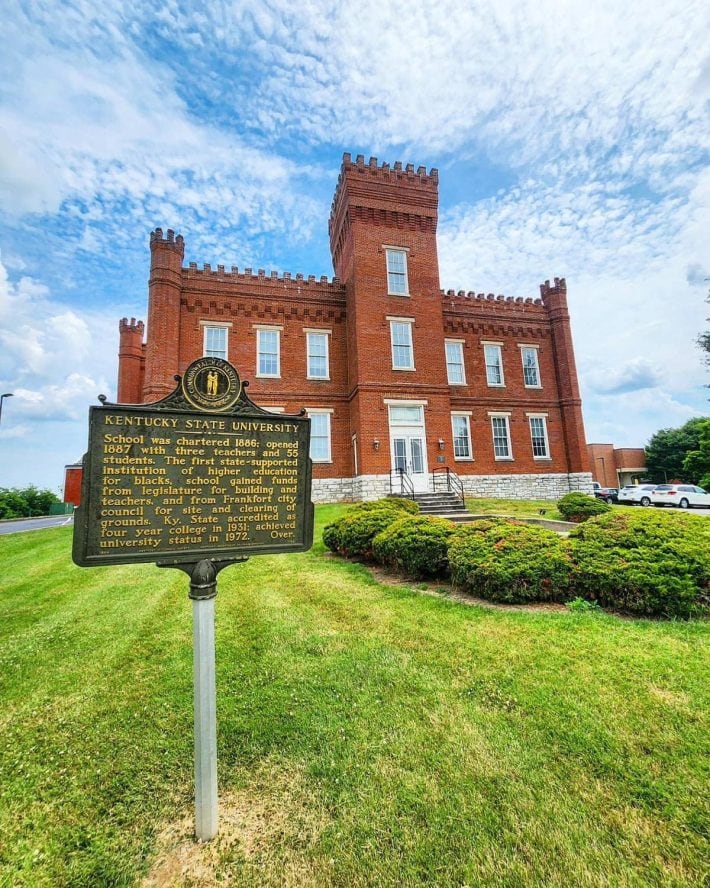
Kentucky State was founded in 1886.
Because of that history, many believe its identity is not flexible.
Instead, they see it as foundational.
A New Model for HBCUs—or a Warning Sign?
The impact of this transition could extend far beyond Frankfort.
If the plan succeeds, Kentucky State could serve as a model for how smaller HBCUs adapt to financial pressures and workforce demands.
If it falls short, however, it may raise deeper questions. Specifically, it could force a conversation about how much change an institution can absorb before it becomes something else.
For now, lawmakers maintain that the goal is preservation.
Meanwhile, students and alumni continue to question what that preservation looks like.
What Happens Next
Now, Senate Bill 185 moves to the Kentucky House.
If lawmakers approve it, the transition would begin in the 2026–27 academic year.
Until then, Kentucky State remains in a rare position.
It is not closing.
It is not staying the same.
And at this point, its future is still taking shape.
Closing Line
For now, the question is not whether Kentucky State will change.
Instead, it is what that change will ultimately mean.
And whether, years from now, it will be remembered as a reinvention—
or something closer to a rewrite.
We’re seen this before. We watched for years, before our eyes how Bluefield State and West Virginia State was transitioned into White Hands. The Three Card Monty game all over again!