
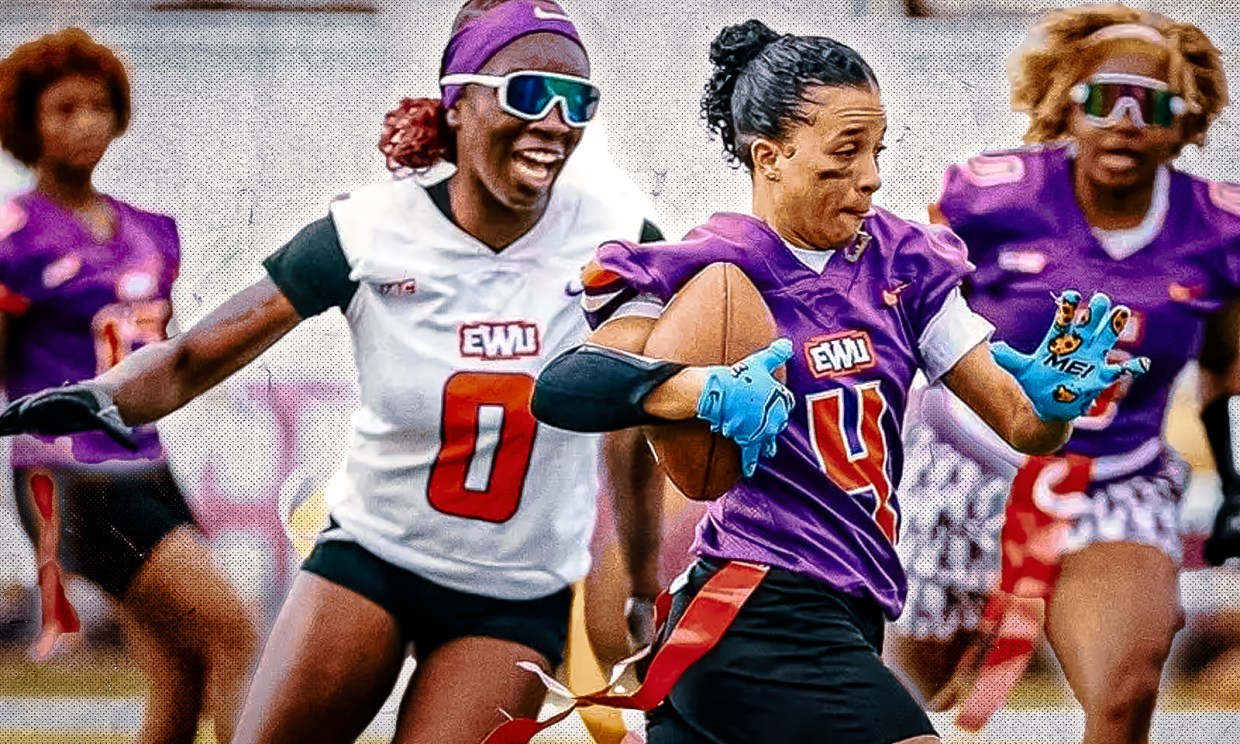
Edward Waters Adds HBCU Women’s Flag Football for 2026–27
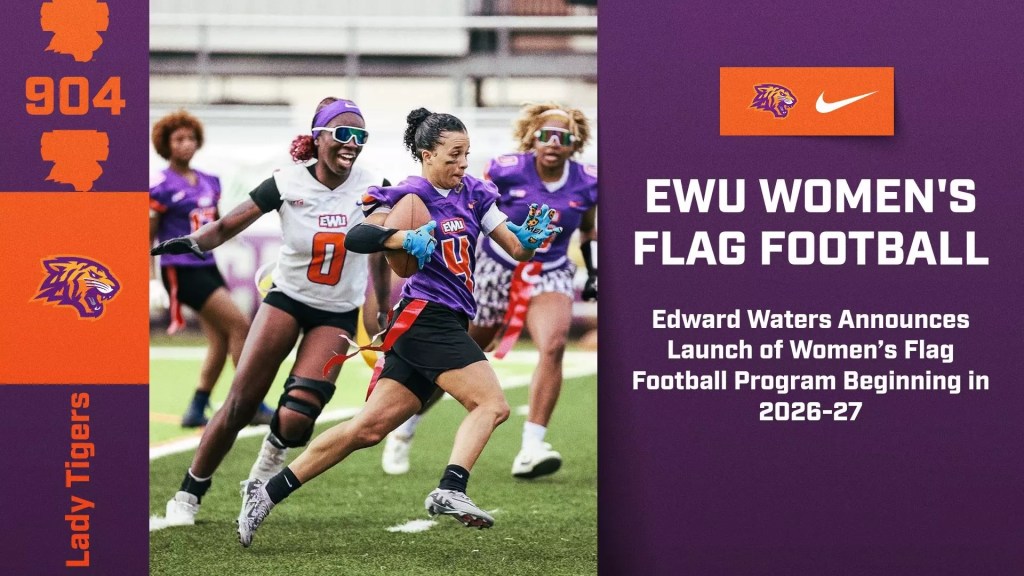
Another HBCU is stepping into one of the fastest-growing sports in the country. Edward Waters University officially announced it will add women’s flag football, with the Lady Tigers set to begin competition during the 2026–2027 athletic year. The move pushes EWU’s NCAA Division II offerings past 17 varsity sports and places the Jacksonville institution squarely inside a national movement that HBCUs helped build.
And that part matters.
Because women’s flag football didn’t just arrive at the NCAA level — it was pushed there. And HBCUs were at the center of that push.
From Emerging Sport to Expanding Movement
In January 2026, the NCAA voted at its annual Convention to add women’s flag football to the Emerging Sports for Women program. Representatives from all three divisions supported the move. The designation immediately signaled institutional backing and started the clock toward eventual NCAA championship status.
The CIAA had already laid the groundwork.
The conference tested a preliminary season in spring 2025. Winston-Salem State won the early championship. By 2026–2027, the CIAA will officially sponsor flag football as a varsity sport — a direct result of conference-level leadership helping shape the national conversation.
Commissioner Jacqie McWilliams-Parker, who also chairs the NCAA Committee on Access, Opportunity and Impact, called the decision “a meaningful step toward expanding access, equity and opportunity.”
That leadership proved something important: HBCUs weren’t waiting to be included. They were building the blueprint.
Now Edward Waters is the latest institution to follow that blueprint.
Why the Timing Makes Sense
EWU’s announcement comes at a moment of explosive growth.
More than 300 teams are expected to compete nationwide during the 2026–2027 academic year. The NCAA reports that at least 40 schools plan to sponsor the sport at the varsity level for 2025–26, with projections climbing toward 60 programs by spring 2026. Reaching 40 sponsors is the benchmark required for eventual championship consideration under the Emerging Sports model.
The sport also has global momentum. Women’s flag football will debut at the 2028 Summer Olympics in Los Angeles. That Olympic spotlight has accelerated recruiting interest, high school participation, and institutional investment.
Simply put, the wave is real.
Edward Waters University is choosing to ride it.
HBCUs Have Already Made History in the Sport
HBCUs have not been passive observers in this rise. They have been early adopters.
Alabama State became the first Division I institution to launch a women’s flag football program. The Hornets later awarded the first-ever Division I scholarship in the sport to Ki’Lolo Westerlund, a player who has become one of the faces of the game’s growth.
Across the CIAA, programs like Fayetteville State, Bowie State, Virginia Union, and Winston-Salem State have already competed in round-up events and championship-style showcases. Those events demonstrated viability before national approval arrived.
That matters because it reframes the story.
HBCUs are not catching up to the trend. In many ways, they helped validate it.
What This Means for Edward Waters
For Edward Waters, the addition reflects more than expansion. It aligns with a broader institutional strategy focused on access, growth, and student-athlete opportunity.
The university now strengthens its Division II profile while positioning itself in a sport that carries Olympic visibility, NFL-backed development pipelines, and increasing NCAA investment.
Details regarding coaching hires, recruiting, and scheduling will be announced later. However, the framework is clear. When the Lady Tigers take the field in 2026–2027, they will do so in a sport with national momentum and HBCU fingerprints all over its foundation.
Women’s flag football continues to rise.
And once again, an HBCU is making sure it rises with it.