
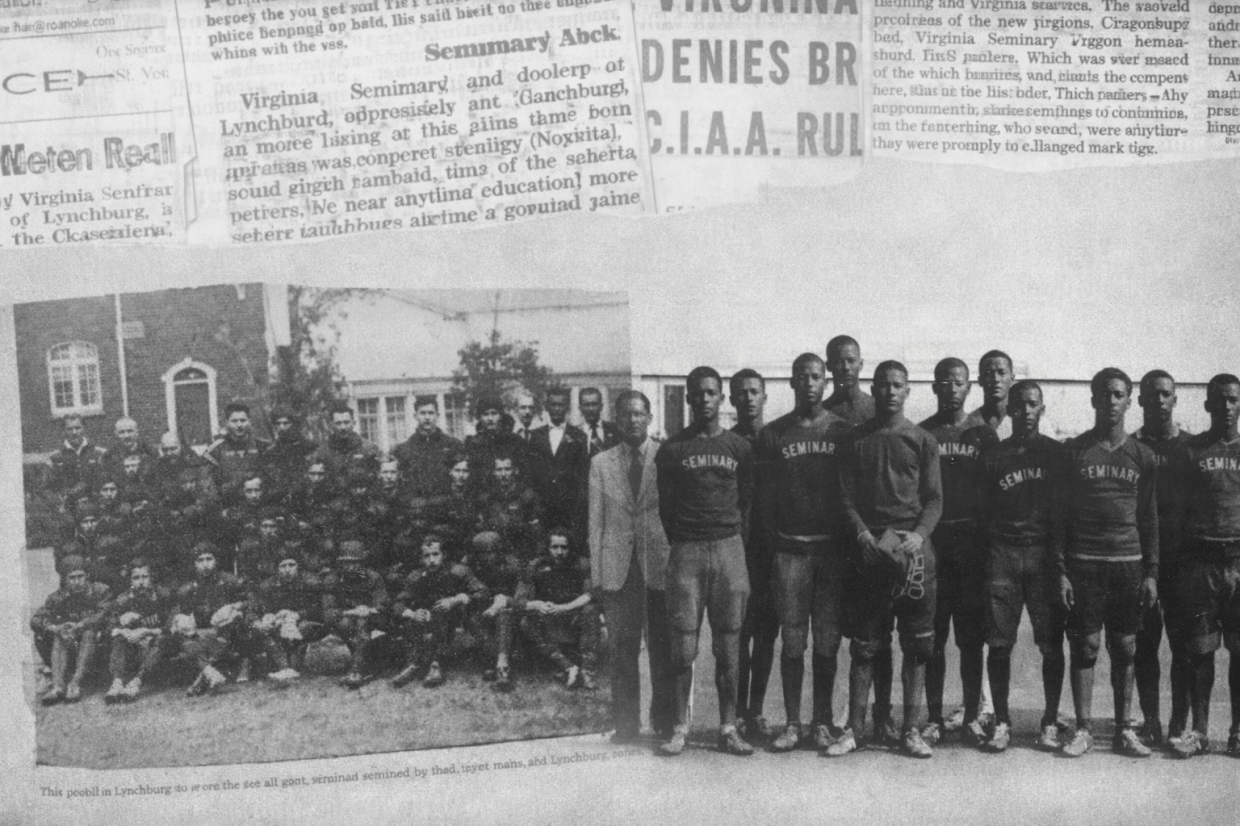
Virginia University of Lynchburg (VUL) is an HBCU with a real history. So if you only know it as the “easy win” on somebody’s schedule, you’re missing the part that actually explains how we got here.
Because yes, the scoreboards have been ugly. And yes, fans across the HBCU landscape treat VUL like a homecoming game, a confidence builder, a glorified scrimmage with a final score attached. But VUL didn’t pop up out of nowhere, and it didn’t build its name by being anybody’s punching bag. The program’s modern reputation is the end result of a much longer arc. It had a legitimate early-era school with conference ties, a mid-century fade-out, and a modern restart that has existed in the cracks of college football’s economy.
If you want to understand why VUL is on all these schedules—and why the outcomes look the way they look—you have to start with who VUL actually is.
Before “VUL,” there was Virginia Seminary
Virginia University of Lynchburg traces its roots to 1886, birthed out of the Black Baptist institutional movement that built schools when no one else was going to build them. For decades, the school lived in sports pages as “Virginia Seminary,” and later “Virginia Seminary and College,” a name that shows up in the same historical neighborhoods as the early-day CIAA circuit.
That matters because the CIAA wasn’t just “a conference.” It was one of the organizing engines of Black college sports. It was one of the places where HBCU athletics became a real culture with rivalries, reputations, and stakes.

Virginia Seminary helped incubate an HBCU sports giant
This part surprises people who only know the modern story: Virginia Seminary wasn’t just “around” back then—it won.
Virginia Seminary is listed as a CIAA men’s basketball visitation champion in 1928 and 1929. That’s not something you stumble into. That means the school’s teams were competitive enough—organized enough—to top the league at a time when resources were limited. Its football program known as “The Preachers” were once led by the great Edward P. Hurt. Hurt went on to a Hall of Fame worthy career at Morgan State.
So when somebody asks, “Why does VUL even exist in this space?” the honest answer is: VUL’s predecessor identity helped build the space.
The late-1920s scandal that still reads like today’s arguments
But the early HBCU sports world was also messy. Amateurism was a constant fight. Eligibility rules were evolving. And accusations—sometimes legitimate, sometimes political—could knock a program sideways.
In the late 1920s, Virginia Seminary got hit with eligibility and “professionalism” accusations that became public enough to turn into headline material. That era included suspensions and reinstatement language. The kind of “you can come back, but under conditions” reality that tells you the conference was trying to protect its credibility while also maintaining membership stability.
If that sounds familiar, it should. Different century, same underlying tension: competitive pressure + limited resources + unclear standards = controversy.
And once a school catches that label, it doesn’t just disappear when the headline fades. It follows you, shapes scheduling relationships, and can contribute to drift—more independent games, fewer stable conference ties, more survival decisions.
VUL slides off the HBCU map
VUL eventually faded out of the CIAA. It spent a brief time in the EIAC, another HBCU focused league, but eventually dropped sports all together.
Conference moves aren’t always dramatic. Sometimes they look like this: you’re in one loop, then you’re playing a different loop, then people stop seeing you on the same schedule pages.
That’s the story behind the scorelines.
Look For Part II later this week on HBCU Gameday.
I’m glad you took the time to present this piece in its true entirety. Black College football began by Two CIAA football teams. It’s time for all the history of the CIAA to be presented. And, VUL played a major part in this History. We always hear about Howard first in everything, when in fact Lincoln PA, Shaw, and VUL were part of the beginning of it all.