

The late 1990s changed the league — and A&T didn’t glide through it
It’s important to be fair here: it’s not accurate to paint the MEAC as a league North Carolina A&T could simply “bully,” especially once the conference’s membership and ambitions changed.
The 1990s expansion brought in programs with real CIAA pedigree and resources. Hampton arrived in 1995 and Norfolk State in 1997. Eventually, North Carolina Central re-joined the MEAC and won four titles while NCAT was still in the league. Add in a Coppin State program at its height and this was a major inflection points in its modern growth.
That matters because it reshaped the middle of the league. The MEAC got deeper, older, and more physical in a way that produced more volatility in March and fewer “automatic” runs for anybody — including North Carolina A&T. The Aggies weren’t just competing against the conference; they were now fighting a tougher weekly grind and a recruiting ecosystem that was steadily becoming more national.
And when a program gets knocked off its normal rhythm, the fall can be steep.
The crater years explain the modern trauma
Two seasons in the record book function like scar tissue for this program — because they reset everything.
In 2002–03, North Carolina A&T finished 1–26 overall.
In 2016–17, A&T went 3–29.
Those were are full-scale program collapses — not just down years. The kind that change how recruits, transfers, and even opponents see you. They force coaching changes, roster overhauls, and long rebuilds that rarely happen on a clean timeline.
Relitigating every season isn’t necessary. The point is to understand how a program with a championship identity can spend two decades stuck on the wrong side of the “start over” button.
2013 was a reminder of what A&T can be — and how fragile it has become
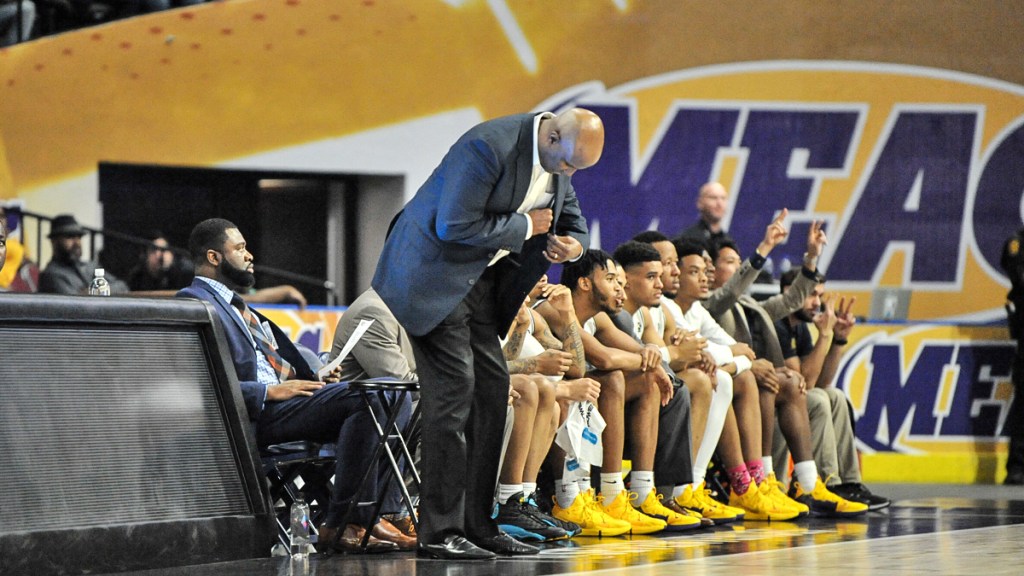
The 2013 run is still the modern proof of concept. North Carolina A&T won the 2013 MEAC tournament title, its first since 1995.
Then it did something else it had never done: it won an NCAA Tournament game, beating Liberty in Dayton to snap a nine-game tournament losing streak.
That should’ve been the launch point. Instead, it became a reminder of the modern problem. North Carolina A&T can still catch lightning — but it hasn’t consistently been able to turn one peak into a stable era.
The closest it got was a four-year stretch from 2017-2021 where it went 68-58. That included back-to-back 20 win seasons under Jay Joyner. But Joyner was dismissed due to murky circumstances at the end of 2019. His replacement, Will Jones, led the team to a 14-5 finish that year and an 11-10 record the next, but COVID-19 thwarted any MEAC title hopes.
Life outside the HBCU bubble
Now layer on the most significant structural change in decades: North Carolina A&T left the MEAC after the 2021 season. First for the Big South and soon after for the CAA. A program that was already fighting to get back to dominance is now fighting nightly in the CAA. It is a league where the floor is higher and the margin for error is thinner.
Ross was hired in April 2023 with the exact résumé you’d want for this kind of assignment: experience, regional ties, and familiarity with CAA country. But the first two years produced back-to-back 7–25 seasons as well as a player involved in a gambling investigation. And perception hardened fast — which is why the Field of 68 ranking landed the way it did.
And perception isn’t just talk. It shows up in recruiting battles. It shows up in who stays. It shows up in how long a rebuild is allowed to be a rebuild.
The late bright spot — and the question that defines the next era
Here’s where the hope finally enters the story, and it doesn’t come as a slogan. It comes as a player.
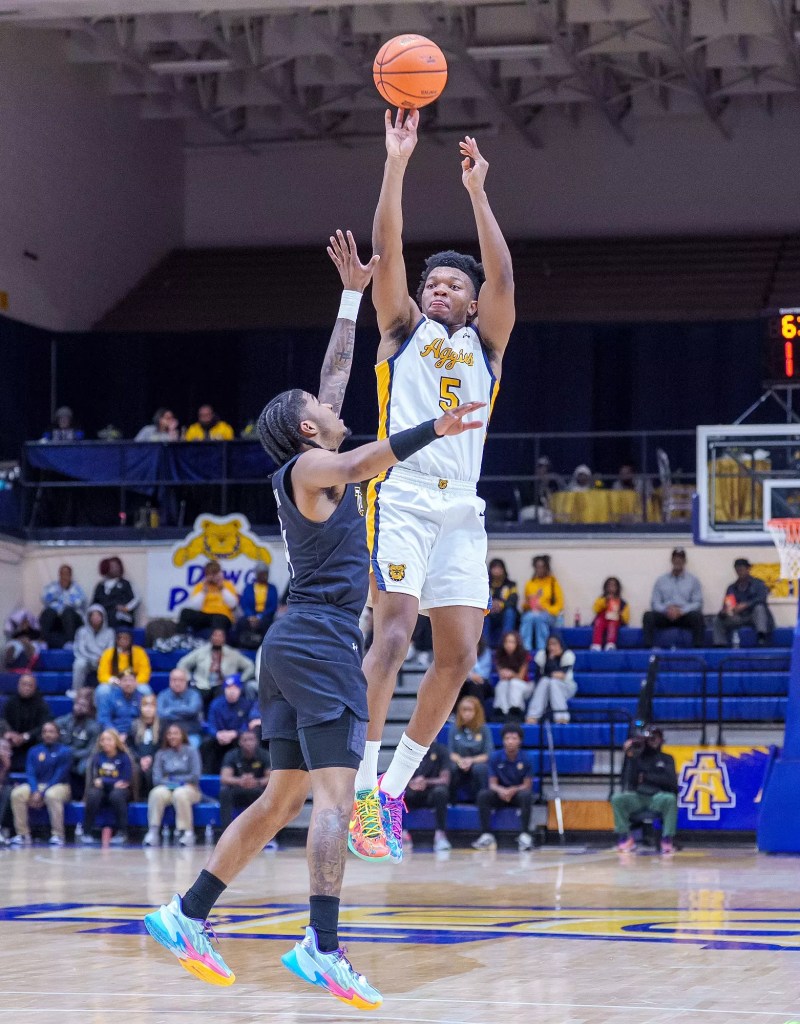
Freshman forward Lewis Walker (6-foot-6, Winston-Salem) is averaging 18.8 points per game. He’s also producing signature moments — including a 33-point performance in a key win that A&T’s own site highlighted as part of a two-game conference win streak.
Walker is the kind of local-to-regional cornerstone North Carolina A&T has historically needed: a face you can build around, market around, and recruit around. He has been an excellent find for Ross and Company.
But the final question is the one that hangs over every HBCU program right now — hell all mid-majors:
Can you keep him?
In the new era of NIL and player movement, development can turn into a tryout for the next level up. North Carolina A&T’s future hinges on whether it can turn this season into more than survival — into proof that the Greensboro HBCU can still be a place where a high-level player grows, wins, and stays long enough to matter.
Because if the Aggies can keep a cornerstone and stack stability behind him, the Field of 68 ranking becomes what it should be: a snapshot, not a sentence.
And if they can’t, then the program’s modern story stays stuck in the same loop — flashes of the old North Carolina A&T, followed by another restart.