
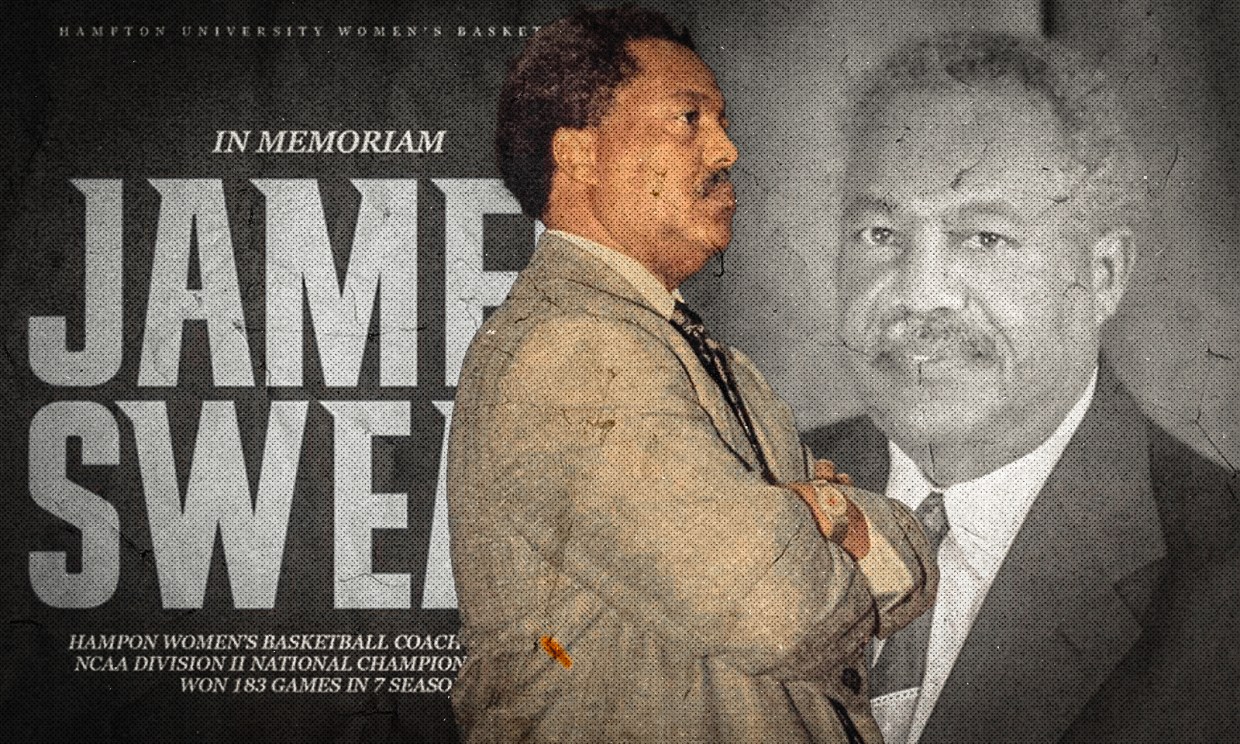
The HBCU basketball community is mourning the loss of one of its foundational architects. Coach James Sweat, a towering figure in CIAA and MEAC women’s basketball history, passed away this week, leaving behind a legacy that defined excellence at Hampton University and Norfolk State University and across the NCAA landscape.
His impact stretched far beyond wins and championships — it reshaped what women’s basketball could look like at historically Black colleges and universities.
For an entire generation, Sweat didn’t just coach the game. He elevated it.
A Standard Set at Hampton
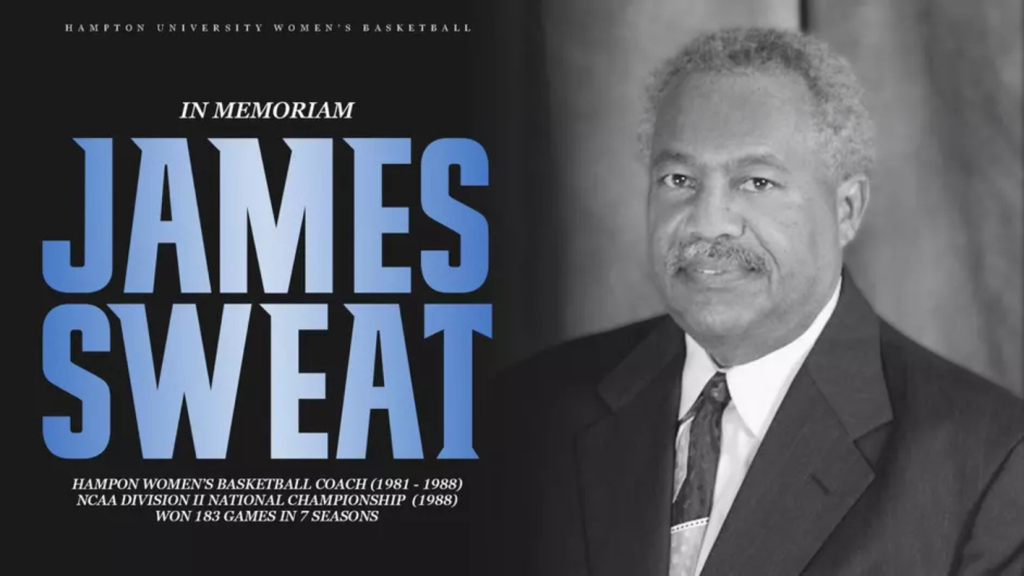
Sweat first emerged as a transformative force at Hampton University, where he served as head coach from 1981 to 1988. In seven seasons, his teams posted a staggering 183–44 record, captured CIAA championships in 1985 and 1987, and became regular fixtures on the national stage.
The apex came during the 1987–88 season, a year that still echoes through HBCU women’s basketball history. Hampton finished 33–1, then capped the run by defeating West Texas State 65–48 to win the NCAA Division II national championship. It remains one of the most dominant seasons ever produced by a CIAA program and a defining moment for HBCU athletics.
Sweat’s dominance wasn’t accidental. He was named CIAA Coach of the Year three times and coached four consecutive CIAA Players of the Year, earning a reputation as both an elite tactician and an uncompromising talent developer.
Decades later, that body of work earned him induction into the CIAA Hall of Fame, Hampton University Athletics Hall of Fame, Hampton Roads African American Sports Hall of Fame, and the Virginia State University Athletics Hall of Fame.
Building a Power at Norfolk State
Sweat carried that championship pedigree to Norfolk State University, taking over the Spartans ahead of the 1988–89 season. Over the next 19 years, he guided the program to more than 340 wins, five CIAA tournament titles, and multiple NCAA Division II postseason runs.
The 1990–91 team set a school record with 33 wins and advanced to the NCAA Division II Final Four, further cementing Sweat as one of the most successful coaches the region had ever seen.
When Norfolk State transitioned from Division II to Division I, Sweat once again proved his adaptability. In 2002, the Spartans won the MEAC Tournament championship, earning the program’s first-ever NCAA Division I Tournament appearance in women’s basketball — a milestone moment for both the school and the HBCU community.
A Coach Who Changed Lives
James Sweat was known for demanding preparation and accountability, but those who played for him remember something deeper: belief.
CIAA Commissioner Jacqie McWilliams Parker, who played under Sweat at Hampton, reflected on his influence not only as a coach but as a life-shaper. She has shared that at a pivotal moment in her life, Sweat offered opportunity, structure, and belief — first as a walk-on, then as part of a national championship team.
That belief, she credits, carried far beyond the court.
“Coach Sweat elevated the game across our HBCU community and raised expectations for what our programs could achieve with the support and the investment,” McWilliams Parker said. “His leadership, his standards, and his belief in his student-athletes helped shape generations of women who went on to lead in sport and beyond.”
It’s a sentiment echoed by countless former players whose confidence, discipline, and sense of purpose were forged under Sweat’s guidance.
A Legacy Shared
Sweat and his wife, LaVerne Sweat, his life partner of 66 years and a longtime collegiate track and field coach, were pillars of the Hampton Roads and national HBCU athletics community. Together, they devoted their lives to student-athletes, education, and competitive excellence — a shared legacy recognized through multiple joint Hall of Fame inductions.
As memorial arrangements are forthcoming, the CIAA has encouraged former players, colleagues, and supporters to keep the Sweat family in their thoughts and to honor Coach Sweat’s legacy by continuing to support women’s athletics.
In the history of HBCU women’s basketball, there are coaches who win games — and then there are those who change the trajectory of the sport.
James Sweat did both.