
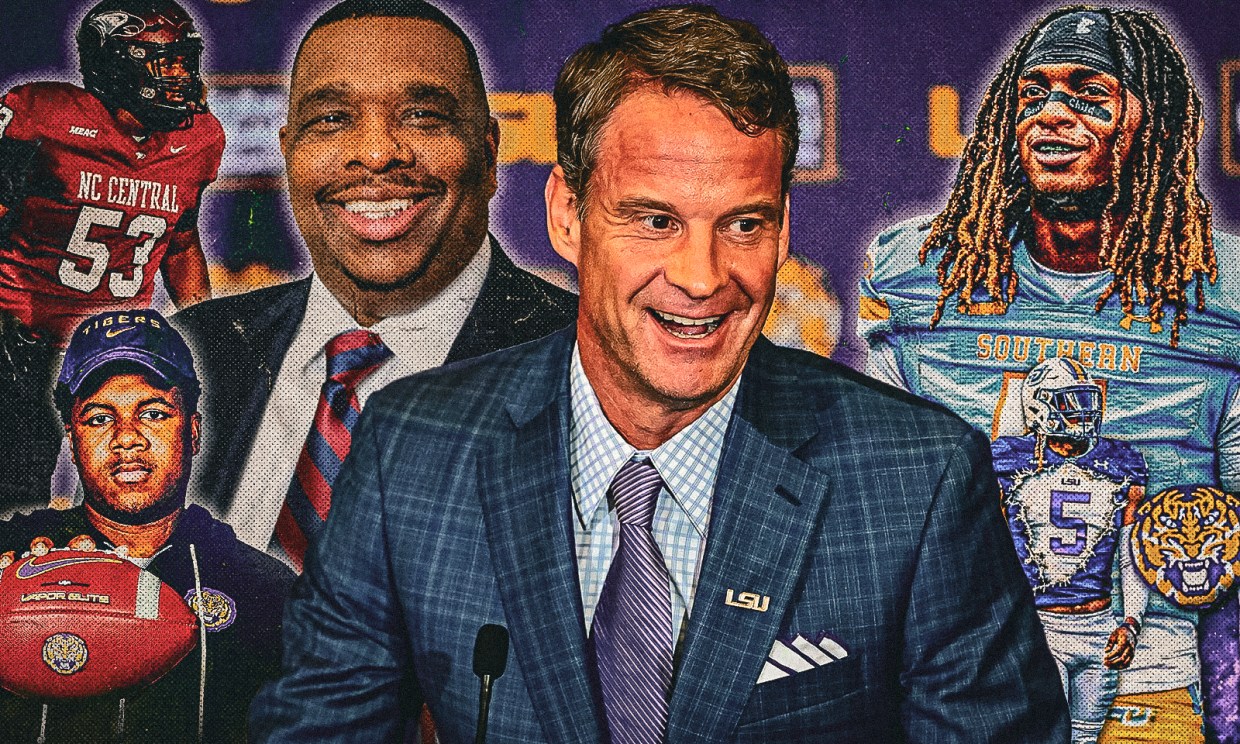
Lane Kiffin’s arrival at the helm of LSU football dominated the college football news cycle and signaled a clear shift in direction for one of the sport’s most scrutinized programs. Known for adaptability and roster flexibility, Kiffin moved quickly to reshape LSU through the NCAA Transfer Portal and staff changes. As that rebuild takes shape, HBCU football has emerged as a quiet but notable part of the process, influencing both personnel decisions on the field and coaching moves on the sideline.
Lane Kiffin’s Arrival Resets the Conversation
Kiffin’s move to LSU immediately reframed expectations in Baton Rouge. He built his reputation as a roster optimizer through aggressive portal use and schematic flexibility. That reputation followed him to LSU.
With the Tigers facing heavy roster turnover, the program entered a phase where experience, evaluation, and fit mattered most. That approach widened the evaluation lens and created space for talent with varied developmental backgrounds, including HBCU football.

Ja’Quan Sprinkle Sets the Tone Up Front
North Carolina Central offensive lineman Ja’Quan Sprinkle became LSU’s first offensive line addition of the transfer cycle. He brings two years of eligibility after appearing in 27 games with the Eagles.
Sprinkle earned Second-Team All-MEAC honors during the 2025 season. He played a central role on an NCCU offensive line that averaged 149 rushing yards per game and 4.3 yards per carry. The unit allowed just three sacks all season.
Baton Rouge-to-Baton Rouge: Treylan James Adds Depth
LSU football also added Southern University defensive back Treylan James through the transfer portal. The move strengthened the Tigers’ secondary depth.
James stayed in Baton Rouge after transferring from Southern, following an earlier stop at Prairie View A&M. Though he entered college as a safety, he settled in at cornerback.
During the 2025 season, James logged 648 defensive snaps. He recorded 26 tackles, three tackles for loss, and five pass breakups. According to Pro Football Focus, he graded as one of the stronger run-defending corners at the FCS level.
LSU returns starters at corner, so James projects as depth. Showing how much Power Four programs value rotational contributors in the shortened NCAA Transfer Portal window..
HBCU Influence Reaches the Sideline
The HBCU presence extends beyond the roster. Former South Carolina State offensive line coach Na’Shan Goddard has joined LSU as an offensive line assistant, according to Locked On LSU’s Matt Moscona.
Goddard built much of his résumé in HBCU football. During his time at South Carolina State, he helped guide three MEAC championships and the Bulldogs’ 2021 Celebration Bowl title.
In 2023, SCSU ranked fifth nationally in FCS rushing, averaging 220 yards per game. The 2024 offensive line produced three BOXTOROW All-Americans, four First Team All-MEAC selections, and the league’s Offensive Lineman of the Year.
Before joining South Carolina State, Goddard coached at Newberry College, where his unit helped set multiple offensive records. He also brings NFL experience, including Super Bowl rings with the Giants and Saints.
Experience Shapes Roster Construction
Kiffin has long prioritized functional experience over pedigree alone. LSU football’s recent additions reflect that philosophy, particularly during a rebuild driven by volume and timing.
Rather than signaling a shift in identity, these moves show how HBCU football increasingly intersects with Power Four roster construction. Portal-heavy cycles demand fast evaluations and proven production, and the HBCU product has clearly stood out.
Tracking an Evolving Trend
LSU’s recent moves do not redefine the program. They do illustrate how HBCU football continues to factor into modern roster building. As Lane Kiffin’s rebuild continues, so do other programs across the country, and HBCU-developed players and coaches remain part of the evaluation pool, both on the field and in meeting rooms.