

HBCU stadium naming rights have become an unavoidable—conversations in Black college athletics. Few recent discussions have captured that tension more clearly than Southern University power broker Tony Clayton’s remarks on The Carlos Brown Show.
Clayton, chairman of the Board of Supervisors at Southern University, did not dismiss tradition when he raised the possibility of naming rights at A.W. Mumford Stadium. Instead, he challenged the assumption that honoring legacy figures and pursuing revenue must exist in opposition.
“This is a business,” Clayton said. “You gotta pay to play.”
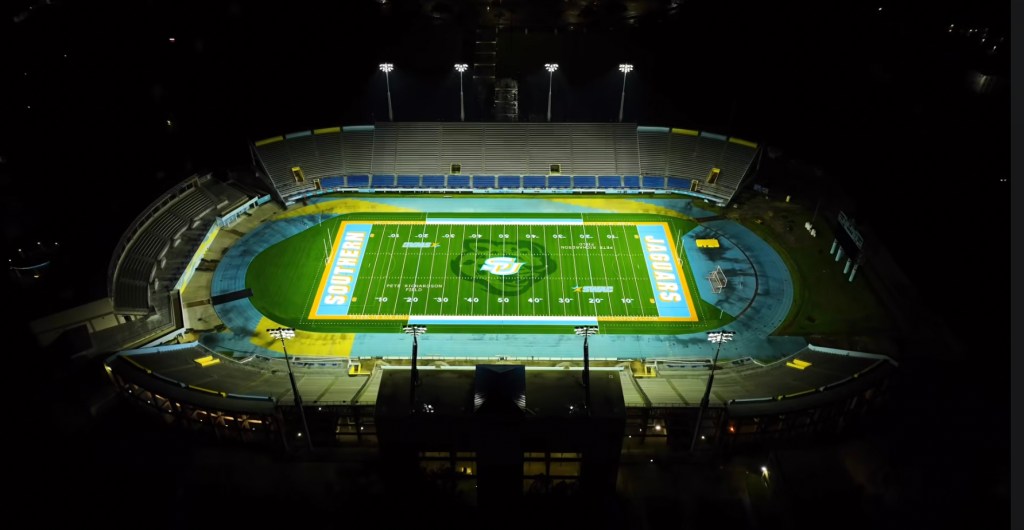
That statement lands differently at Southern precisely because of who A.W. Mumford was. Mumford is not a placeholder name. He is a cornerstone of Southern’s athletic identity—a legendary coach whose success helped define the Jaguars’ golden era and cement the program’s place in HBCU football history. Any discussion of renaming the stadium must begin there.
Why HBCU Legends Still Matter
Across the HBCU landscape, stadium names often serve as living monuments. Grambling State University plays in Eddie G. Robinson Stadium, honoring the most iconic coach in Black college football. Florida A&M University’s Bragg Memorial Stadium commemorates the Rattlers’ founding football architect. Alabama A&M University’s Louis Crews Stadium recognizes an administrator who modernized the Bulldogs’ athletic program.
These names are not branding exercises. They are declarations of institutional memory.
Clayton acknowledged that reality, even as he pushed the conversation forward.
“We can honor them forever,” he said. “Plaques, statues, buildings. But those naming rights have to generate money.”
The Other Side of the Equation: Corporate Value
While much of the naming rights debate focuses on alumni emotion, Clayton also raised an equally important—but less discussed—factor: corporate incentive.
Naming rights only work if businesses see tangible value. For HBCUs, that means consistent attendance, television exposure, community engagement, and year-round usage of facilities.
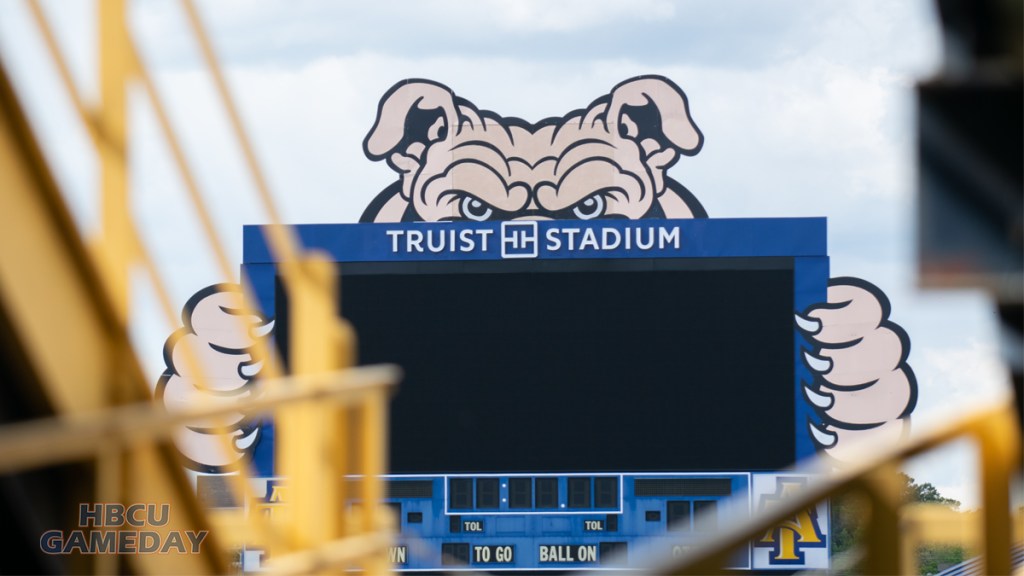
At North Carolina A&T State University, the decision to rebrand Aggie Stadium as BB&T and, later, Truist Stadium was not symbolic. It reflected A&T’s footprint, alumni base, and ability to offer a corporate partner measurable return—visibility, activation opportunities, and brand alignment.
Clayton hinted that Southern must think similarly.
“Half a million people come through that stadium over time,” he said. “That has value.”
But value must be demonstrated, not assumed. That includes upgraded facilities, improved game-day operations, and a broader vision for how a stadium functions beyond six Saturdays in the fall.
Why This Moment Is Different for HBCUs
The naming rights conversation arrives at a time when HBCUs face rising expenses tied to NIL, coaching salaries, security costs, and facility upgrades. High-profile hires and national exposure have raised expectations—but not automatically revenues.
Clayton’s argument is not that tradition is expendable. It is that tradition alone cannot fund the future.
That reality forces difficult questions:
Can an HBCU afford to leave millions on the table?
Can it modernize while still honoring those who built it?
And can it convince corporate partners that its story is worth investing in?
Toward a Hybrid Future
The likely answer lies in compromise. Hybrid naming models—corporate partnerships paired with legacy recognition—offer a path forward. “Corporate Partner Stadium at X Field” might feel like erasure to some. To others it is evolution.
For HBCUs, the challenge is not choosing between past and present. It is ensuring that the past has a future.
“We can’t keep doing things the way we did in 1990 and expect to survive,” Clayton told the panel.
The naming rights debate is not about disrespect. It is about relevance, sustainability, and whether HBCUs are willing to adapt on their own terms—or wait until the market forces them to.