
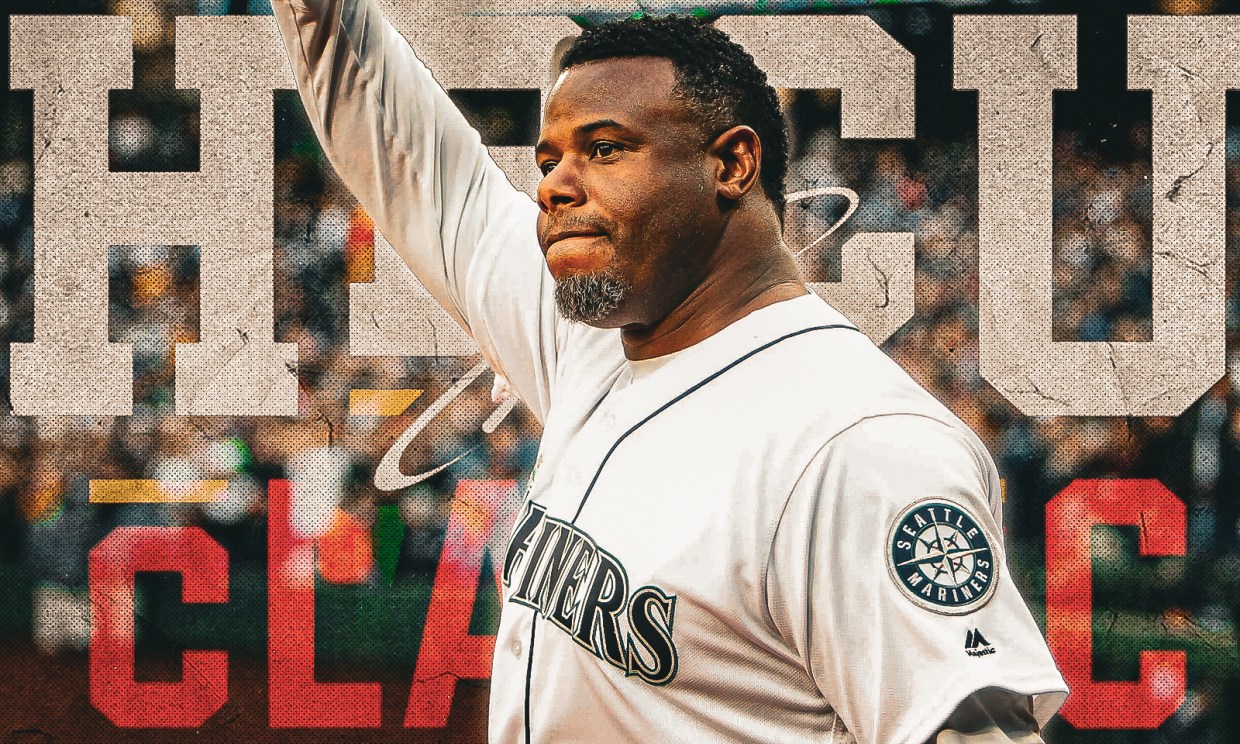
Ken Griffey Jr. knows what greatness looks like. The swing. The swagger. The 630 home runs. But now, the Hall of Famer is using his iconic status to spotlight a different kind of legacy—one rooted in access, visibility, and opportunity at the HBCU level. Griffey’s mission is simple: use his MLB legacy to elevate Historically Black Colleges and Universities (HBCUs) and the talented baseball players who often go unseen. And he’s doing it through the HBCU Swingman Classic.
Griffey’s son, Tevin Griffey, recently played football at Florida A&M University (FAMU), one of the most storied HBCUs in the country. During Trey’s playing days, Griffey didn’t just show up as a celebrity parent. He showed up with a camera in hand. The Hall of Famer took on a new role: sideline photographer—capturing FAMU games from the sideline, not the luxury box.
That experience gave Griffey Jr. a firsthand look at the pride, tradition, and challenges that define HBCU athletics.
“They’re not getting the recognition that they would like to advance to the next level,” Griffey told USA TODAY Sports in an exclusive interview.
A Stage Built for HBCU Stars
That motivation led to the creation of the HBCU Swingman Classic—a showcase featuring 50 of the top Division I baseball players from HBCUs. Now in its third year, the game kicks off MLB’s All-Star Week on Friday, July 11 at 7 p.m. ET, live from Truist Park in Atlanta and airing on MLB Network.
“It’s just an opportunity to give some of these kids an opportunity to be seen,” Griffey said.
Sixteen HBCUs will be represented in the event. And it’s not just a game—it’s a cultural celebration. Former MLB stars Brian Jordan and David Justice will manage the teams, while Emily Haydel, granddaughter of Hank Aaron, will serve as sideline reporter. Martin Luther King III was originally scheduled to throw out the first pitch, underscoring the event’s more profound social significance.
Not Just About Race—It’s About Opportunity
While the Swingman Classic elevates Black baseball culture, Griffey is clear: it’s open to all HBCU athletes.
“There are plenty of kids who are White and don’t have money, and they go to HBCUs, and they want to continue to play,” he told USA TODAY Sports. “It’s not about the color of your skin. It’s the school that you go to.”
That inclusive mindset reflects the heart of the game. Griffey isn’t chasing headlines—he’s creating pipelines.
HBCU Talent Deserves a Spotlight
The Swingman Classic is already producing results. Three players were drafted after the 2023 game. Two more went pro last year. With direct input from MLB and the MLBPA, and stronger collaboration with HBCU coaches, the level of competition has only improved.
Still, Ken Griffey Jr. believes more can be done, especially in how Major League Baseball scouts evaluate talent.
“The sad part is that the scouting department has gone away from trying to find these diamonds in the rough,” he said.
The Eye Test Still Matters
Griffey wants MLB to take a page from classic college football recruiting—the way Alabama and Clemson built dynasties by relentlessly seeking out talent.
“Now, if it’s not on a computer… they can’t understand talent unless they see it,” Griffey said. “What does it look like when it comes off the bat? What does it look like when he throws the ball?”
Many HBCU programs lack access to advanced metrics and expensive facilities. Griffey knows those limitations shouldn’t be a dealbreaker.
“Our kids need to be seen,” he said. “You give a kid an opportunity to be successful, and that’s all you ask for.”
Griffey’s Vision for the Future of HBCU Baseball
As long as Ken Griffey Jr. has a voice in the league office, he plans to use it to amplify HBCU talent. The Swingman Classic is more than a game—it’s a movement. One that’s giving a platform to players who deserve more than just a stat sheet.
And if Griffey has anything to do with it, this is just the beginning.