
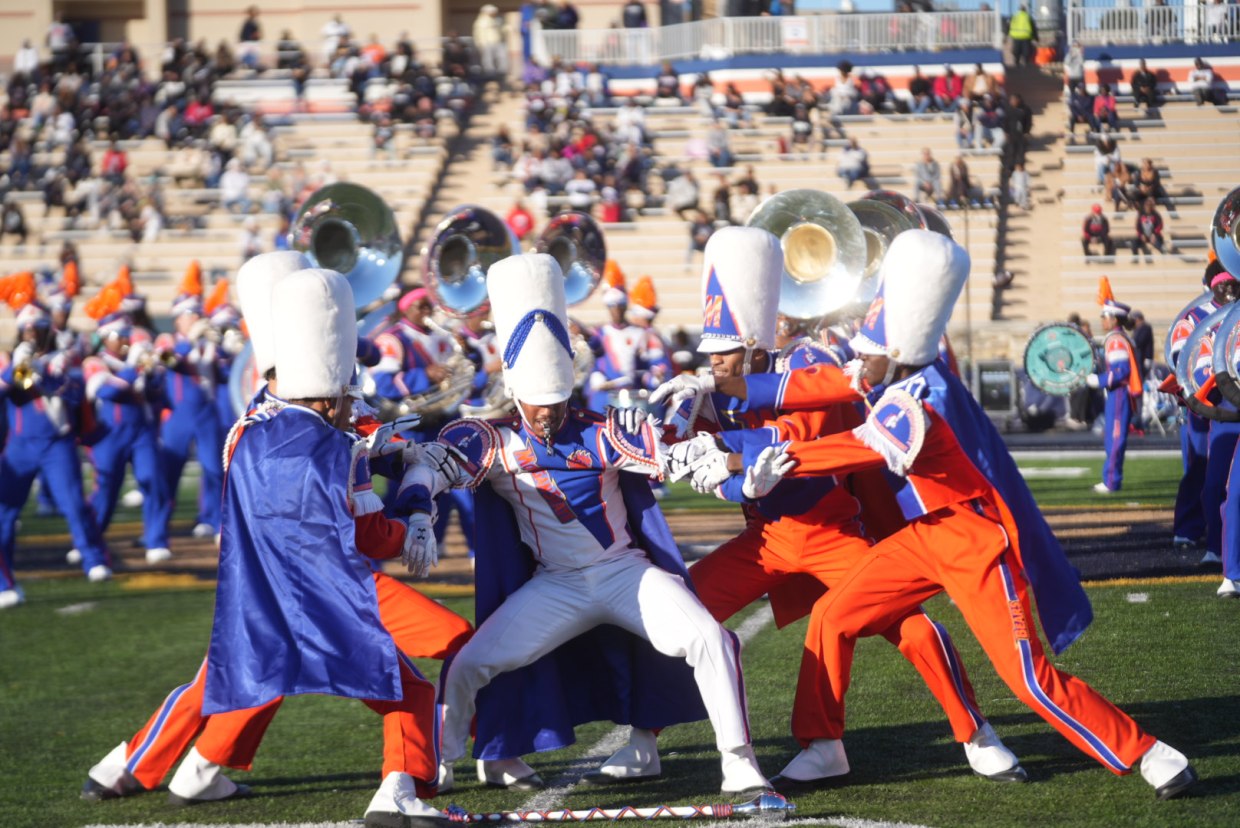
Morgan State University’s Magnificent Marching Machine is celebrating 80 years of HBCU band tradition, but director Dr. Jorim E. Reid Sr. isn’t interested in simply maintaining the status quo.
Since taking over the historic program in 2022, Reid has worked to balance the traditions that made Morgan State’s band a respected institution with his vision for its future.
Speaking with HBCU Gameday during the Morgan State-Howard football matchup, Reid discussed the band’s anniversary, its growing international profile and the challenge of bringing change to a program with generations of dedicated alumni. For Reid, celebrating the past begins with understanding it.
Graduate student Michaela Hart has been researching Morgan State’s band history, collecting photographs and documenting the contributions of previous directors.
“We’re trying to basically get that history out there and make sure we’re accurate with it,” Reid said.
He noted that much of the band’s history has never been thoroughly documented academically, making preservation especially important as the program celebrates its milestone anniversary.
Building on the foundation of Morgan State legends
One of the most significant figures in Morgan State band history is Dr. Melvin Miles Jr., who led the program for 49 years before retiring in 2022.
Miles helped establish the Magnificent Marching Machine’s reputation and became a mentor to Reid long before Morgan State entered his career plans.
Reid recalled admiring Miles while still an undergraduate student at Florida A&M University. Decades later, receiving his blessing to succeed him carried special meaning. The new director arrived with substantial HBCU band experience.
A Florida A&M graduate who served as head drum major, Reid earned his master’s degree from Florida State and doctorate from Boston University. He previously directed bands at North Carolina Central and Fayetteville State, building programs and earning national recognition. At Fayetteville State, his Marching Bronco ‘Xpress captured ESPN’s The Undefeated CIAA Band of the Year honors in 2018 and 2019.
But Reid understood that Morgan State presented a different challenge. Rather than establishing a new identity from scratch, he inherited one that generations of musicians had already built.
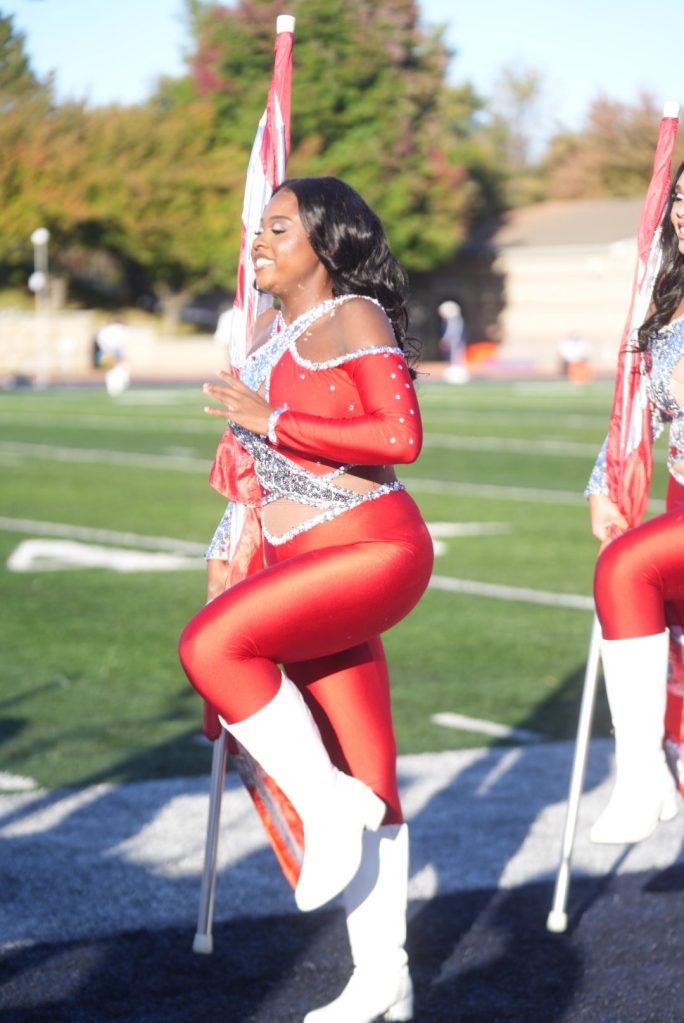
Tradition doesn’t mean standing still
Reid believes preserving Morgan State’s legacy requires understanding what made the program special in the first place.
“For how I like to see it, it’s about the meaning,” Reid said. “What do we call ourselves? It’s a Magnificent Marching Machine. We have machine there. So the precision. So you can’t tell me that sloppiness or messiness is tradition.”
That philosophy extends beyond musical performance.
Reid wants to preserve traditional uniforms, longstanding songs and familiar elements of Morgan State’s band culture while allowing students to introduce new ideas.
He specifically pointed to the band’s traditional drum major uniform, which some current students consider outdated. Reid believes its elegance remains an important part of Morgan’s identity.
Still, he recognizes that change can create tension with alumni accustomed to how things were done during their time.
His response is simple: every tradition was once something new.
For Reid, the responsibility is not to abandon the program’s history, but to ensure that history doesn’t prevent the next generation from making its own contributions.
Morgan State’s band takes its sound worldwide
The Magnificent Marching Machine’s recent accomplishments demonstrate that philosophy.
Morgan State University became the first HBCU band to participate in the D-Day Memorial Parade in Normandy, France, in 2024. The program also performed in Venice, Italy, in 2025 before opening 2026 with an appearance in the prestigious Tournament of Roses Parade in Pasadena, California.
Reid described the Rose Parade as one of marching music’s highest-profile opportunities.
“That was a great experience. It was a great experience for our students, for the university,” Reid said.
The international exposure created experiences extending beyond performances. Reid laughed while recalling students exchanging clothing and hats with members of a Mexican band, including sombreros. Those cultural exchanges, he said, created memories students will carry throughout their lives.
The performances also introduced Morgan State’s musical identity to audiences far beyond Baltimore.
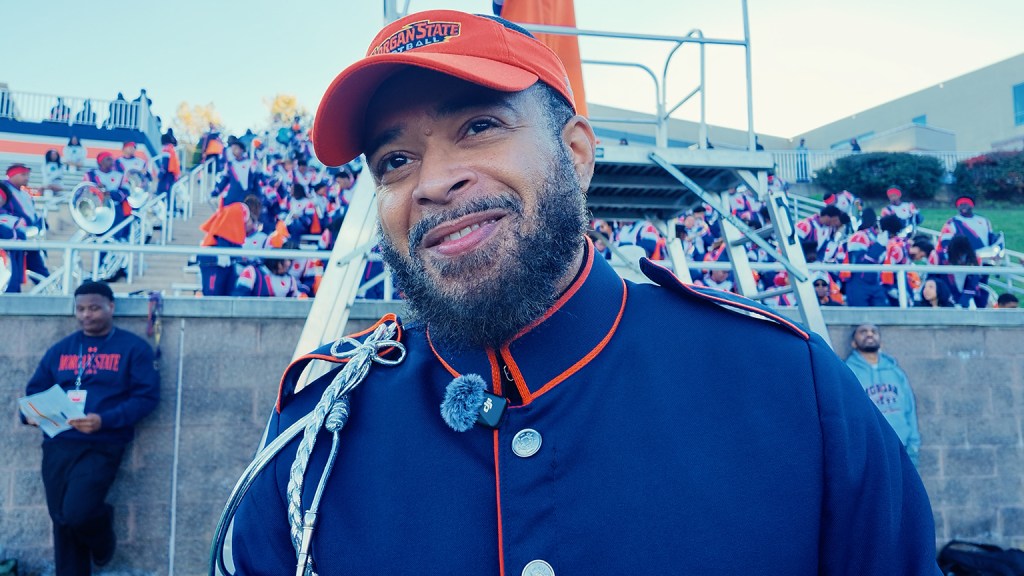
Excellence over Band of the Year recognition
Despite the program’s expanding profile, Reid isn’t measuring success solely through competitions.
With the growing prominence of the HBCU Band of the Year competition, Reid acknowledged that such recognition can benefit Morgan State.
However, he doesn’t believe an outside judging panel should define the program’s worth.
“I don’t look at it as validation,” Reid said. “I look at it as I want this program to be Band of the Year material.”
He recognizes that comparing bands with different styles, instrumentation and auxiliary units involves subjective judgments. The more important objective is developing a program capable of delivering excellence regardless of the rankings.
Reid appreciates that the competition has encouraged HBCU bands to examine their performances more critically, describing marching band as both art and athletic expression.
For Morgan State, the standard remains precision, musicianship and pride.
Eighty years of band history provide a foundation worth celebrating. Under Reid, the Magnificent Marching Machine is working to ensure its next chapter gives future generations just as much to remember.