
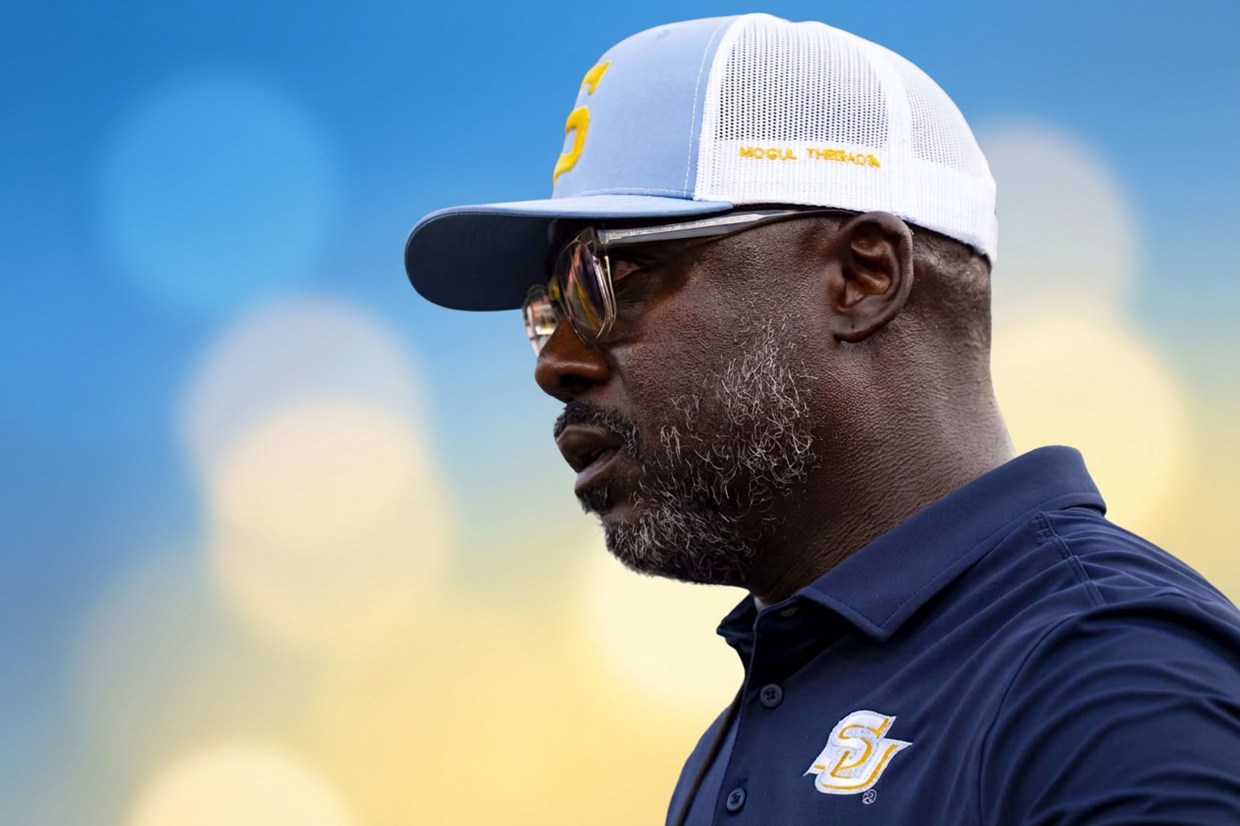
Southern University head football coach Marshall Faulk is determined not to let his Parkinson’s disease diagnosis define the next chapter of his life.
The Pro Football Hall of Famer spoke candidly about his health during Monday’s Southwestern Athletic Conference coaches media session, discussing his decision to share his diagnosis publicly, the importance of early detection and his determination to continue coaching the Jaguars.
The conversation carried additional emotional weight following the death of former Los Angeles Rams running back Lawrence McCutcheon, who died October 23 at age 76 after a long battle with Parkinson’s disease.
For Faulk, McCutcheon was more than another name in the Rams’ storied history. He was a friend, mentor and connection to an earlier generation of professional football.
‘Your life doesn’t have to stop’
Faulk said he hopes sharing his diagnosis will encourage others, particularly men, to be proactive about their health.
The first-year Southern head coach explained that he has been receiving treatment and remains optimistic about his future.
“I have my things under control,” Faulk said during Monday’s media session.
He acknowledged that a serious medical diagnosis can quickly become the center of someone’s public identity, but emphasized that he has no intention of allowing his life to revolve entirely around his condition.
“And that’s not me,” Faulk said. “You know, I’m always trying to make progress, trying to move forward.”
Faulk said his decision to speak publicly was motivated in part by a desire to raise awareness.
“I’m gonna use this to help advocate for other people,” he said, adding, “your life doesn’t have to stop.”
Faulk described his experience with early detection and medication, saying he has received encouraging information from his medical team about managing the disease.
His comments reflected his personal medical outlook rather than a prediction about how Parkinson’s disease progresses for everyone.
For now, his focus remains on living fully, maintaining his health and continuing his work as Southern’s head coach.
Remembering a Rams legend
The timing of Faulk’s announcement brought added significance to the death of Lawrence McCutcheon, one of the most accomplished running backs in Rams history.
McCutcheon, affectionately known as “Clutch,” was selected by the Rams in the third round of the 1972 NFL Draft out of Colorado State.
He became one of the NFL’s most productive running backs during the 1970s, earning five consecutive Pro Bowl selections from 1973 through 1977.
McCutcheon rushed for 6,186 yards during his Rams career, establishing a franchise rushing record at the time. He also played in Super Bowl XIV, where he threw a touchdown pass against the Pittsburgh Steelers.
Following his playing career, McCutcheon remained connected to the organization, eventually working in scouting and player personnel before retiring in 2016.
Faulk, who would later become one of the most celebrated players in Rams history, developed a relationship with McCutcheon during their time around the organization.
During Monday’s media session, Faulk recalled conversations with McCutcheon about the history of professional football.
“Coach was a great guy, man,” Faulk said. “I enjoyed my time that we spent together.”
Faulk explained that he made a deliberate effort to learn from former players, particularly those whose careers helped establish opportunities for later generations.
He said he frequently sought out retired players to hear their stories, understand the challenges they faced and recognize their contributions.
The conversations with McCutcheon were part of that tradition.
Faulk spoke about the importance of honoring former players while they were still alive, noting that even Hall of Famers can gradually fade from public memory after their playing careers end.
McCutcheon’s death represents the loss of a significant figure in Rams history and someone Faulk personally valued.
Two generations connected by football and Parkinson’s
The connection between the two running backs is especially poignant given their shared association with Parkinson’s disease.
McCutcheon battled the neurological condition for years before his death. Faulk is now navigating his own diagnosis while continuing his coaching career.
The two men represent different generations of Rams football excellence, but their relationship extended beyond statistics, championships and professional accomplishments.
For Faulk, McCutcheon represented a living connection to the history of the game.
When asked whether he had spoken with McCutcheon’s family about their experiences with the disease, Faulk said he had offered condolences but had not reached out to discuss Parkinson’s.
“I just sent my condolences to his family and that’s it,” Faulk said.
He then returned to the message he wanted people to understand about his own health: he intends to continue moving forward.
Faulk’s comments also underscored the importance of treating each person’s experience with Parkinson’s individually. The disease can affect people differently, and his optimism reflects the guidance he says he has received from his doctors.
Football remains the focus at Southern
Despite the attention surrounding his diagnosis, Faulk continues to approach his responsibilities at Southern with the same competitive focus that defined his Hall of Fame playing career.
During Monday’s coaches call, he discussed the Jaguars’ running game and the importance of establishing offensive balance as Southern prepares to face Florida A&M.
Running back Trey Holly has emerged as an important part of the offense, including a recent performance in which he carried the ball 35 times.
Faulk acknowledged that such a workload is substantial, especially with other capable backs available.
He identified Mike Franklin and Champ Davis as additional options in Southern’s backfield but explained that he is willing to stay with a running back who has established a rhythm.
“I’m a guy who likes to play the hot guy,” Faulk said.
He praised Holly’s approach and physical running style, explaining that the back often becomes more effective as his workload increases.
The Jaguars’ ability to run the football will be especially important against Florida A&M, Faulk said, because controlling possession can limit an opponent’s offensive opportunities.
It was a reminder that, even during a media session featuring deeply personal questions about his health, Faulk remains immersed in the details of coaching football.
Moving forward
Faulk’s Parkinson’s diagnosis introduces a new challenge for one of football’s most recognizable figures, but he is making it clear that the disease will not be the only story he tells.
His reflections on McCutcheon revealed the importance he places on relationships, mentorship and honoring those who helped shape the game.
His comments about Southern revealed a coach still focused on developing players, improving his football team and winning games.
And his message about his health was one of determination.
For Faulk, the next chapter is not simply about managing a diagnosis.
It is about continuing to live, coach, mentor and make a difference while encouraging others to take their health seriously.