
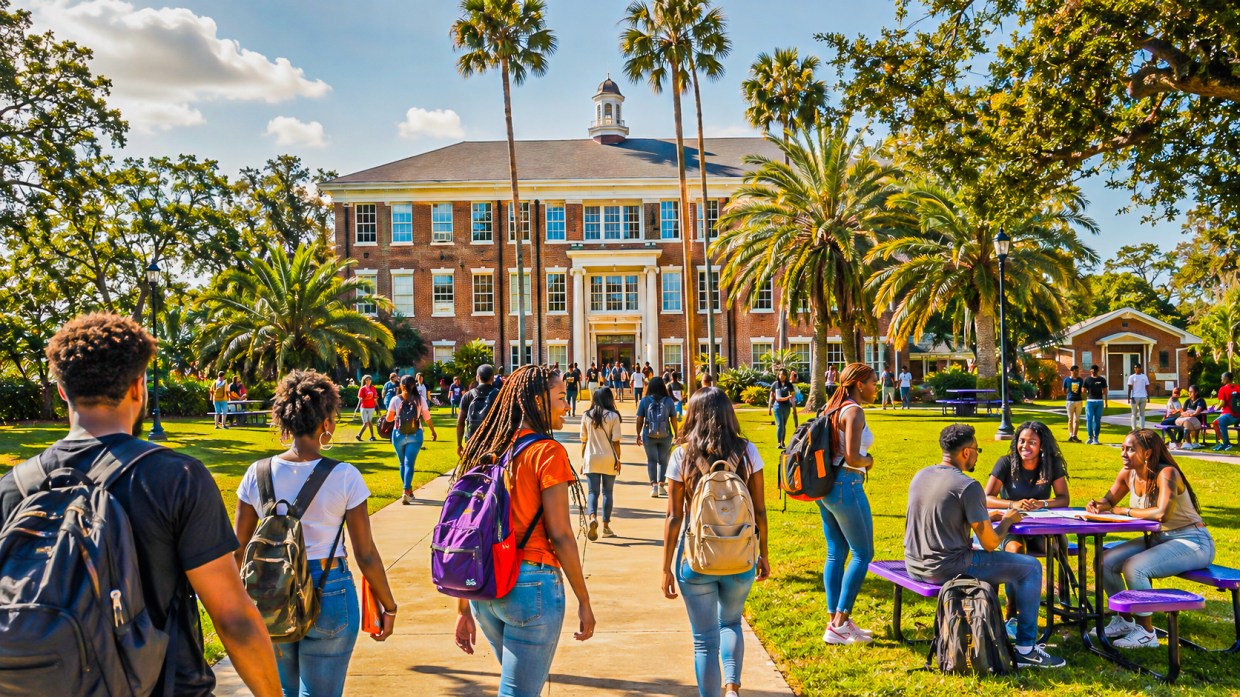
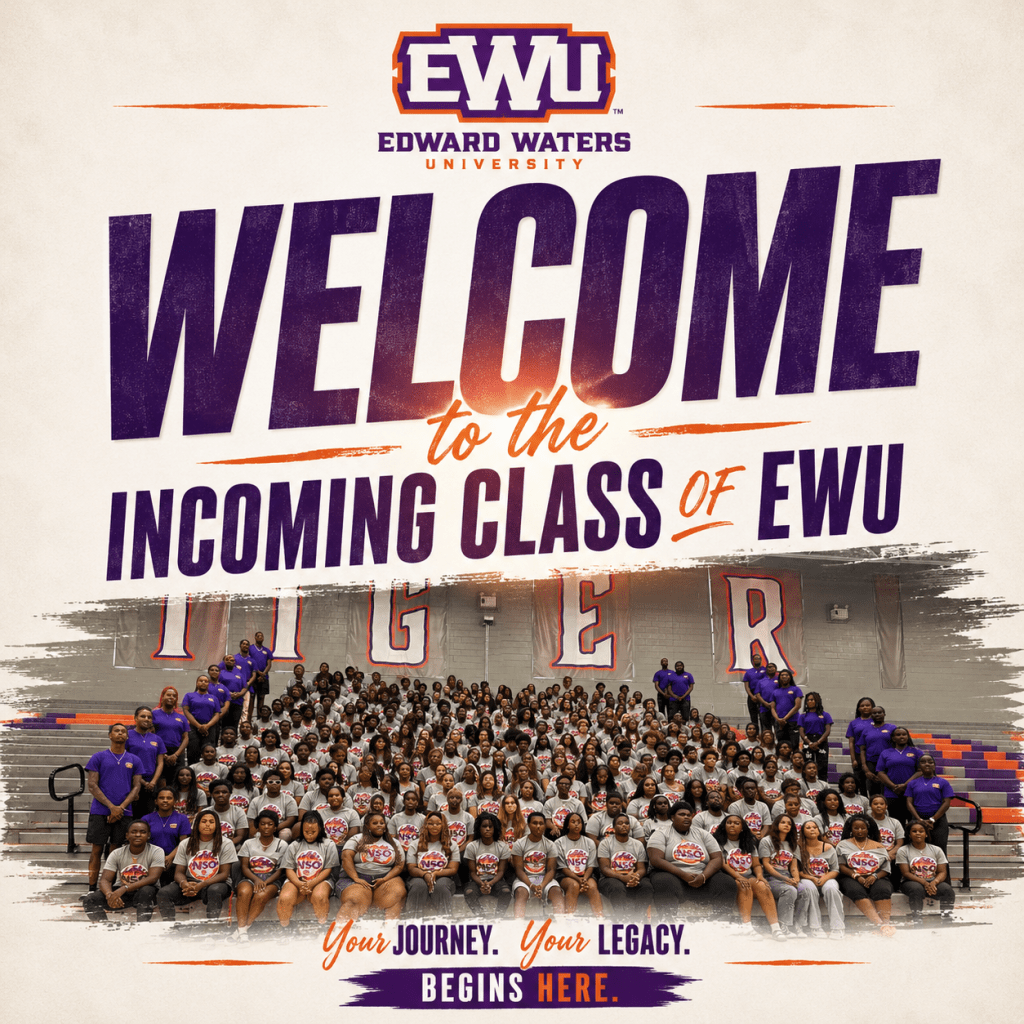
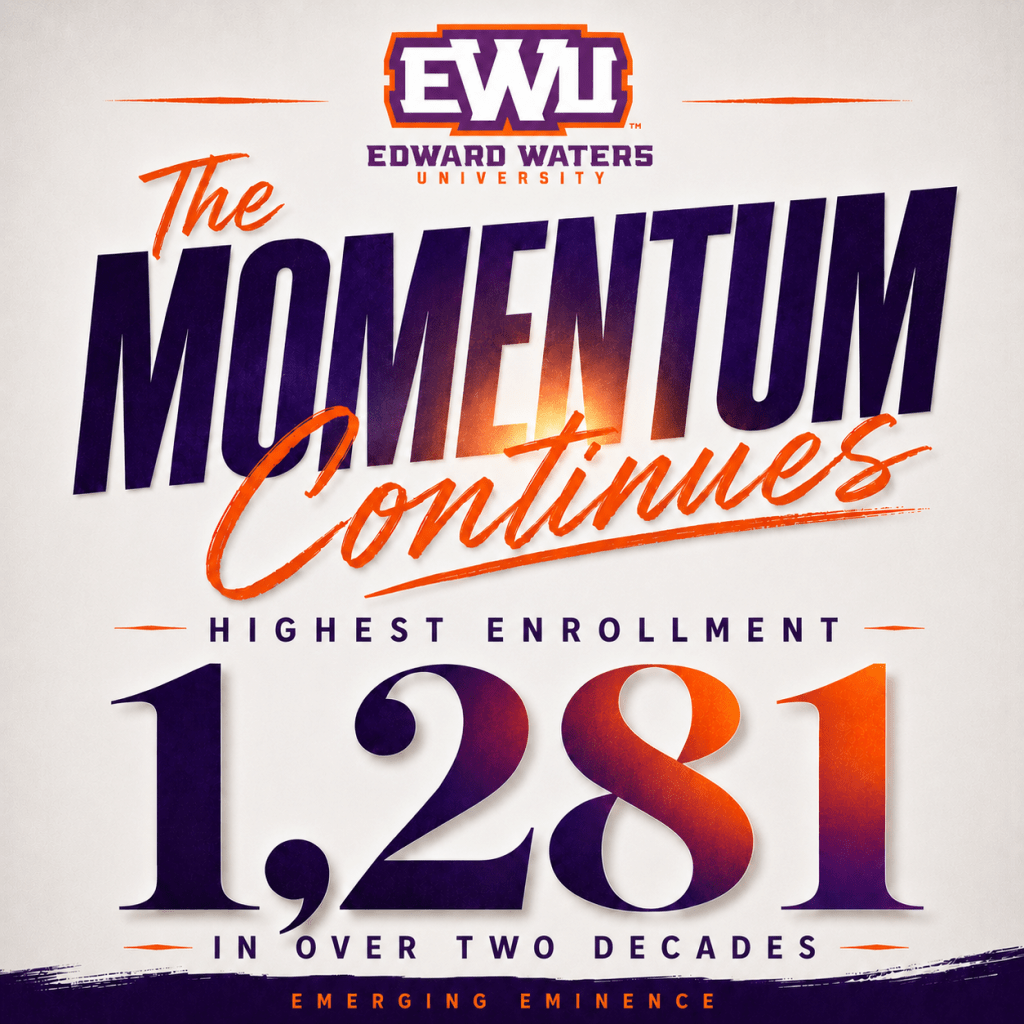
Edward Waters University is approaching an enrollment record that has stood for nearly its entire 160-year history. The Jacksonville, Florida, institution announced a Fall 2026 enrollment of 1,281 students. It is the largest student body at the HBCU in more than two decades and a 5.4 percent increase from Fall 2025.
More importantly, Edward Waters is now only 39 students away from setting a new all-time enrollment record.
That puts one of the nation’s smaller and most historic HBCUs on the verge of achieving something few institutions of its size can take for granted in the current higher education climate.
“Edward Waters University is no longer a story about potential. It is a story about performance,” EWU President and CEO Dr. A. Zachary Faison Jr. said in the university’s announcement.
“We are 39 students away from it. We intend to break it.”
A historic HBCU continues its comeback
Edward Waters has increased its enrollment by 37.4 percent since Fall 2019, when the university reported 932 students.
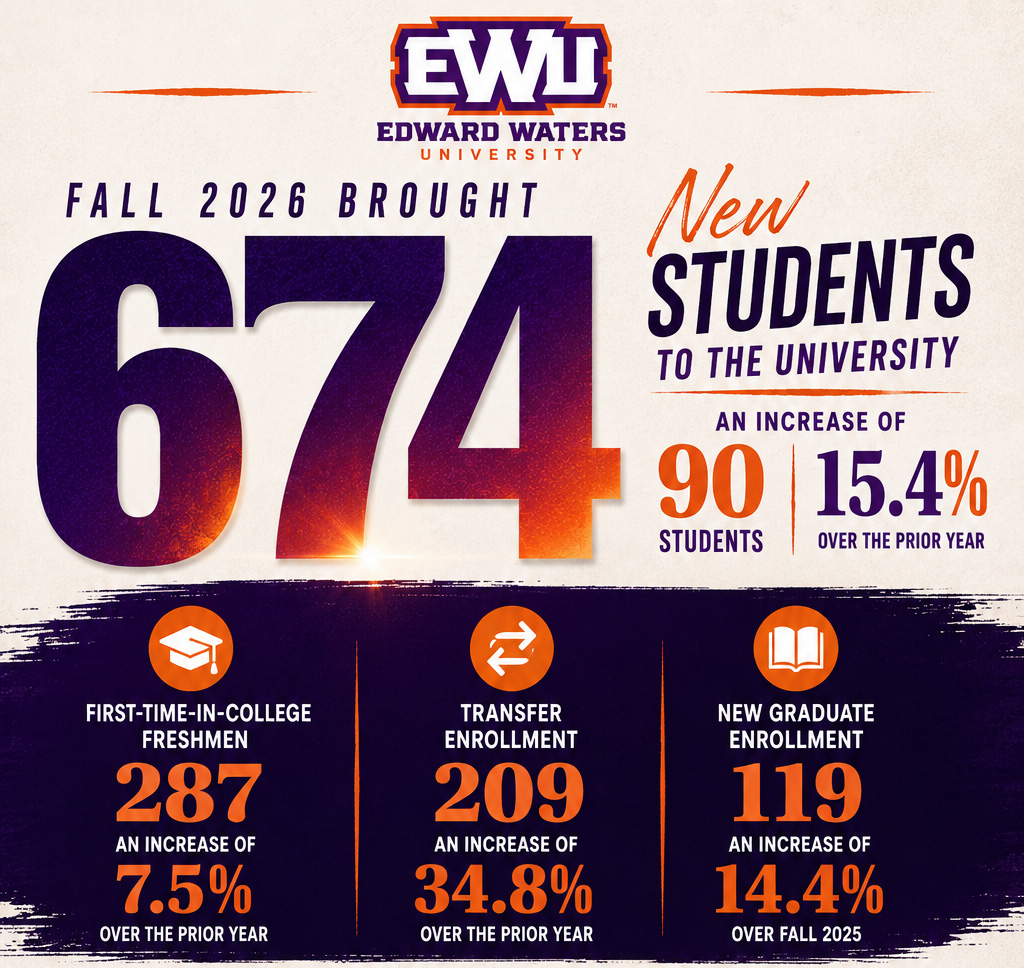
Its latest class includes 674 new students, a 15.4 percent increase from the previous year. The university welcomed 287 first-time freshmen and 209 transfer students. Transfer enrollment alone increased by 34.8 percent.
EWU also added 119 new graduate students, bringing its total graduate enrollment to 149.
Those gains followed an application pool of more than 13,000 students for the 2026-27 academic year.
The numbers tell a much larger story than a one-year enrollment spike. They mark another step in the reemergence of an HBCU that has survived fires, financial challenges, accreditation concerns, and a changing higher education marketplace.
In the mid-2010s, Edward Waters reportedly enrolled approximately 800 students as aging campus infrastructure and accreditation warnings complicated its recruiting efforts.
The university recovered to 932 students by 2019. It has added nearly 350 more students since then.
“The market did not get easier. We got better,” Faison said.
Florida’s first HBCU was founded for the formerly enslaved
Edward Waters was founded by the African Methodist Episcopal Church in 1866, one year after the conclusion of the Civil War.
The institution began as the Brown Theological Institute. Its original mission centered on educating newly emancipated Black people and training teachers and ministers at a time when Florida had made little provision for their education.
The school was later renamed in honor of Edward Waters, the third bishop of the AME Church, and relocated to Jacksonville during the 1890s.
Edward Waters is recognized as Florida’s first HBCU and its first private, independent institution of higher education. It is not the first HBCU founded nationally—a distinction generally associated with Cheyney University of Pennsylvania—but its origin places EWU among the earliest institutions created to educate Black Americans after slavery.
Its survival has never been guaranteed.
The Great Fire of Jacksonville destroyed the school’s downtown facilities in 1901. Edward Waters acquired the site of its current Kings Road campus in 1904 and rebuilt.
Centennial Hall, the oldest remaining structure on campus, later became a monument to that perseverance. The historic building was added to the National Register of Historic Places in 1976.
The university’s legacy also reaches deep into American civil rights history. A. Philip Randolph, the labor leader who organized the 1963 March on Washington, attended Edward Waters. Former Jacksonville sheriff Nat Glover became the first Black sheriff elected in Florida since Reconstruction before eventually returning to lead the institution as its president.
In 2021, Edward Waters College officially became Edward Waters University following the addition of its first graduate programs.
Five years later, those programs have become an important part of its enrollment growth.
New programs are expanding the HBCU’s reach
Edward Waters now offers graduate degrees in cybersecurity, business administration, public administration, and education policy and advocacy.
Fall 2026 also brought the launch of a new dual-degree partnership with Payne Theological Seminary. The fully online program allows students to earn a Master of Divinity and a Master of Business Administration in three years.
The partnership connects two institutions rooted in the AME Church while opening another path for working professionals, clergy, and organizational leaders.
Expanding beyond a traditional undergraduate model is becoming increasingly important for smaller HBCUs. Online programs, graduate degrees, and partnerships allow institutions with limited physical space to reach new students without abandoning their historic missions.
Edward Waters has paired that academic growth with improved financial stability.
According to the university, it has recorded six consecutive operating surpluses and increased its endowment from $2.8 million to $8.6 million. EWU also completed its decennial accreditation reaffirmation through the Southern Association of Colleges and Schools Commission on Colleges with no recommendations.
That combination may be as significant as the enrollment figure itself.
Rapid growth can strain housing, classrooms, and student services at smaller universities. Edward Waters says its growth has occurred alongside an 82.9 percent persistence rate among students eligible to return from Spring 2026 to Fall 2026.
Smaller HBCUs are finding new momentum
The Edward Waters milestone arrives amid renewed attention and enrollment momentum across parts of the HBCU landscape.
Large public institutions such as North Carolina A&T continue to attract record numbers of students, but some of the sector’s most important growth is happening at smaller, private HBCUs.
Simmons College of Kentucky, for example, announced its largest incoming freshman class in institutional history in 2025 after expanding student services, online offerings and residential capacity. Other small HBCUs have leaned into more personalized student support.
New career-focused programs and the cultural connection many Black students and families are seeking.
The results are not uniform. Small private colleges throughout the country remain vulnerable to declining birth rates, limited endowments, and rising operating costs. Several HBCUs continue to face serious financial and accreditation challenges.
That reality makes the growth at Edward Waters more meaningful.
The HBCU is not simply benefiting from a larger national spotlight. It has spent years developing graduate programs, rebuilding its finances, strengthening retention, and expanding the number of ways students can enter the institution.
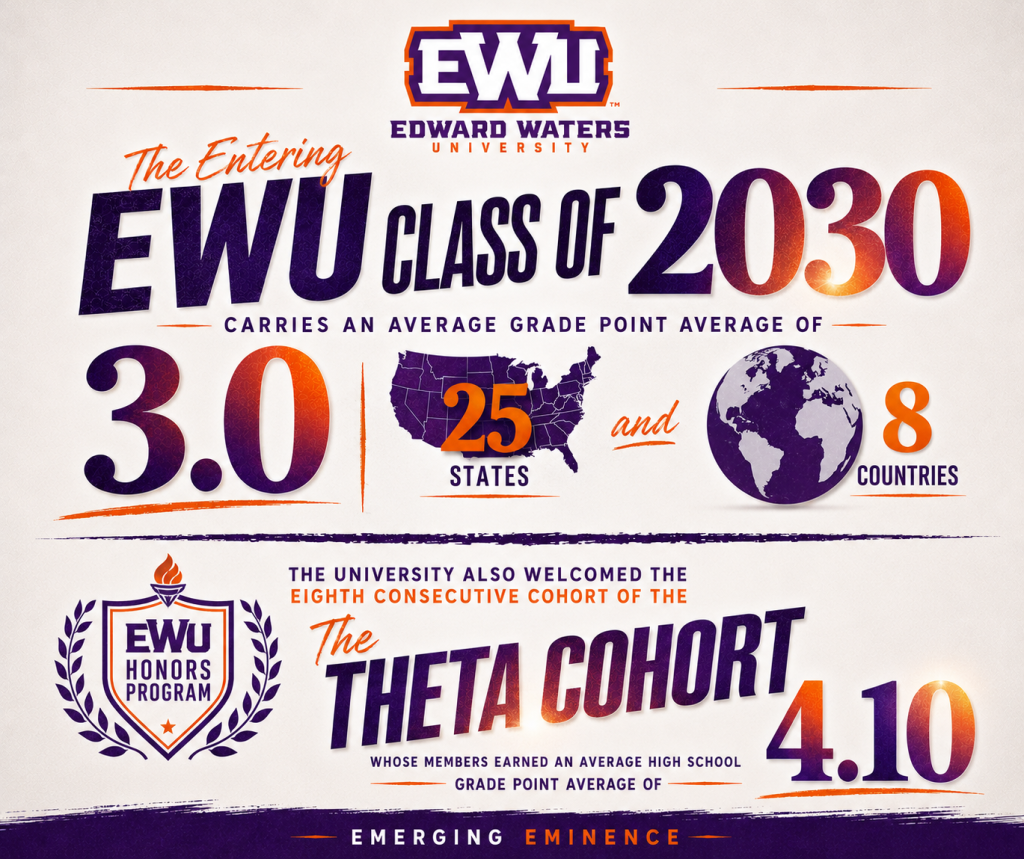
The incoming Class of 2030 represents 25 states and eight countries. Its students carry an average high school GPA of 3.0, while members of EWU’s eighth Honors Program cohort entered with an average GPA of 4.10.
Each of those students is joining an institution established during Reconstruction to educate people who had been denied access to formal education.
Now, 160 years after its founding, Florida’s first HBCU is within 39 students of its largest-ever enrollment.
“We are growing because students and families are choosing us,” Faison said. “Every number in this release represents a young person who decided that this institution, founded in 1866 by and for the formerly enslaved, was where their future would begin.”
This was very informative! Glad to hear anything good about an HBCU! People we need more support of our education and history.