
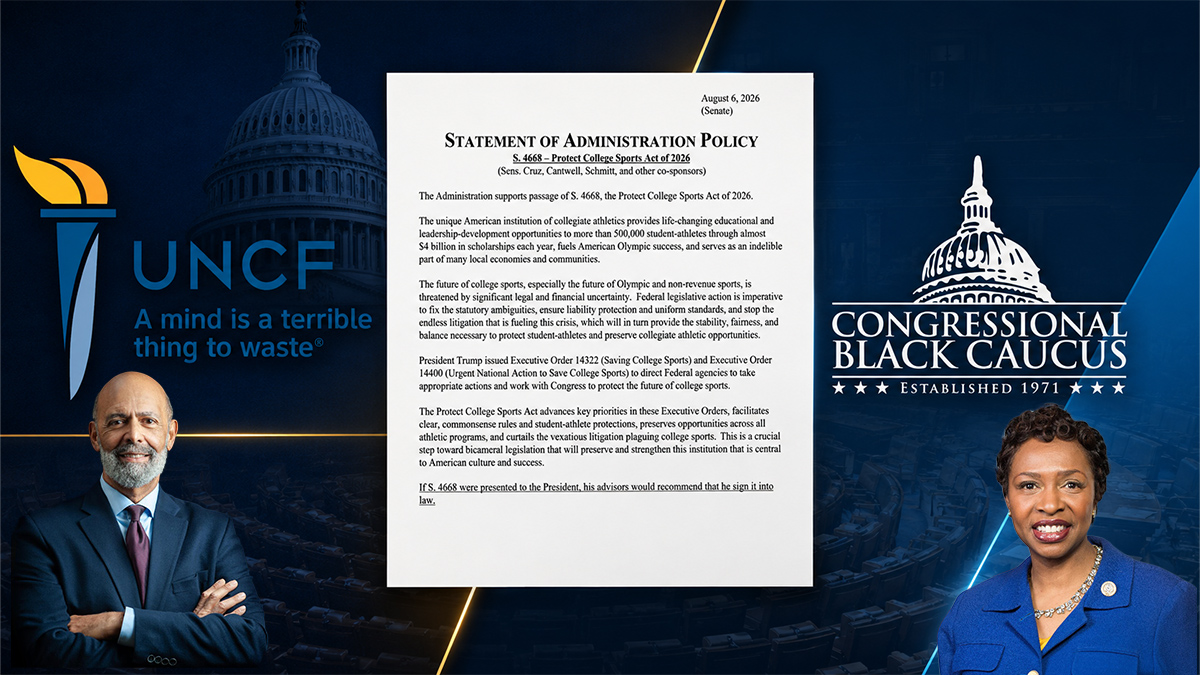
The Protect College Sports Act has created a public split between two influential voices in Black America: UNCF and the Congressional Black Caucus. UNCF supports the sweeping federal legislation, while the Congressional Black Caucus is urging the Senate not to advance it.
That divide puts HBCUs in the middle of a national debate over who should control the future of college athletics. It also raises a critical question as the bill approaches a possible Senate vote. Does the proposal create stability for HBCUs? Or does it strengthen the NCAA and major conferences at the expense of Black athletes?
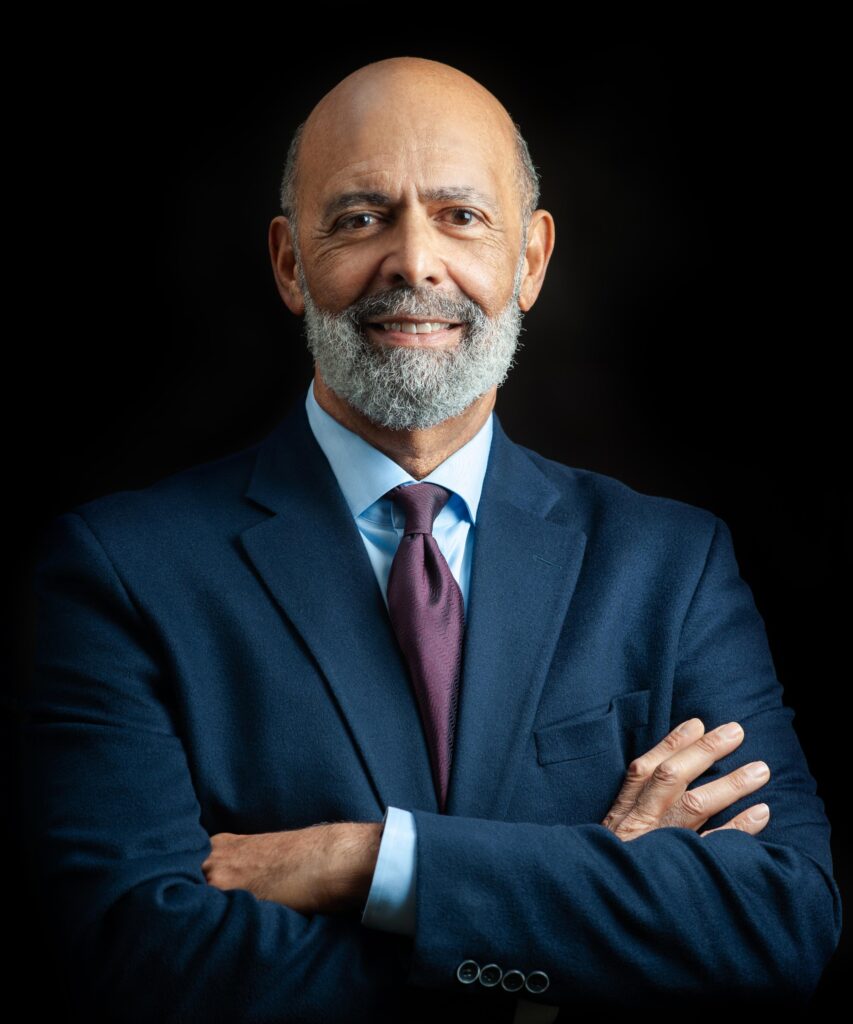
UNCF President and CEO Dr. Michael L. Lomax and Senior Vice President of Government Affairs Lodriguez V. Murray outlined their support in a letter made public Friday by Yahoo Sports reporter Ross Dellenger.
UNCF praised several parts of the Protect College Sports Act. The organization said a uniform national name, image and likeness framework would replace the current patchwork of state laws. It argued that the change would help HBCUs recruit and retain talent on a more level playing field.
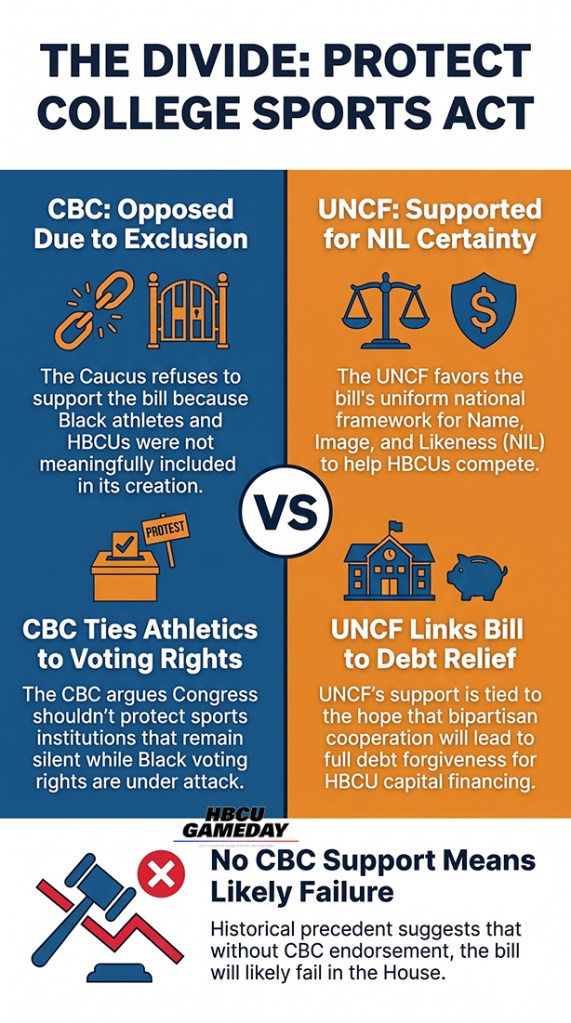
The letter also highlighted protections for scholarships, eligibility and NIL opportunities. UNCF said the legislation would increase transparency and strengthen oversight of agents. It would also give HBCUs more certainty as they plan for the future.
“Collectively, these provisions represent an important step toward ensuring that HBCUs remain full participants in the future of intercollegiate athletics,” the letter stated.
Congressional Black Caucus rejects current bill
The Congressional Black Caucus reached a much different conclusion one day earlier.
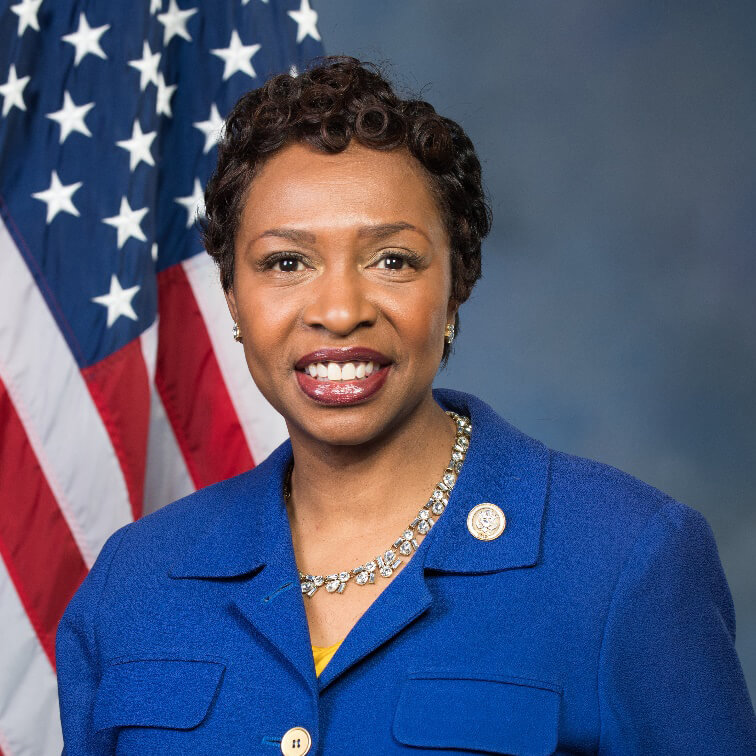
CBC Chair Yvette D. Clarke and caucus members announced their position Thursday. They “cannot support advancing the Protect College Sports Act in its current form,” the statement read. The CBC argued that lawmakers did not meaningfully include Black athletes, coaches, agents and HBCUs in shaping the bill.
“Meaningful engagement is measured by results, not meetings,” the CBC stated.
The caucus said the legislation provides sweeping legal protections to powerful athletic institutions. It argued that athletes would not receive adequate rights, representation and economic safeguards.
That concern centers partly on the bill’s antitrust provisions. The Congressional Budget Office said the measure would protect institutions, conferences and athletic associations from certain antitrust claims. That protection would apply when they enforce rules covered by the legislation.
The Protect College Sports Act would also establish national standards for NIL agreements, transfers and eligibility. Schools could not reduce scholarships because an athlete has an NIL deal. The bill would also create health coverage requirements and establish a student-athlete ombudsman.
The revised proposal includes a $22.5 million athlete-retention fund for eligible schools. Programs could unlock another $5 million by matching NIL spending on women’s and Olympic sports. That would raise the potential retention total to $27.5 million.
Supporters believe those rules would bring order to an unstable system. Opponents fear the compensation limits and antitrust protections would restrict athletes while insulating the institutions that have faced repeated legal challenges.
HBCUs land on both sides of national fight
The UNCF endorsement gives supporters a major response to claims that the Protect College Sports Act leaves HBCUs behind. UNCF represents 37 private HBCUs and has spent decades advocating for federal investment in Black colleges and their students.
Still, its position does not settle the question of how the bill would affect individual HBCUs or their athletes. The CBC insists that the people most affected by the legislation did not have enough influence over the final product.
“No legislation that disproportionately affects Black athletes should move through Congress without meaningful participation from the communities it will most directly affect,” the caucus stated.
The CBC also connected the college sports fight to attacks on Black voting power. It previously opposed the SCORE Actafter calling on the NCAA and major conferences to speak against efforts to weaken Black political representation.
House leaders eventually pulled the SCORE Act from consideration amid unified Democratic opposition and Republican defections. The CBC’s current position could matter again if the Protect College Sports Act clears the Senate and reaches the closely divided House.
UNCF used its letter to raise another HBCU priority: forgiveness of the remaining debt carried by eligible institutions through the HBCU Capital Financing Program. The organization praised lawmakers for working with it on the issue and called full forgiveness a historic federal investment.
The letter did not explicitly make UNCF’s support for the sports bill conditional on that debt relief. It presented the two matters as connected opportunities to strengthen HBCUs.
The Senate Commerce Committee advanced the Protect College Sports Act by a 19-9 vote in June. A revised version released this week gained support from the SEC and Big Ten, joining backing from hundreds of universities and major professional sports organizations.
But the emerging disagreement shows why counting “HBCU support” as a single bloc would be misleading. UNCF sees a framework that could provide stability and opportunity. The Congressional Black Caucus sees a process and a bill that still leave Black stakeholders without enough power.
Congress will ultimately decide which interpretation carries more weight. If the bill reaches the House, the same CBC opposition that helped stall the SCORE Act could once again become decisive.