
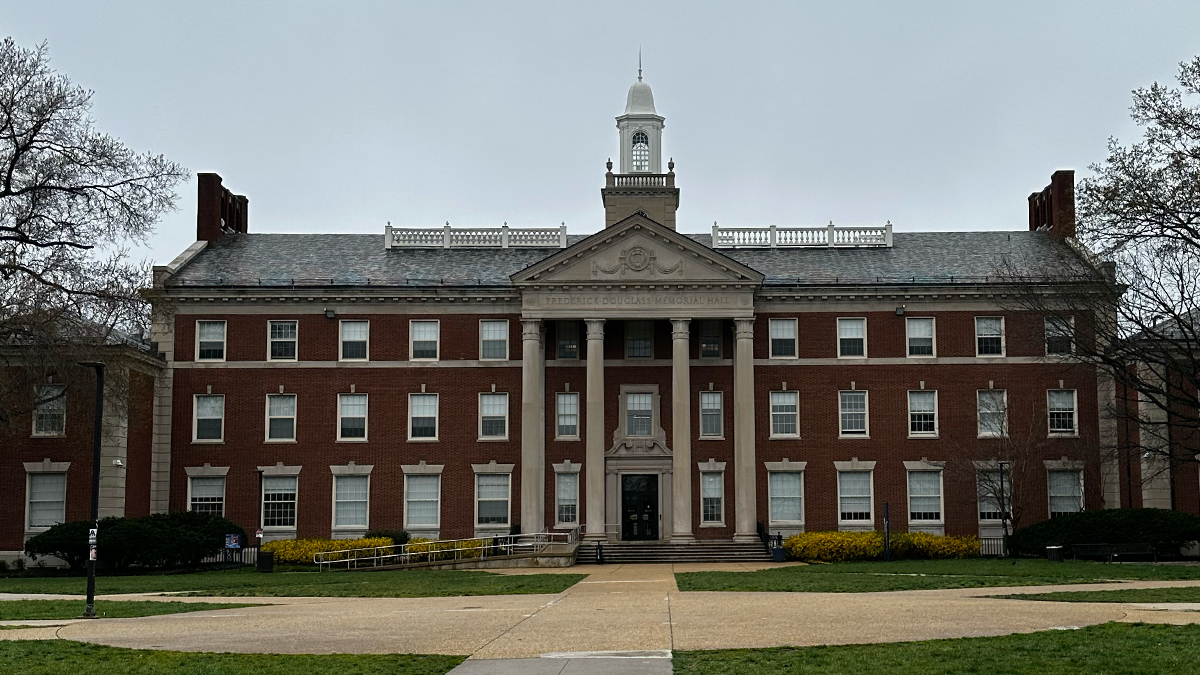
Howard University is offering voluntary separation packages to hundreds of faculty and staff members as the institution responds to a changing financial landscape shaped by new federal student loan lending rules, uncertainty in research funding and the rising cost of operating one of the nation’s premier HBCUs.
According to The Chronicle of Higher Education, approximately 600 employees are eligible for the voluntary separation program. That represents about 16 percent of Howard’s workforce. University leaders say the initiative is part of a long-term strategy to position Howard for the future. However the announcement also comes as colleges across the country begin adjusting to changes in Parent PLUS lending and other financial challenges.
The announcement follows another closely watched decision by Howard earlier this summer. The university disenrolled more than 500 incoming students who had not finalized payment arrangements before the start of the academic year. While more than 200 students were later reinstated, university officials said the decision reflected a changing financial environment affecting both students and institutions.
Taken together, the two developments suggest that even the nation’s most prominent HBCU is navigating a different financial reality than it did just a few years ago.
Howard University offers voluntary separation packages
Howard’s voluntary separation program is available to eligible full-time faculty and staff who meet specific age and years-of-service requirements. According to The Chronicle, employees must have at least 10 years of continuous service, and their age plus years of employment must total at least 70 to qualify for the incentive. (chronicle.com)
Interim President Wayne A.I. Frederick told the publication the program is designed to help Howard continue evolving after earning Research 1 status while also addressing broader financial pressures facing higher education.
Those pressures include a more competitive research funding environment and changes to federal student lending programs that many colleges have relied on for decades.
Howard has not indicated how many employees it expects will ultimately accept the voluntary separation offer.
Parent PLUS student loan changes are affecting colleges
Among the most significant financial changes for colleges is the implementation of new limits on Parent PLUS borrowing.
Beginning with the 2026-27 academic year, annual Parent PLUS borrowing is capped at $20,000 per dependent student. That includes with a lifetime borrowing limit of $65,000. Those changes are expected to affect families who have traditionally used the program to help cover the gap between financial aid awards and the total cost of attendance.
For many HBCUs, that matters.
Historically Black colleges have experienced record application growth in recent years. However, many also enroll students whose families depend heavily on federal financial aid programs to make college affordable. As borrowing limits change, institutions may have to rethink enrollment projections, financial aid strategies and long-term budgets.
Howard has not said the Parent PLUS changes alone prompted the voluntary separation program. However, university leaders have acknowledged that the new lending environment is one of several financial factors influencing institutional planning.
A question other HBCUs may soon face
Howard’s decision could prove to be one of the first visible examples of how HBCUs respond to a changing financial landscape.
Over the last five years, many Black colleges have celebrated record enrollment, increased philanthropic support and growing national recognition. At the same time, institutions have faced rising operating costs, deferred maintenance needs, housing shortages and increasing demands for student financial assistance.
Those pressures are not unique to Howard University.
The question now is whether other HBCUs will make similar adjustments in the months ahead.
Some institutions may slow hiring. Others could expand fundraising efforts, adjust enrollment targets or reevaluate staffing levels as they adapt to changing revenue streams.
Howard’s workforce initiative does not necessarily signal that similar moves are imminent across Black higher education. It does, however, underscore the financial decisions college leaders may increasingly face as they work to balance growing student demand with a rapidly evolving funding environment.
For HBCUs, the challenge is no longer simply attracting students. It is ensuring institutions have the financial flexibility to serve them in an era of changing federal aid policies and increasing operational costs.