
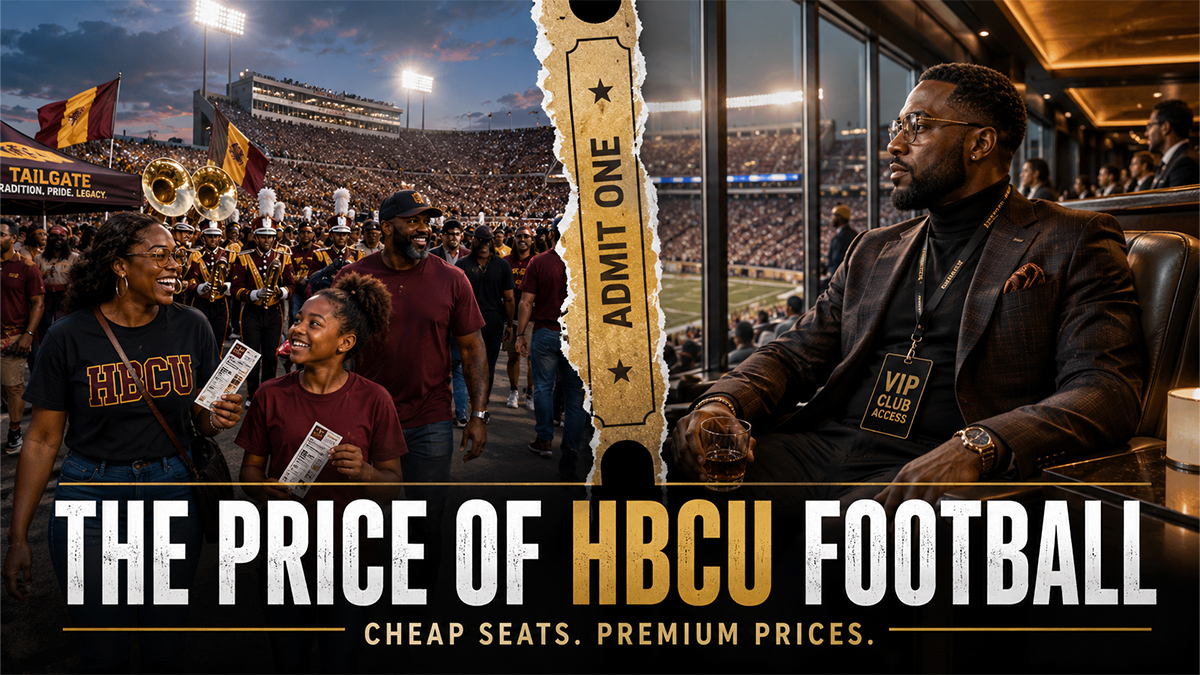
HBCU football tickets are telling a larger college football story in 2026, one that stretches from $70 season passes to premium suites and donor-driven packages.
For years, HBCU football has been built around access. A Saturday afternoon at the stadium has often meant alumni, students, families, band supporters, former players and local fans gathering around a shared tradition. That remains true.
But the 2026 ticket market shows something else, too.
HBCU athletic departments are becoming more strategic about how they price the full gameday experience. They are not just selling admission anymore. They are selling better seats, parking access, tailgate space, family bundles, digital convenience, hospitality and, in some cases, direct support for the modern athlete economy.
The range is wide.
Morgan State has an early-bird general admission option listed at $70. North Carolina Central has a Lawn Season pass listed at $72. Allen University has a digital pass listed at $83. On the other end, Alabama A&M has a Legacy Club package listed at $1,875, Delaware State has VIP Box Suites ranging from $1,000 to $1,800. Tennessee State offered a $15,000 package last year.
HBCU football is still one of the most accessible products in college football. But schools are also building pricing ladders designed to reach different fans at different levels.
HBCU football still has affordable entry points
The lower end of the 2026 ticket market shows that many HBCU programs are still protecting community access.
NCCU’s $72 Lawn Season pass is one of the clearest examples. Morgan State’s $70 early-bird general admission option is another. UAPB has a general admission option listed at $90. Virginia Union’s season pass is listed at $100. Bowie State’s Black Pass is listed at $105, while Fort Valley State’s general admission option is listed at $95.
That is a wide range of prices for a wide range of expriences.
At a time when college football costs are rising across the country, several HBCU programs still offer season-long access for around $100 or less. That is important for alumni who travel back to campus, families buying multiple tickets and fans who simply want to be in the building.
It also keeps HBCU football tied to its roots. The product has never been only about the final score. It is about the band, the tailgate, the Greek plots, the class reunions, the local vendors and the feeling of being back on campus. Low-cost tickets help keep that culture within reach.
But affordability is only one part of the 2026 picture.
The market is also showing a clear middle tier, where schools are trying to move casual buyers into more committed season-ticket packages.
Reserved seats are becoming the bridge.
Delaware State has a reserved option listed at $200. NCCU has reserved bleacher seating listed at $169. Morgan State’s reserved seating is listed at $150. UAPB has a bench-back 50-yard line season package listed at $160, while Fort Valley State has reserved seating listed at $140.
For athletic departments, this tier is critical. General admission fills seats. Reserved seating creates more predictable revenue.
It also gives fans a reason to commit before the season starts.
A better sightline, an assigned seat or a seatback can turn a one-game customer into a season-ticket holder. That is the kind of conversion every athletic department needs, especially in a college football environment where travel, staffing, equipment and facility costs continue to climb.
Premium tickets are becoming part of the HBCU model
The upper end of the HBCU football ticket market shows a different goal.
Some schools are no longer just asking fans to attend. They are asking high-end supporters to invest in the program at a higher level.
Alabama A&M’s Legacy Club package is listed at $1,875. It includes premium seating, VIP parking, hospitality access and a Bulldog Collective contribution. Delaware State’s VIP Box Suites range from $1,000 to $1,800 and include box seats, early access, ambassador service and pregame social invitations. Prairie View A&M’s Club 2026 option is listed at $300 and includes admission to all five home games and parking.
Those packages show how HBCU football is moving toward a more segmented model. There is still a seat for the budget-conscious fan. There is still a place for the season-ticket loyalist. But there is also a growing space for boosters, corporate buyers and alumni who want a premium experience.
That is not just about luxury. It is about revenue.
Alabama A&M has been one of the more direct schools in explaining the purpose behind price increases. Its athletics materials frame season tickets as a way to contribute to the program, raise standards and carry tradition forward. The school has also connected pricing to sustaining operations, competing with similar institutions and attracting talent.
HBCU football is not operating outside the new college sports economy. It is operating inside it, but with fewer resources than many larger programs.
That is where ticket strategy becomes more than a box-office issue. It becomes part of the larger athletic budget conversation.
The most interesting piece may be Alabama A&M tying premium ticket packages to a Bulldog Collective contribution. That moves NIL support closer to the ticket booth.
For years, schools sold tickets in one lane and asked for donations in another. The 2026 market suggests those lanes are starting to merge.
At some HBCUs, buying the best seat in the house may also mean buying into the program’s athlete-support strategy.
The ticket is only part of the cost
For many HBCU football fans, the ticket is just the beginning.
Parking, tailgating and Homecoming access can change the real price of gameday quickly. The 2026 pricing report describes the stadium perimeter as a high-margin revenue source. That is especially true at HBCUs, where tailgating is often as central to the experience as the game itself.
Fort Valley State has season RV tailgating listed at $600. Bowie State’s Gold RV tailgate option is listed at $655. North Carolina A&T has a Homecoming tailgate space listed at $600, compared to a $100 regular-game tailgate rate.
That sets up another major question for HBCU athletics.
What is the full cost of being a fan?
A season ticket may still be affordable. But the full experience can include parking, tailgate space, food, travel, lodging and Homecoming premiums. For fans who build their fall around HBCU football, those costs add up.
Digital ticketing is also changing the experience.
Southern University has discontinued PDF tickets and moved fans to Ticketmaster mobile entry. North Carolina A&T has moved to Paciolan’s All-IN-1 digital pass, which updates automatically for each game. Several schools are encouraging fans to add tickets to Apple Wallet or Google Wallet before gameday.
That shift can help schools fight fraud and improve operations. It can also give athletic departments better fan data. But it comes with a learning curve.
HBCU crowds often include older alumni and longtime supporters who may not move as quickly with new technology. Schools will have to balance modernization with customer service.
That is the larger story of HBCU football tickets in 2026.
The market is changing while the culture is still there. The challenge is keeping both in balance.
HBCU athletic departments need revenue to fund programs, improve facilities, support athletes and compete in a changing college football landscape. Fans still need the experience to feel accessible, familiar and worth the cost.
The best programs will likely be the ones that can do both.
The 2026 ticket market shows HBCU football in transition. There are still affordable seats. But there are more premium options and new digital systems. There are bigger asks of boosters. There is also a growing understanding that gameday is bigger than the ticket itself.
For HBCUs, the future of football revenue may come down to one question.
Can schools raise the value of the experience without pricing out the people who made it valuable in the first place?