
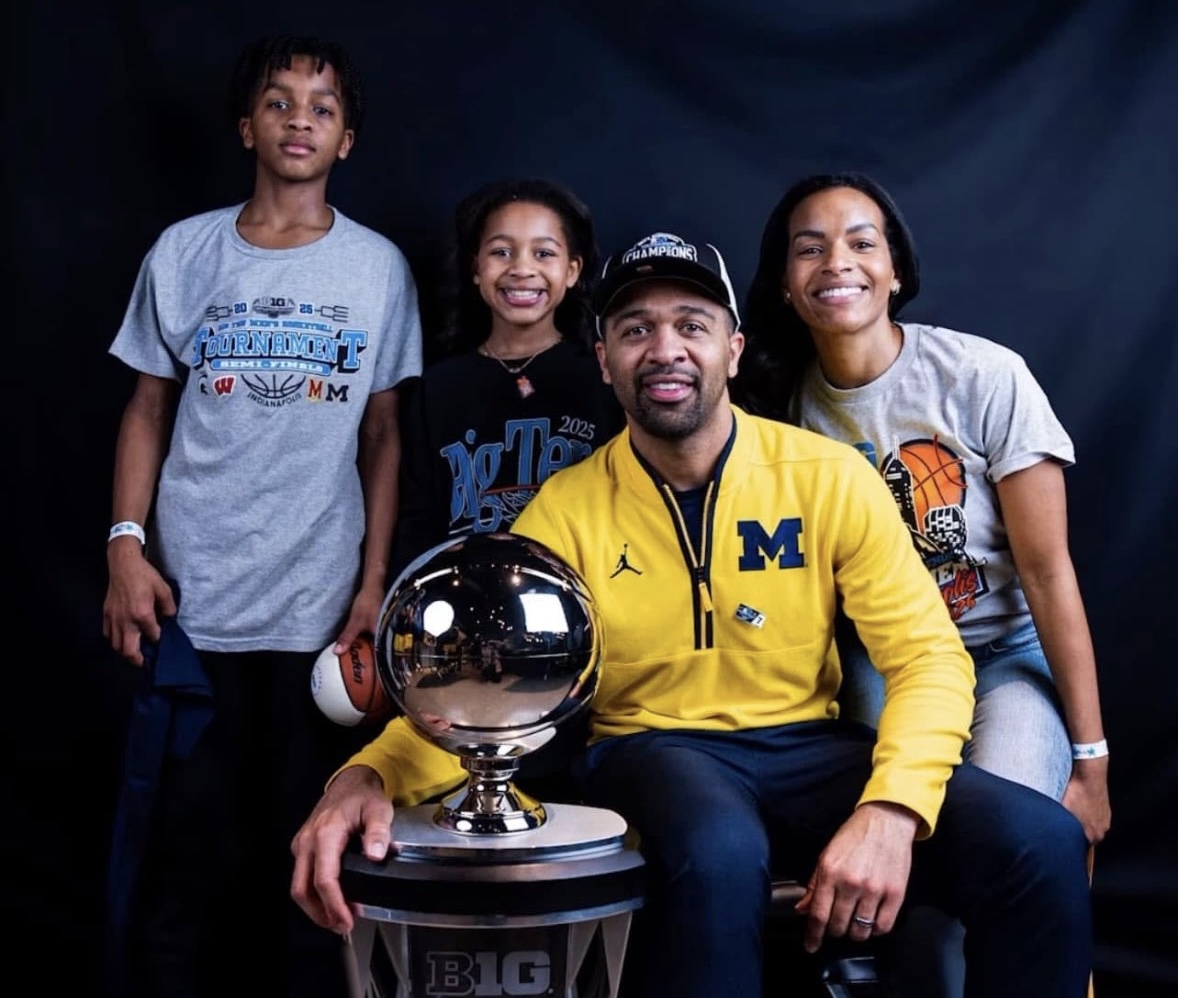
Dusty May led the Michigan Wolverines men’s basketball to a national title, but he had help from two former HBCU assistants.
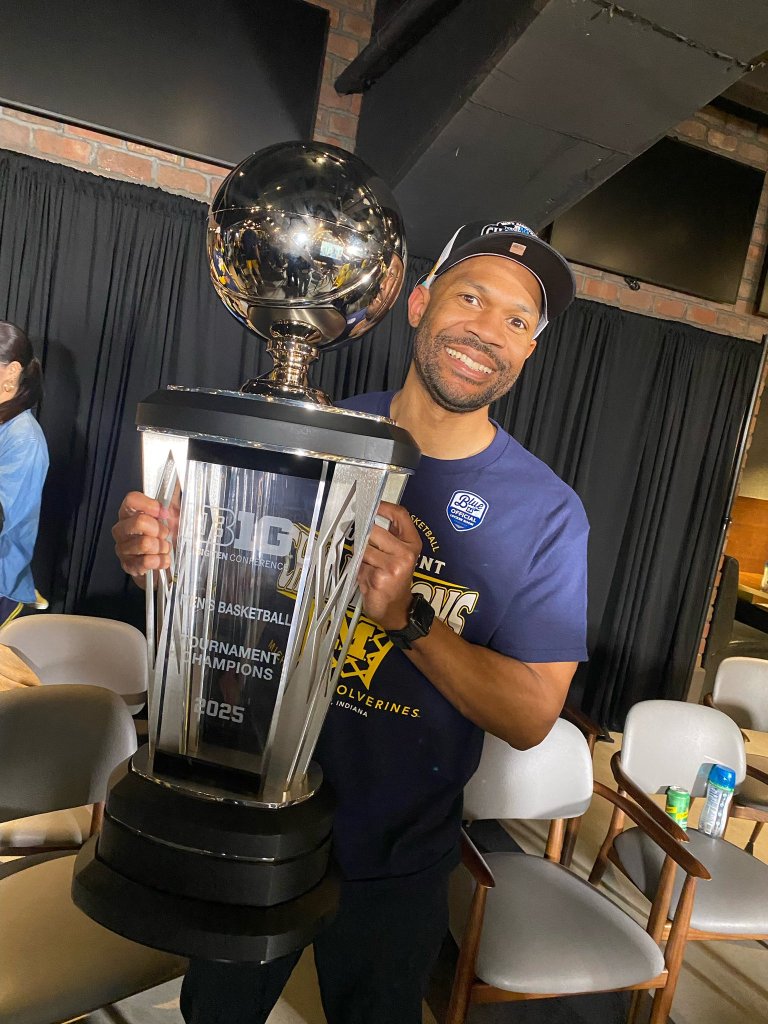
Two assistant coaches with deep ties to HBCU programs — Drew Williamson and Akeem Miskdeen — played key roles in Michigan’s title run. Both men sharpened their coaching skills at historically Black colleges and universities before joining Dusty May and ultimately reaching the sport’s biggest stage.
HBCU experience laid ground work
Drew Williamson, who previously coached at Virginia State University, built his reputation through player development and recruiting. His time at the CIAA program helped establish his ability to connect with athletes and maximize talent, traits that translated well at the Division I level.
With an 87-26 record in CIAA play, Williamson helped VSU win six straight CIAA Northern Division titles, capture two CIAA Tournament crowns (2016 & 2019) and make four appearances in the NCAA DII Tournament and advancing to three regional semifinal games.
Akeem Miskdeen followed a similar path. Before joining Michigan, he served on staff at Hampton University, where he developed a reputation as a strong recruiter and detail-oriented coach.
Recording 98 wins throughout his career with the Pirates, he helped them capture the 2016 Mid-Eastern Athletic (MEAC) regular-season title (13-3), win back-to-back MEAC Tournament titles, which earned two straight trips to the NCAA Tournament (2015 & 2016). The regular-season title was Hampton’s first since the 2001-02 season.
Impact on Michigan’s championship run
That HBCU foundation matters. It forces coaches to adapt, teach, and lead in ways that aren’t always required at power programs.
Michigan’s national championship wasn’t just about talent. It was about preparation, discipline, and cohesion — areas where assistant coaches often make their biggest impact.
Williamson and Miskdeen were part of a staff that helped guide Michigan through a challenging NCAA Tournament. The Wolverines leaned on defensive execution and timely scoring throughout March, ultimately closing out UConn in a tightly contested title game.
Their presence highlights a growing trend. HBCU coaching pipelines continue to produce high-level basketball minds who can thrive at the sport’s highest levels.
Dusty May recognized talent
For HBCU coaches, this moment hits deeper than just a title. It’s validation.
Coaches who grind at the Division II and mid-major HBCU levels often do so without the same visibility or resources. Yet their work continues to shape the broader college basketball landscape. Dusty May recognized this at Florida Atlantic and brought both with him to Michigan.
Williamson and Miskdeen’s journey from HBCU sidelines to a national championship bench sends a clear message — the talent within HBCU programs extends beyond players.
More than a championship
Michigan’s national championship will be remembered for the final score and the celebration. But for those paying attention, it also represents opportunity and progression.
Two coaches with HBCU roots helped guide a blue-blood program to the top of college basketball. That just proves you never know who on an HBCU bench can become a national champion.