
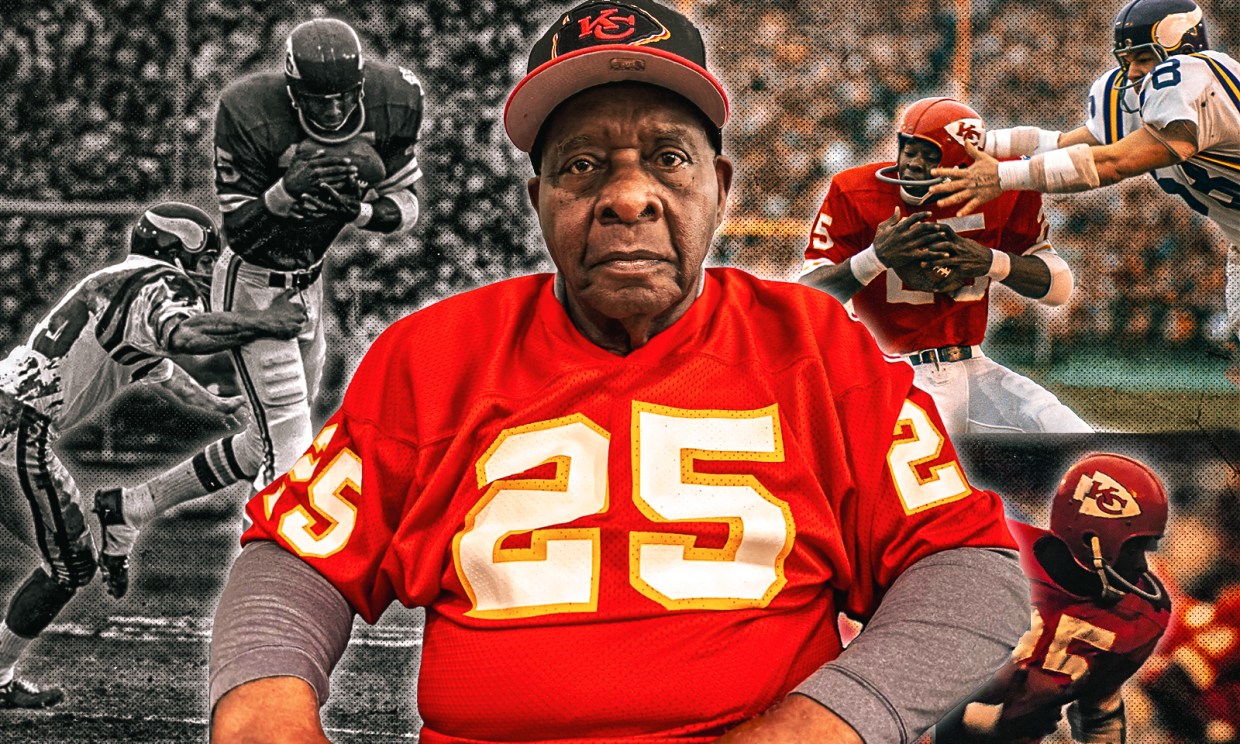
The Southern University legend played in the first Super Bowl and later won Super Bowl IV, helping shape the golden era of HBCU players in the NFL.
Frank Pitts never needed to explain where he came from. His football journey told that story for him. Pitts, a Southern University football standout who played in the first Super Bowl and later won an NFL championship, died on Jan. 16 at age 82. His passing marked the loss of a figure whose life bridged HBCU football’s golden era and the earliest days of the Super Bowl.
Born in South Carolina and raised in Atlanta, Pitts found his football home at Southern University in the early 1960s. During that era, collegiate opportunities for Black athletes remained limited to the HBCU sphere. Southern served as both a proving ground and a launchpad.
Pitts emerged as a dynamic wide receiver and helped strengthen the Jaguars’ national reputation. His performance placed him among a generation of HBCU football players who competed at a high level despite societal limitations.
That path eventually led him into professional football history.
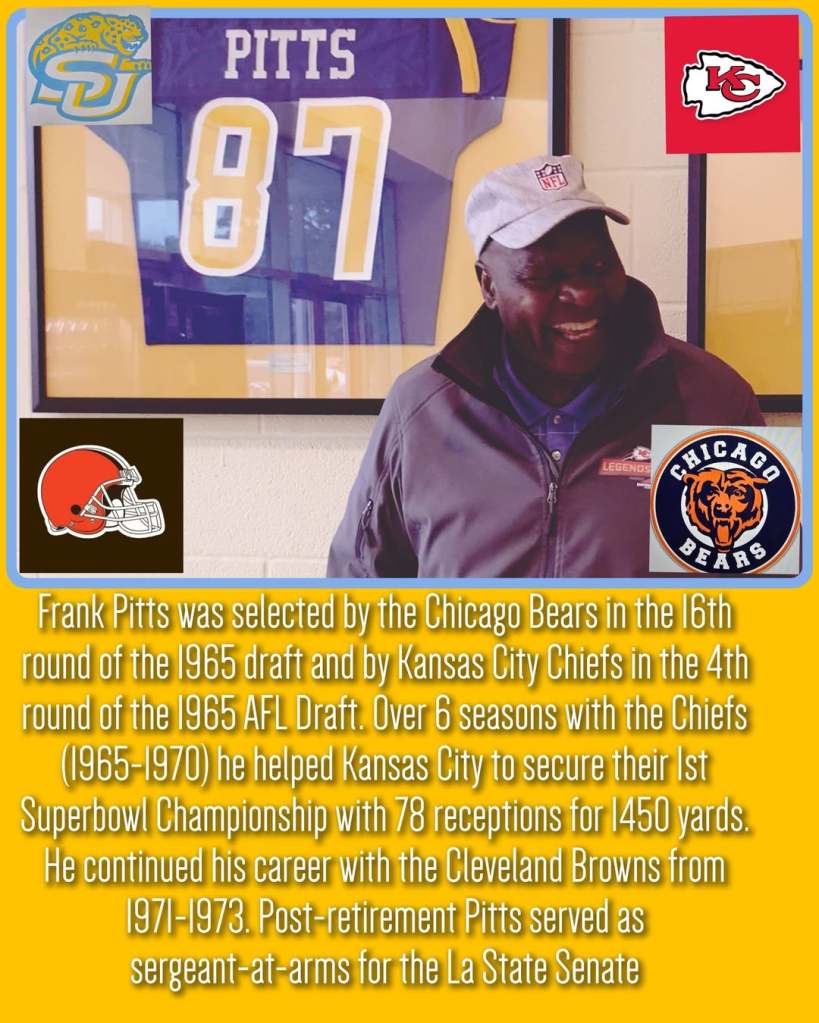
From Southern University to the First Super Bowl
The Kansas City Chiefs selected Pitts in the fourth round of the 1965 AFL Draft. He began a 10-season professional career during the turbulent AFL-NFL merger era.
In January 1967, Pitts took the field in the first Super Bowl, then known as the AFL-NFL World Championship Game. The Chiefs lost 35–10 to the Green Bay Packers. Still, Pitts secured his place in history.
HBCU football produced a generation of professional stars during that era. Only a select few, however, played on the Super Bowl stage while the game itself was still being defined.
Pitts later returned to the Super Bowl with Kansas City and helped the Chiefs defeat the Minnesota Vikings 23–7 in Super Bowl IV. The win, played in New Orleans, validated the AFL and reshaped professional football’s future.
A Career Built on Versatility and Longevity
Pitts spent time with the Cleveland Browns, Oakland Raiders, and Atlanta Falcons. He contributed as both a wide receiver and special teams player. Over his career, he scored approximately 27 receiving touchdowns and earned respect as a reliable professional.
His playing days reflected the grit required of early HBCU football alumni. Pitts adapted, endured, and thrived in a league still defining itself.
Returning Home to Serve Southern University
After retiring from the NFL, Frank Pitts returned to Baton Rouge. He served as Director of the F.G. Clark Activity Center and coached wide receivers for the Southern Jaguars.
He mentored players who followed the same HBCU football path he once took to the Super Bowl. Pitts also served as sergeant-at-arms for the Louisiana State Senate, extending his commitment to service beyond athletics.
To those around him, Pitts represented more than championships. He embodied discipline, history, and continuity.
A Legacy Carried Forward by Brandon Bolden
That legacy continues through his grandson, Brandon Bolden.
Bolden grew up hearing stories of Super Bowl Sundays and watching old game film alongside his grandfather. Pitts’ Super Bowl IV ring became both an heirloom and a source of motivation.
Bolden later starred at Ole Miss before carving out a decade-long NFL career with the New England Patriots, Miami Dolphins, and Las Vegas Raiders. Like his grandfather, he built his value through special teams and reliability. He also won two Super Bowls with New England.
When Bolden joined the Raiders, he chose jersey No. 25 to honor his grandfather. The gesture connected two eras of professional football under the same colors. The bond went deeper than symbolism. Pitts reviewed game film with his grandson and offered guidance until the end of Bolden’s career in 2023.
Remembering a Trailblazer
Frank Pitts is survived by his wife of 60 years, Diane Pitts; three children; six grandchildren; and four great-grandchildren.
His story stretches beyond statistics. Pitts stood at the intersection of HBCU football and the Super Bowl, helping open doors for generations that followed. His influence lives on through the players he coached, the institution he served, and a grandson who carried his example onto football’s biggest stage.
Prayers for the family.