
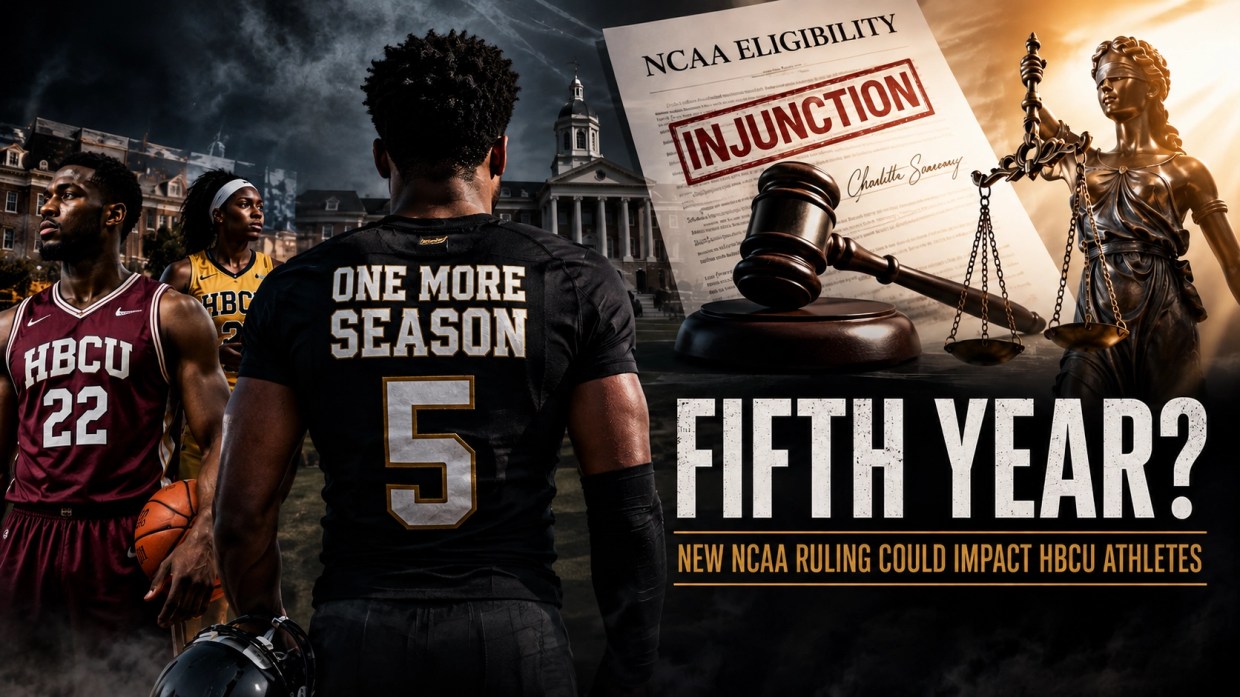
A federal judge’s latest ruling on NCAA eligibility could have ripple effects across HBCU athletics, potentially giving some former student-athletes one last opportunity to return to the field or court. Last week, U.S. District Judge Charlotte Sweeney issued a preliminary injunction preventing the NCAA from automatically denying a fifth season of competition to athletes who first enrolled in college in 2022 and have already exhausted four seasons of eligibility.
The ruling immediately sparked conversations across college athletics, where coaches and athletic departments are now evaluating whether former players could become eligible again.
While the decision has generated excitement, a follow-up order from Sweeney makes clear that not every athlete from the 2022 class will qualify.
What the ruling means for HBCUs
For HBCU programs, the decision could create unexpected roster opportunities if the injunction ultimately stands.
Schools in conferences such as the SWAC, MEAC, SIAC and CIAA could potentially welcome back experienced veterans who appeared to have exhausted their eligibility after the 2025-26 academic year. Veteran players often serve as leaders in the locker room, and another season could provide stability at key positions while giving athletes another opportunity to improve their professional prospects.
The timing is especially significant as many HBCU programs continue navigating the transfer portal, revenue sharing and changing roster management rules.
Who could qualify?
The ruling is narrower than it first appeared.
Judge Sweeney clarified that athletes must still meet several NCAA eligibility requirements, including:
- Be 24 years old or younger
- Not have signed a professional contract
- Continue to follow NCAA transfer portal rules
- Compete within the roster limits and revenue-sharing cap established by the House v. NCAA settlement
In other words, the injunction does not create a blanket fifth year for every athlete who enrolled in 2022.
The NCAA’s age-based eligibility rule—which generally starts an athlete’s five-year eligibility clock after turning 19 or enrolling in college, whichever comes first—remains in place under the judge’s clarification.
NCAA already fighting the decision
The NCAA has already appealed the injunction, meaning the legal battle is far from over.
In a statement following the clarification, NCAA Chief Legal Officer Scott Bearby emphasized that the House settlement’s roster limits and financial restrictions remain fully enforceable.
“The District Court of Colorado has granted the NCAA’s motion to clarify the injunction and make clear that the House Settlement’s roster limits and benefits cap remain fully in effect,” Bearby said.
For now, schools can evaluate whether current or former athletes qualify under the order, but the NCAA’s appeal could ultimately change the landscape before many athletes take the field.
Why HBCU coaches will be watching closely
Although the ruling originated from a lawsuit involving former Northern Colorado basketball player Brock Wisne, its implications stretch far beyond one program.
For HBCU coaches, another year of eligibility could mean retaining proven starters instead of replacing them through the transfer portal. Programs that have built championship-caliber teams around veteran leadership may benefit the most if eligible players choose to return.
At the same time, the House settlement’s roster caps mean schools cannot simply add returning players without difficult roster decisions elsewhere.
For now, the ruling creates more questions than answers. But until the appeal is resolved, HBCU athletic departments—like programs across the country—will be closely monitoring which athletes may have one more season left to play.