
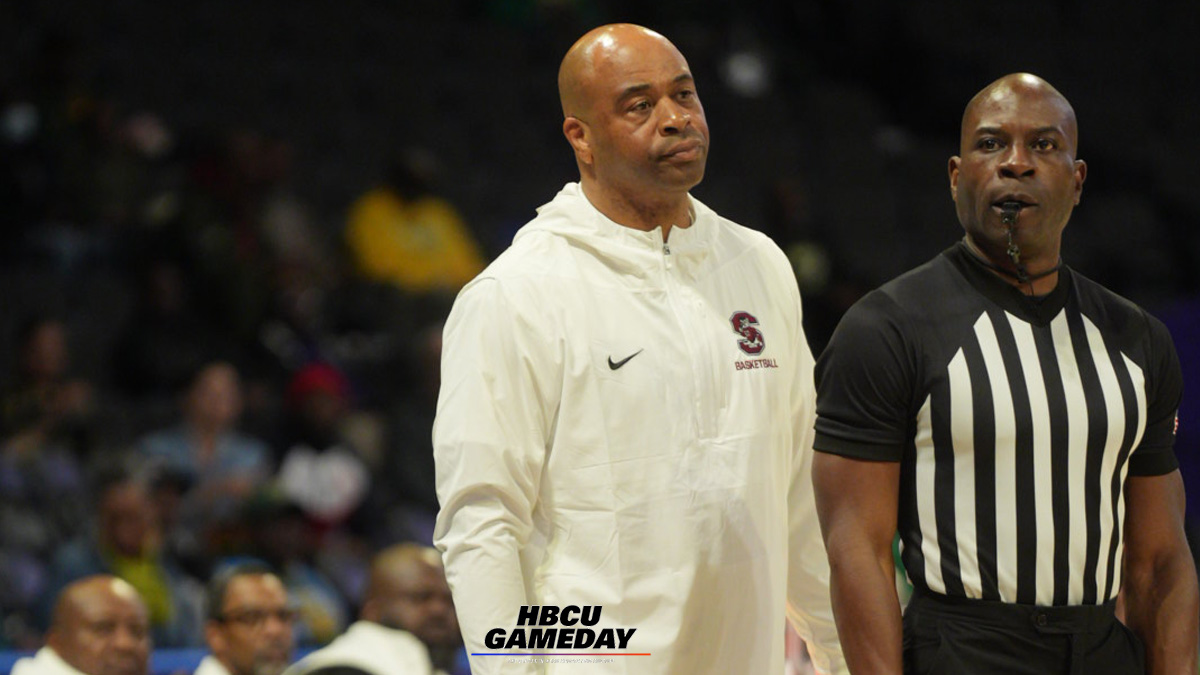
When it comes to NIL, many HBCU and small Division I programs like South Carolina State just don’t have the money. SC State head coach Erik Martin gave some of the most candid commentary on NIL and the transfer portal of any Division I coach on Friday night.
Following a 78-61 defeat to Howard, Martin reflected not only on the game but the landscape that programs like his operate within as player movement and compensation reshape college athletics.
“I’d love to have guys back,” Martin said. “But the reality is — go get your money, man. Go get your money. I’m not one of those coaches that’s going to hold a kid back.”
A different reality for many HBCU programs
While South Carolina State competes at the Division I level, Martin was frank about the program’s limitations when it comes to NIL resources.
“We have to be creative in how we recruit because we don’t have any NIL,” Martin said. “So we start our conversations with recruits by saying that. Let’s get that out of the way so we don’t waste each other’s time.”
But he wasn’t complaining. Instead of competing with larger programs financially, Martin focuses on something different. He offers players — opportunity.
“I can’t get you the money,” he said. “But I can get you to the money. Come play with me for a year, do well, and you can go.”
In many ways, that approach has turned programs like South Carolina State into developmental stops for players seeking larger opportunities through the transfer portal.
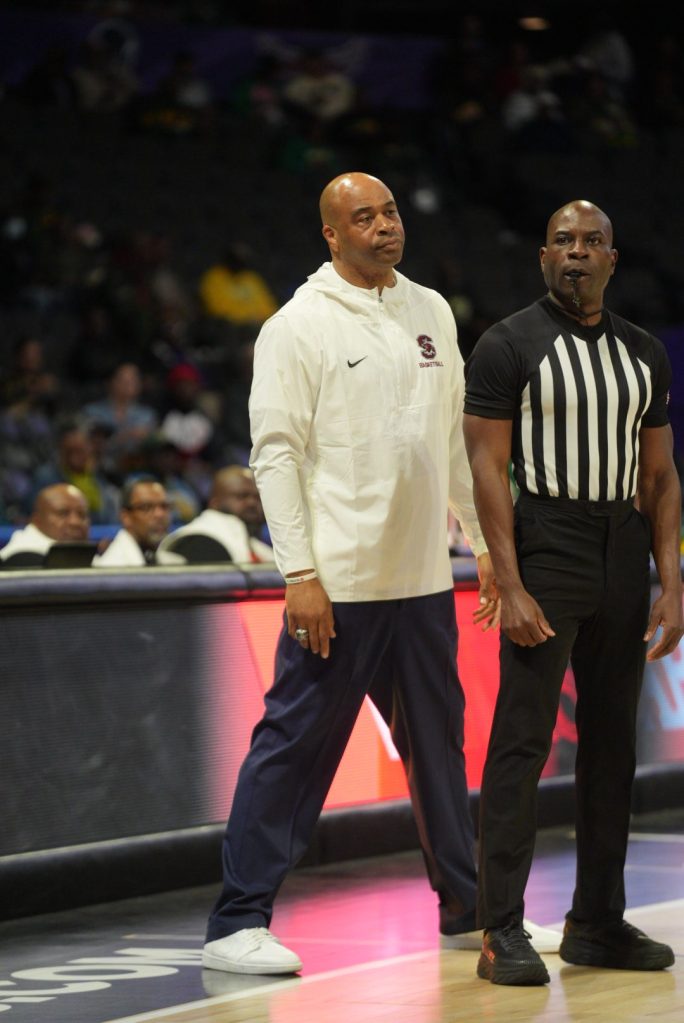
Supporting players chasing opportunities
Martin emphasized that while roster turnover can be difficult for coaches, he does not begrudge players who leave for better financial situations.
“I’m one of those guys who played and didn’t get paid,” Martin said. “So I’m glad this generation is getting the money.”
He also pointed out the double standard that sometimes emerges in conversations about player compensation.
” They don’t put a salary cap on me. They don’t put a salary cap on the presidents, ADs. If you get four million, that’s what you should get paid. So I would love to have my team back all the time, but I know you got to go.”
One recent example came from former South Carolina State center Drayton Jones. After developing in Martin’s program, Jones received a larger opportunity at Butler. Martin said he supported the decision. Jones donated money back to the program.
“That’s what you want for these young men,” Martin said. “You want them to be successful.”
Concern about the future of NIL
While Martin supports players benefiting from NIL, he also expressed concern about discussions in political circles about potentially restricting NIL opportunities.
Without naming names, Martin referenced conversations about possible federal action that could alter NIL rules.
“I hope whoever is making those decisions doesn’t step in and change things,” Martin said. “Who’s to say how much money someone can make?”
For Martin, the issue is simple: players deserve the same economic freedoms that exist throughout the rest of college athletics.
“I have yet to hear a college say they’re running out of money,” he said. “So I hope these kids keep getting theirs.”
A new recruiting reality
With the transfer portal reshaping college basketball each offseason, Martin said South Carolina State must search everywhere for talent.
“Your best players might leave,” he said. “That’s just the reality now. You have to turn over every stone to find players.”
Even so, Martin remains optimistic about the direction of his program.
“I’m happy with where my program is trending,” he said.
For programs like South Carolina State, the modern era of NIL and player movement brings constant roster turnover. But for Martin, the mission remains the same. He wants to develop players, help them succeed and support them. Even when that success leads them somewhere else.