
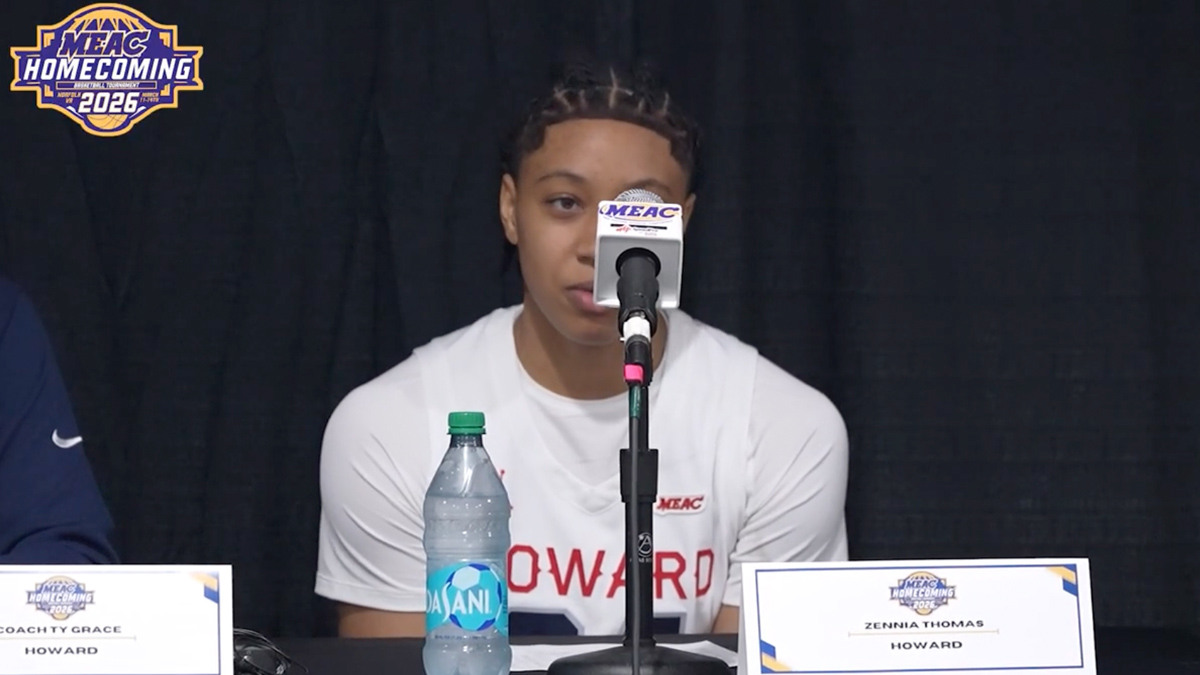
Howard University made a statement in the MEAC opener, before the national anthem and after it.
The biggest statement from the MEAC regular-season champions on Wednesday wasn’t just the 75-43 win over South Carolina State to advance to the semifinals. It was that Howard continued its decision to sit out the national anthem, a team-wide approach that has become part of its identity since 2020.
National anthem: The rule and Howard’s workaround
Howard’s University women’s basketball program has framed the current situation as a rule-driven change in method, not a change in message.
The protocol is straightforward: student-athletes are expected to stand during the national anthem. If they do not plan to stand, they must remain in the locker room until the anthem concludes. That structure removes the option of kneeling on the court — but it doesn’t eliminate protest entirely.
Howard’s response has been to stay in the locker room, avoiding a public pregame confrontation while still refusing to participate in the anthem ritual. In other words: the Bison are complying with the procedure, not surrendering the purpose.
Guard Zennia Thomas said the program’s position is rooted in continuity and conviction, even as the environment around them changes.
“I mean coach has instilled in us that it’s just bigger than kneeling,” Thomas said. “I mean we’re supporting a cause that’s been going on since 2020. So, I mean, at the end of the day, like unfortunately, we have to abide by certain rules, but we’re still going to stand on our beliefs and our morals.”
Thomas also made clear that the team is thinking beyond a single pregame moment, looking for ways to keep advocating without allowing policy to “deteriorate” what they believe.
“It’s just about, you know, sticking to what we believe in, sticking to supporting our morals, and not letting anything kind of deteriorate that and finding new ways to kind of, still be able to protest in a way,” she said.
Howard University: A March spotlight, on and off the court
The timing matters. Howard University is trying to close a championship season, and postseason runs come with a bigger audience. That includes people who weren’t paying attention in January.
That spotlight can force programs into false choices: either prioritize winning or values. Howard is trying to do both. The team’s stance hasn’t disappeared because the stakes got higher; if anything, it has become more visible because the games now matter more.
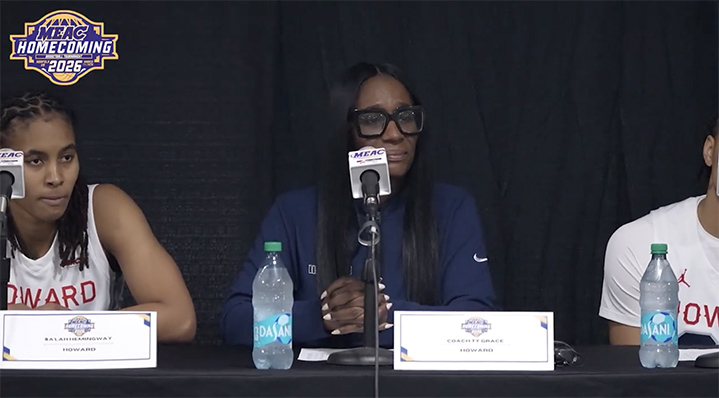
Head coach Ty Grace reinforced that the program’s anchor is unity, and that the team has handled the pressure of the moment with maturity.
“I agree with everything Z said, they’re going to support each other. They’re going to support each other,” Grace said. “We’re going to do what we need to do. We’re going to have further conversations going into the end of the season, but they’ve done a great job handling um everything thus far. So, I’m proud of them.”
Grace said Howard’s strength is the ability to be individual people — and still lock arms when it counts.
“They all are who they are individually. But when we come together as a team, we’re going to have each other’s back and um stand together,” he said.
HBCU: Winning the MEAC without losing the message
For an HBCU program, especially one wearing the “Mecca” label, the standard isn’t just performance. It’s also leadership, tradition, and being a living example of what the institution claims to stand for.
Howard’s current posture is a tightrope: keep the department’s protocol, keep the team’s unity, keep the protest’s meaning, and keep winning.
On the court, the Bison moved one step closer to the NCAA Tournament with the win over South Carolina State. Next up is the winner of North Carolina Central vs. Coppin State. But as Howard pursues a MEAC championship, it’s making one thing plain: the method may shift, but the stance remains.