

Winston-Salem State University (WSSU) is the 2025–2026 CIAA women’s basketball champion.
It is the first CIAA championship in program history and it was done in dominating fashion. These are all
As a journalist, those are the indisputable details I’m supposed to lead with. But if I’m being honest — I was deeply and emotionally invested in this run. And I’m okay with that.
This story didn’t start in Baltimore. It didn’t start with a confetti shower. It started a year ago when L’Tona Lamont told me she was retiring. She’s one of my favorite people in this business. The moment she said she was stepping away, my mind immediately went to one question: What’s next for WSSU women’s basketball?
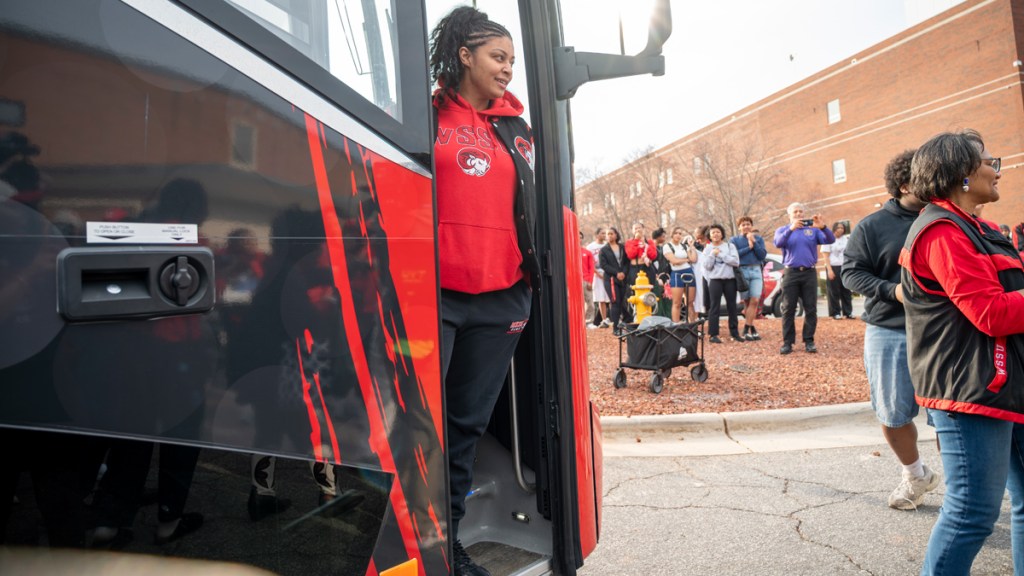
Finding the right leader
At the time, Tierra Terry was having her best season as a head coach at Virginia Union. She’s a Winston-Salem State alumna from my era. I don’t think I ever interviewed her. But I knew who she was. I knew she understood the culture. And I knew she was growing.
At the 2025 CIAA Tournament, after Virginia Union lost in the semifinals, I jokingly ran into Dr. Hakim Lucas and told him, “We (WSSU) coming to get our girl.”
A couple months later, the news broke — Tierra Terry was coming home to WSSU.
I drove 45 minutes one way to pick up my daughter early from daycare. Then I rolled back through rush hour traffic to cover her introductory press conference with a one-year old I didn’t think I could keep still. Luckily WSSU Assistant AD of Operations and Equipment April Reid kept my daughter busy while daddy covered the press conference.
When she walked into that room, you could see it in her eyes — this wasn’t just another job. This was her alma mater. Winston-Salem State is special to her just like it is to me and a lot of us.
But emotion doesn’t win games — work does.
From Seven Wins to Something Different
The Lady Rams were coming off a seven-win season. Optimism was cautious at Meet the Rams. We felt hopeful but uncertain.
Then the season started. First home game: 100 points and a win. That wasn’t normal around here. But WSSU kept winning.
Five in a row. Six. Seven. Eight.
That’s when I started digging through record books. The longest win streak after returning to Division II? Ten. The program record for consecutive wins? Twelve.
Now my history brain kicked in.
This wasn’t just a good team — it was potentially a historic team. I made sure to speak on it as much as possible on the WSSU Ram Nation platform.
When they tied the record, the chancellor rewarded them with sneakers. When they broke it, former greats came back to witness it. Through it all, Terry and her players were grateful for the acknowledgment— but made it clear the title was the goal. That mattered.
A Personal Inspiration
Then life reminded me it’s bigger than basketball.
During that Fayetteville State loss after the snowstorm, my grandmother was declining. Soon after, she passed. Her funeral was scheduled on the same Saturday WSSU was set to face Fayetteville State in the rematch.
I sat in that service thinking about closure, about transitions — and yes, about whether I could make it back in time for tip-off. When the funeral ended, I made the 15-minute drive and got there in time to watch them win by 14.
That game brought me joy in a moment of grief. It was something steady in a season of change. They played hard, together, and they won.
Hope, Prayer, and Perception
Fast forward to Baltimore.
By then, people had opinions. About me, about coverage and about whether WSSU got too much shine.
On Thursday, I wore a WSSU hat — not as a statement, just a bad hair day. Tyreece Brown pointed it out. He joked about “WSSU Gameday.” It wasn’t the first time I’d heard someone say that. And it wouldn’t be the last.
But then came the line: “We don’t hope — We pray.”
I don’t know when I used the word hope publicly, but apparently I had. And it struck a nerve. It became bulletin board material and fuel for all of WSSU Ram Nation.
And that’s the part about this business people forget — narratives move people.
I showed up Friday with a chip on my shoulder and a WSSU shirt on my chest. It was under my quarter-zip at first — until the press conference started. I asked direct questions. He laughed and said I was trying to troll him. And he wasn’t wrong. But by then he had already gotten the ball the rolling. At this point the lines between coach and journalist blurred into a combustible moment of HBCU pride between two men who loved their school.
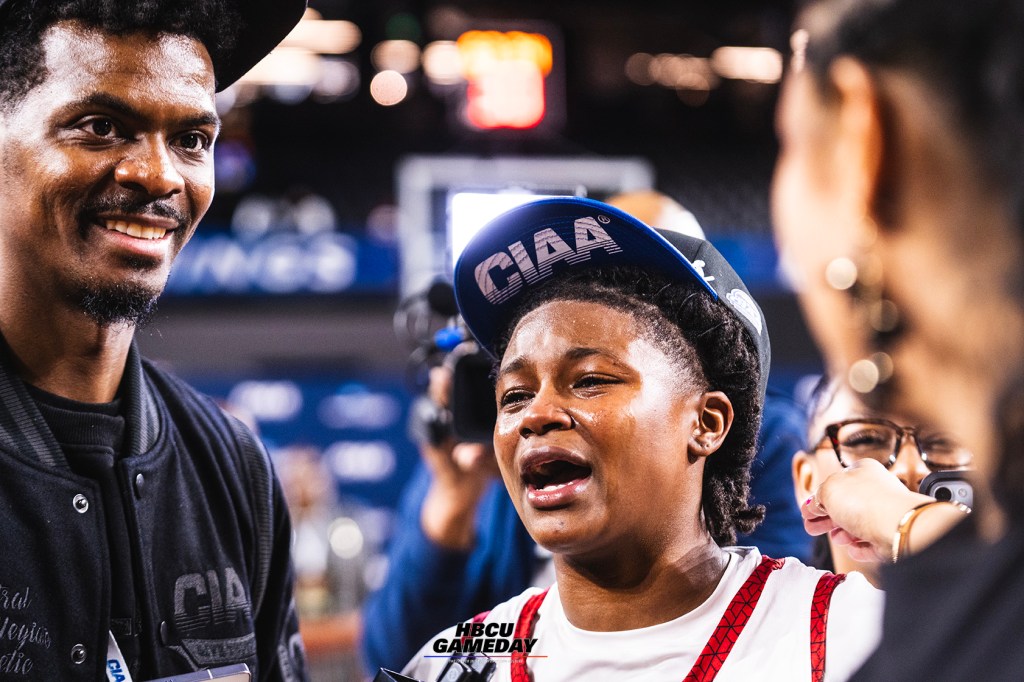
But then came Gameday. And that Gameday belonged to WSSU women’s basketball.
WSSU was too much. Too deep, connected and locked in.
It felt like watching Michael Jordan finally get past the Detroit Pistons. You knew the breakthrough was coming. You could feel it building. And when it happened, it wasn’t fluky. It was earned.
After the game, players told me they felt the sting of the press conference commentary. I don’t think that was Brown’s intent, but intent and impact clearly aren’t always the same. Especially the implication that WSSU didn’t pray too. That mattered to them.
“We are a God fearing program,” WSSU assistant Jessica Freeman said.
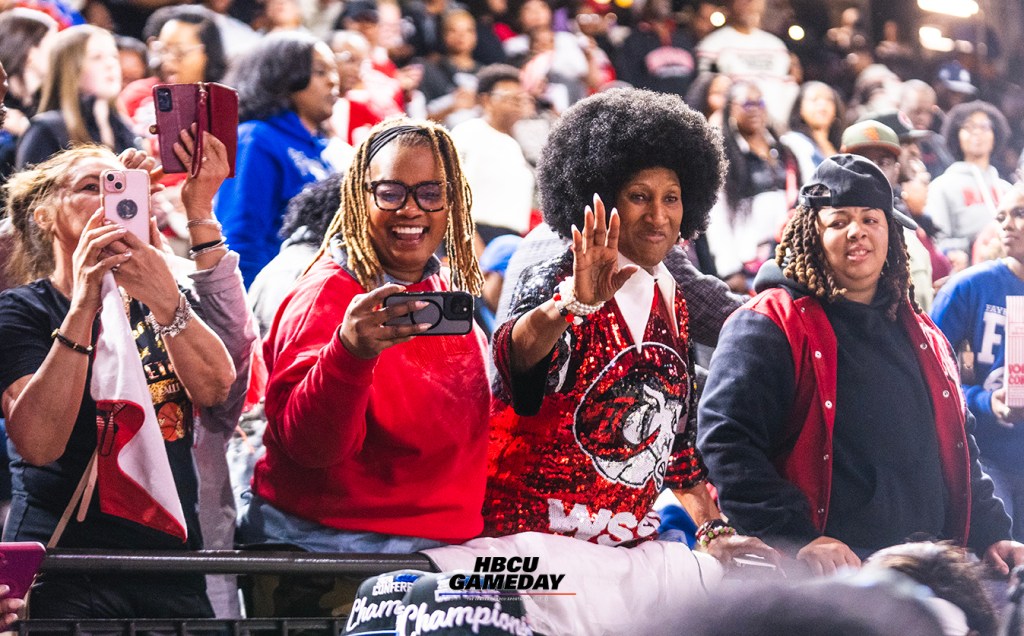
Of course, I was just one person who felt the emotion beyond the final score. There was “Mama K,” a one of the first women’s basketball players at WSSU turned super fan. There was Sharon Holloway Tanner, WSSU’s all-time leading rebounder, who hugged me with tears in her eyes. These women and many others had longed for the day their HBCU would win the CIAA.
So yeah, they did inspire hope in others. But they prayed and prepared and showed up ready to dominate their one-time bully. And that’s exactly what they did.

Why This One Hit Different
WSSU women’s basketball didn’t just win a championship. It filled a void in the university’s history. Literally, there was space waiting for the first championship on the wall in the C.E. Gaines Center.
The program has a chance to quadruple its win total from the previous year. It is nationally ranked. The 26-3 squad is headed to the NCAA Division II playoffs. They did it behind an alumna who convinced players — many with no prior connection to the school — to buy into something bigger than themselves.
That’s leadership, culture and legacy.
Yes, I was emotionally invested. It’s my alma mater and I covered this story with vigor from my backyard.
But here’s the thing: if we can’t care about stories like this — transformative, historic, deeply human stories happening in our own backyard — then what exactly are we doing?
This team inspired hope — but also put in the work.
It prayed — but it also prepared.
It earned every single piece of what it received. And I’m proud that I was there to document it. Not just because it was WSSU.
But because it was history.
And this history deserves to be told.