
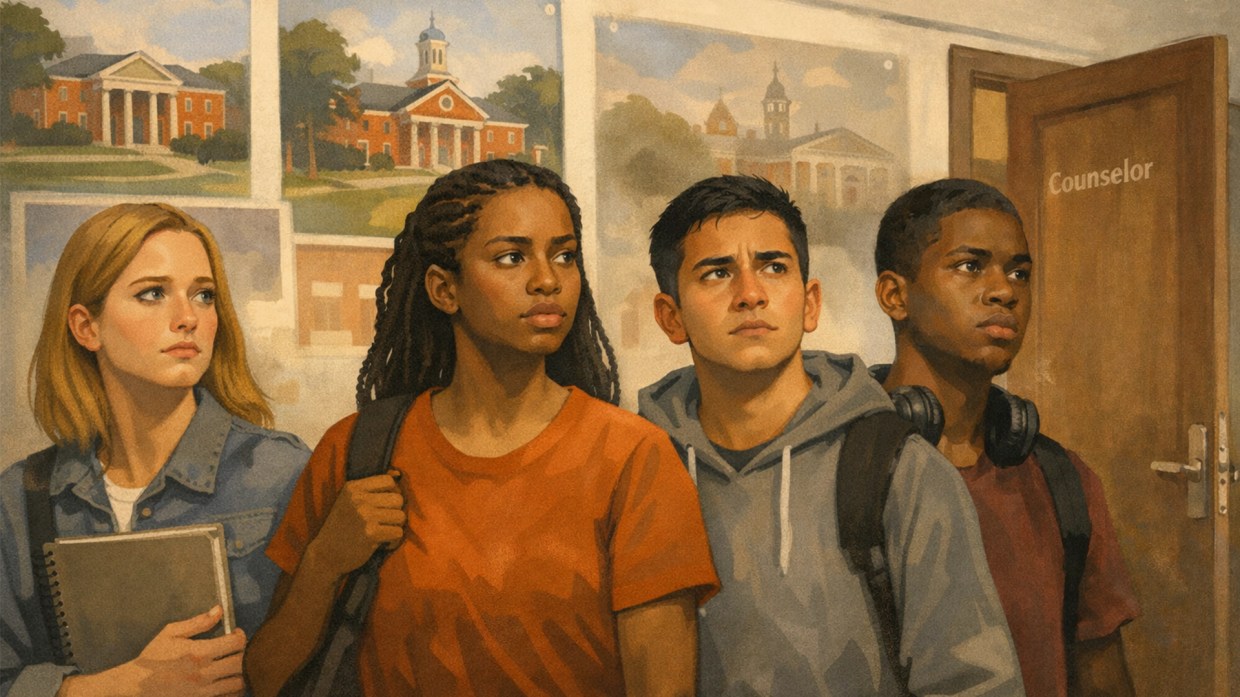
A new study released by the United Negro College Fund (UNCF) reveals a significant disconnect between what high school educators know about Historically Black Colleges and Universities (HBCUs) and what students are actually learning about them.
The study, “Breaking Barriers, Building Bridges,” was released on January 2, 2026, and examines how teachers and school counselors influence college readiness and exposure to HBCUs among high school students.
Students Largely Unfamiliar With HBCUs
Despite strong awareness among educators, most students surveyed reported little to no familiarity with HBCUs.
The study surveyed nearly 150 students, teachers, and school counselors across seven high schools in the Northeast, Midwest, and West. While 67% of teachers and 60% of school counselors said they were knowledgeable about HBCUs, more than 60% of students said they were either not at all familiar or only slightly familiar with these institutions.
Awareness gaps were especially pronounced among non-Black students:
- 83% of Hispanic students reported little or no familiarity with HBCUs
- 80% of white students reported the same
- Roughly half of Black and multiracial students also reported low familiarity
Counselors Rarely Suggest HBCUs
The study found that school counselors rarely guide students toward HBCUs:
- 53% of students said counselors never or rarely suggested attending an HBCU
- 54% said counselors never or rarely provided resources about HBCU attendance
- Only 36% of students said they often or always discussed college options with counselors
Among students who said they were not planning to attend an HBCU, 58% cited simply not knowing enough about them. Meanwhile, just 14% of students planning to attend an HBCU said a teacher or counselor encouraged them to do so.
Educator Influence and Bias Remain Key Factors
“The pivotal role of K-12 schools in shaping students’ college aspirations and preparedness cannot be overstated,” said Dr. Meredith B.L. Anderson, co-author of the study and UNCF’s Director of K-12 Research and Advocacy. “Teachers and school counselors carry considerable influence in guiding students through the college application process.”
While the study found positive trends among teachers who regularly reviewed student data and advocated for fair school policies, it also uncovered instances of bias. Some educators expressed deficit-based perceptions of students of color, questioning their academic readiness, motivation, or ability to afford college.
Co-author Ashlyn Thomas, UNCF’s research and engagement manager, emphasized the importance of data-driven advocacy.
“Intentional student data review among teachers and other school staff is a critical way to ensure students are on the path to post-secondary success,” Thomas said.
Recommendations for Schools and HBCUs
The study outlines several recommendations aimed at closing the awareness gap.
For high schools and districts:
- Increase exposure to HBCU scholarships and financial aid opportunities
- Train teachers to review student data to identify achievement gaps
- Provide anti-bias training for teachers and counselors
For HBCUs:
- Distribute financial aid and scholarship information directly to high schools
- Share academic and student support resources with local communities
- Partner with K-12 schools to support anti-bias training initiatives
“We believe the findings of this study will contribute to dismantling barriers surrounding higher education and perceptions of HBCUs,” said Dr. Tia Dolet, co-author and founder of Thirdspace Collective Consulting. “It will help build bridges between schools, communities, and HBCUs to enhance college access for all students.”
UNCF’s Ongoing Commitment
UNCF currently supports students through more than 11,000 scholarships totaling over $62 million annually, benefiting students at a wide range of institutions, including its 37 member HBCUs. Since its founding in 1944, UNCF has raised over $6 billion to support access to higher education.
Learn more about UNCF’s K-12 research and advocacy efforts at UNCF.org/k12advocacy.