
When evaluating the greatest HBCU football programs, the schools in Divsion II are often left out of the conversation. These schools, some of the first to play black college football, are often overlooked. But not at HBCU Gameday.
At the Division II level, the conversation must begin with sustained success. While flashes of brilliance and recent titles matter, the most respected programs have demonstrated longevity, maintained winning traditions, and captured championships across multiple eras. This ranking focuses exclusively on programs currently competing at the Division II level and does not include those that have since transitioned to the FCS.
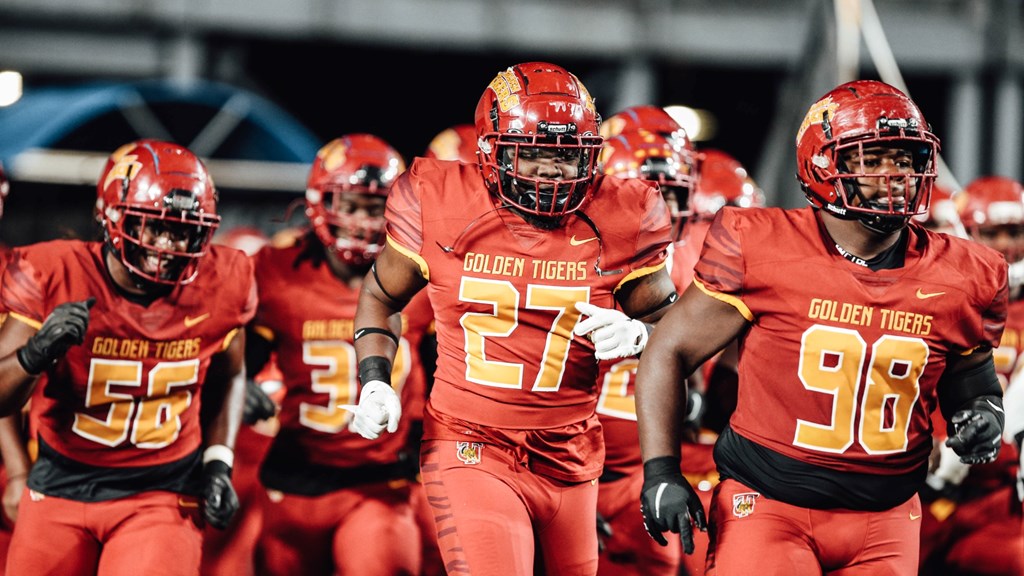
At the top of the Division II HBCU football mountain stands Tuskegee University. With a record of 719 wins, 396 losses, and 49 ties across 128 seasons, the Golden Tigers boast a .638 winning percentage—the highest among DII HBCUs. Tuskegee has claimed an astounding 30 conference titles and 13 national Black college championships. Its success spans generations, with championship runs from the 1920s through the early 2000s. Tuskegee is the standard by which all other Division II HBCU programs are measured and its resume stands with that of its peers in Division I.
Not far behind are the stalwarts of the CIAA: Virginia State and Virginia Union. Both programs have been active for over 120 seasons, and each has surpassed 600 wins while maintaining win percentages above .600. Virginia State has won 12 conference championships, with six division crowns, and claims four national titles. Virginia Union mirrors that with 12 championships (nine division) and three national championships. Their ability to remain relevant from the 20th century into the 21st cements their place among the elite.
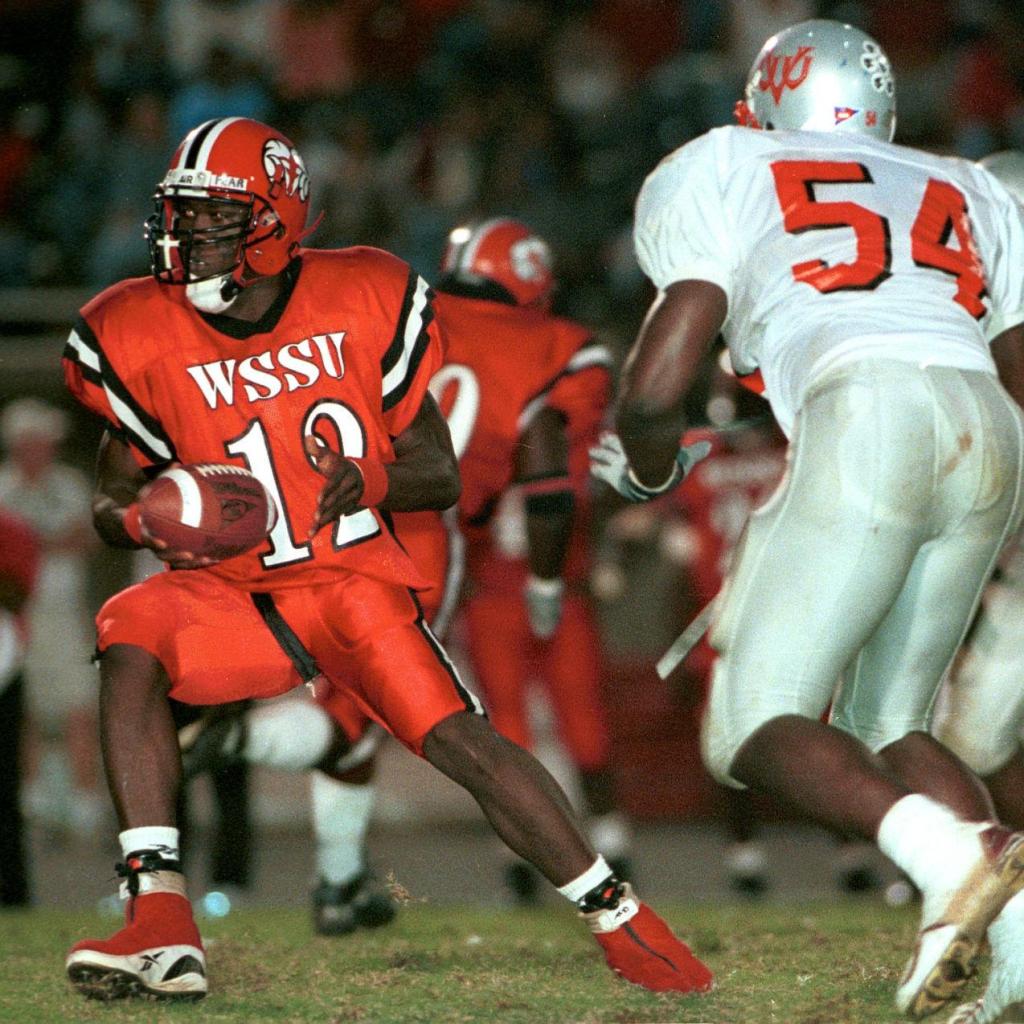
Winston-Salem State deserves special mention for its dynamic stretches of dominance, particularly during the 1970s, 80s and 2000s. Though they have only played 83 seasons, the Rams have racked up 460 wins, 12 championships, and four claimed national titles. Their success in both the CIAA after a brief run in Division I reflects the high ceiling of this program, even if their win percentage (.571) slightly trails the top tier.
Albany State rounds out the upper echelon. Though their first conference title didn’t come until 1985, the Golden Rams have made up for lost time. With a .605 win percentage, 15 conference championships, and three national titles, Albany State has become the flagship program of the SIAC in the modern era.
Other programs like Fort Valley State, Central State, and Morehouse College also command respect. Fort Valley has 451 wins and 12 titles, while Central State dominated the NAIA scene in the 1980s and 1990s, winning eight national championships. Morehouse, with 124 seasons under its belt, stands out for historical significance even if modern success has been limited. Programs like Miles College and Benedict have shown championship mettle recently, but climbing the ladder takes some time.
On the other end of the spectrum, a consistent losing record over time can contribute to a loss of status. Programs such as Lane College, Clark Atlanta, and Lincoln (MO) have struggled to maintain relevance despite long histories. In these cases, tradition alone isn’t enough to keep pace with the upper tier of HBCU football programs.
Then there are the two schools that started HBCU football: Johnson C. Smith and Livingstone College. The two schools kicked things off back in 1892, but have combined for just three CIAA titles since, with the most recent one being won by Livingstone in 1998.
As the landscape of HBCU football continues to evolve, especially in light of NCAA reforms and realignment pressures, these Division II programs stand as testaments to the enduring legacy of Black college football at the small college level.
HBCU D2 Football Tiers
? BLUEBLOODS
The most historically dominant and iconic Division II HBCU football programs
- Tuskegee — 128 seasons | 719–396–49 (.638)
30 SIAC titles | 13 national titles - Virginia State — 118 seasons | 603–378–53 (.608)
- 12 championships | ? 4 national titles
- Virginia Union — 123 seasons | 605–396–47 (.600)
12 championships | 3 national titles
TIER 1
Legacy-rich programs with long-term relevance and success across multiple eras
- Winston-Salem State — 83 seasons | 460–343–25 (.571)
12 championships (17 division) | 4 national titles (claimed) - Albany State — 76 seasons | 442–285–21 (.605)
15 conference titles | 3 national titles - Central State — 93 seasons | 455–358–33 (.557)
8 national titles - Fort Valley State — 79 seasons | 451–305–21 (.594)
12 conference titles
TIER 2
Consistently strong or culturally significant programs with recognized championship eras
- Morehouse — 124 seasons | 454–515 (.470)
7 titles (5 in league’s first decade) - Bowie State — 52 seasons | 247–273–6 (.475)
3 CIAA titles | 3 national titles - Shaw — 38 seasons | 161–191–8 (.458)
5 titles | 1 national title - Fayetteville State — 89 seasons | 342–418–27 (.451)
4 titles | 1 national title - Miles College — 53 seasons | 179–329–7 (.354)
8 SIAC titles
TIER 3
Programs with respectable history, recent surges, or competitive periods
- Benedict — 23 seasons | 106–135 (.439)
2 SIAC titles (recent) - Lincoln (PA) — 72 seasons | 184–301–28 (.386)
1 title | 3 national titles (early 1900s) - Johnson C. Smith — 96 seasons | 362–490–34 (.428)
1 title - Livingstone — 75 seasons | 268–433–14 (.385)
2 titles - Saint Augustine’s — 36 seasons | 121–181–4 (.401)
- West Virginia State — 101 seasons | 361–511–40 (.417)
- Elizabeth City State — 81 seasons | 341–415–20 (.452)
1 title
TIER 4
Programs with limited football success, recent revival, or long stretches of inactivity or underperformance
- Clark Atlanta — 85 seasons | 235–456–23 (.345)
6 titles (Clark College era) - Savannah State — 75 seasons | 230–450 (.342)
- Lane College — 82 seasons | 252–450–21 (.363)
1 title - Lincoln (MO) — 92 seasons | 253–504–25 (.339)
- Edward Waters — 4 DII seasons | 17–24 (.414)
- Allen — 4 seasons | 12–24 (.333)
- Kentucky State — 103 seasons | 402–510–26 (.423)
- Bluefield State — 16 seasons | 59–62–6 (.488)
2 early national titles, but dormant for decades