
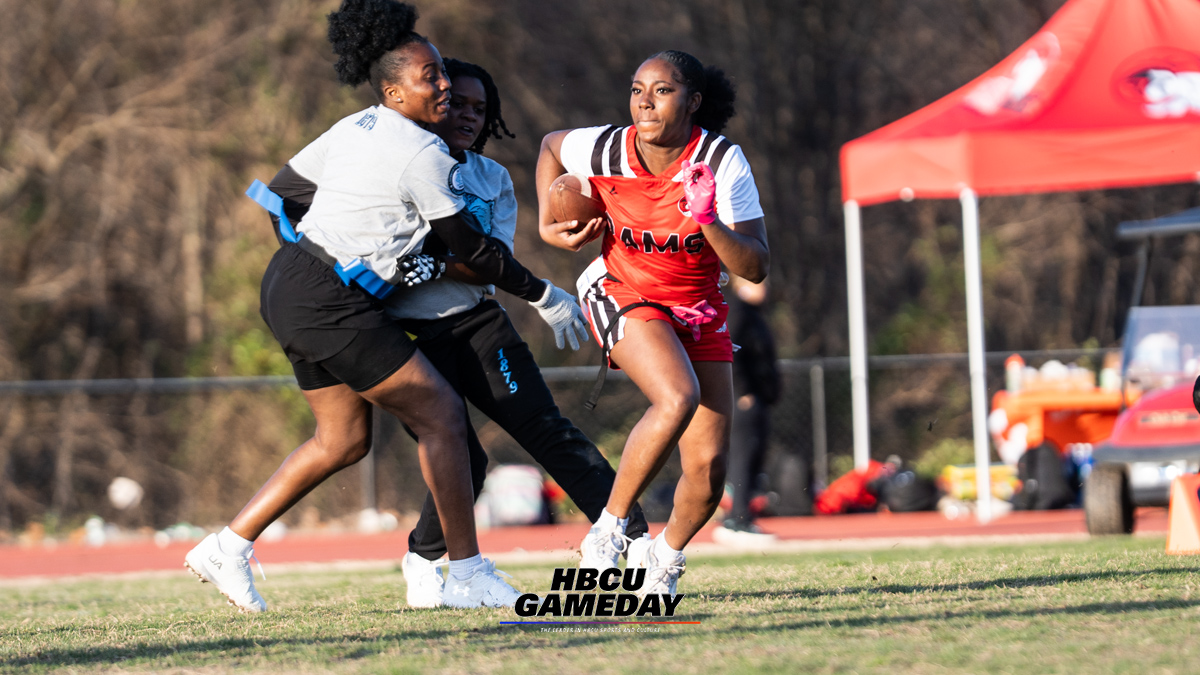
The CIAA, the oldest HBCU conference, took a bold step into the future this past spring, launching its inaugural season of women’s flag football. With eight programs participating — including Winston-Salem State, which claimed the inaugural title — the response exceeded expectations. It laid a strong foundation for what could be a transformative sport for the HBCU landscape.
A Strong Start for a New Era
“I wasn’t expecting that we would have that many schools,” CIAA Commissioner Jacqie McWilliams-Parker told SB Nation. “I think there’s a lot of institutions that are trying to at least strike the interest of having flag football.”
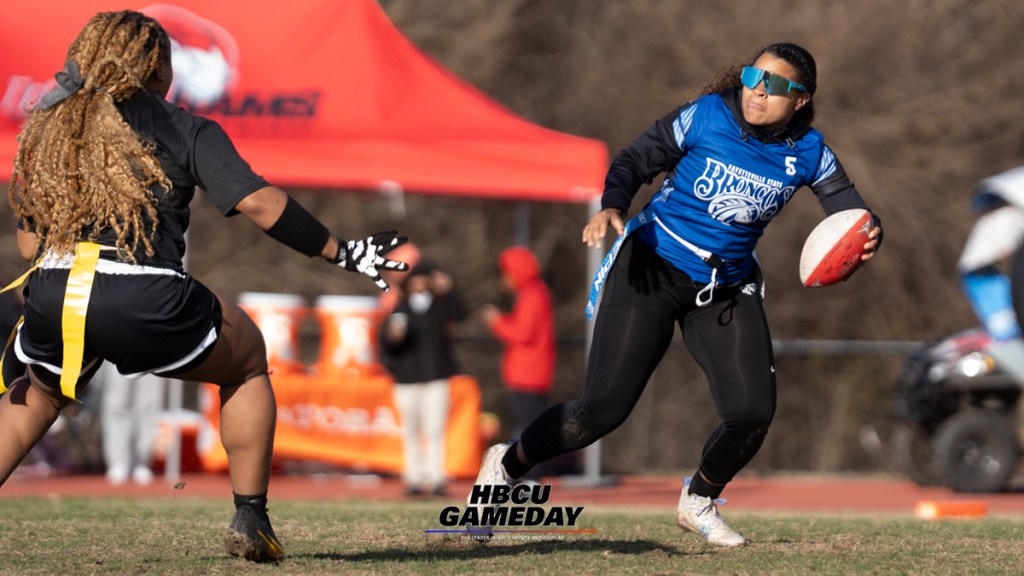
The CIAA is now leading the way in growing women’s flag football at the collegiate level. What began as a club initiative is quickly gaining traction toward becoming a full-fledged varsity sport.
“There’s an intent to play again this spring,” McWilliams-Parker confirmed. “I think we put funding in the budget so that we can do this jamboree again. I think there’s still commitment from our institutions, and the women are excited.”
NFL Support and Olympic Momentum
That excitement reflects a national trend fueled by the NFL. The league has played a key role in elevating flag football through partnerships with colleges and high schools. McWilliams-Parker revealed that the NFL pitched the sport to all four NCAA HBCU conferences — the CIAA, SIAC, MEAC, and SWAC — nearly four years ago.
“We’ve been talking about [flag football] probably before it even got bigger,” McWilliams-Parker said. “Hopefully we’ll get some additional funding this year. We’re working on that as well. But if not, I still think the schools are committed to having that platform.”
With flag football set to debut at the 2028 Olympics, the timing couldn’t be better for HBCUs to invest in the sport’s growth.
A Path to Varsity Status
Currently, flag football is classified as a club sport in the CIAA. But McWilliams-Parker believes that could change soon.
“Once it becomes an official sport for [the NCAA], most likely it appears that our conference is going to have it as a varsity sport,” she said. “Right now, we’re just trying to figure out the interest, but I think there’s a strong interest in our conference to have it as a varsity sport.”
Her goal is to transition women’s flag football into a varsity sport by the 2026–27 academic year. That includes creating an official season and scheduling structure.
Building an HBCU Flag Football Community
McWilliams-Parker — the first woman to serve as CIAA commissioner and a proud graduate of Hampton University — also sees an opportunity for broader HBCU collaboration.
“I think it’d be really fun if we could figure out how to do an HBCU flag football tournament or week, or something like that,” she said. “We’re going to be meeting this summer to kind of strategize what sports and collaboration looks like for us.”
The Future Looks Bright
With strong backing from institutions, growing student enthusiasm, and possible funding from external partners, women’s flag football has a promising future. The CIAA is not only laying the groundwork for its own programs but also positioning HBCUs to thrive in a fast-rising sport.