
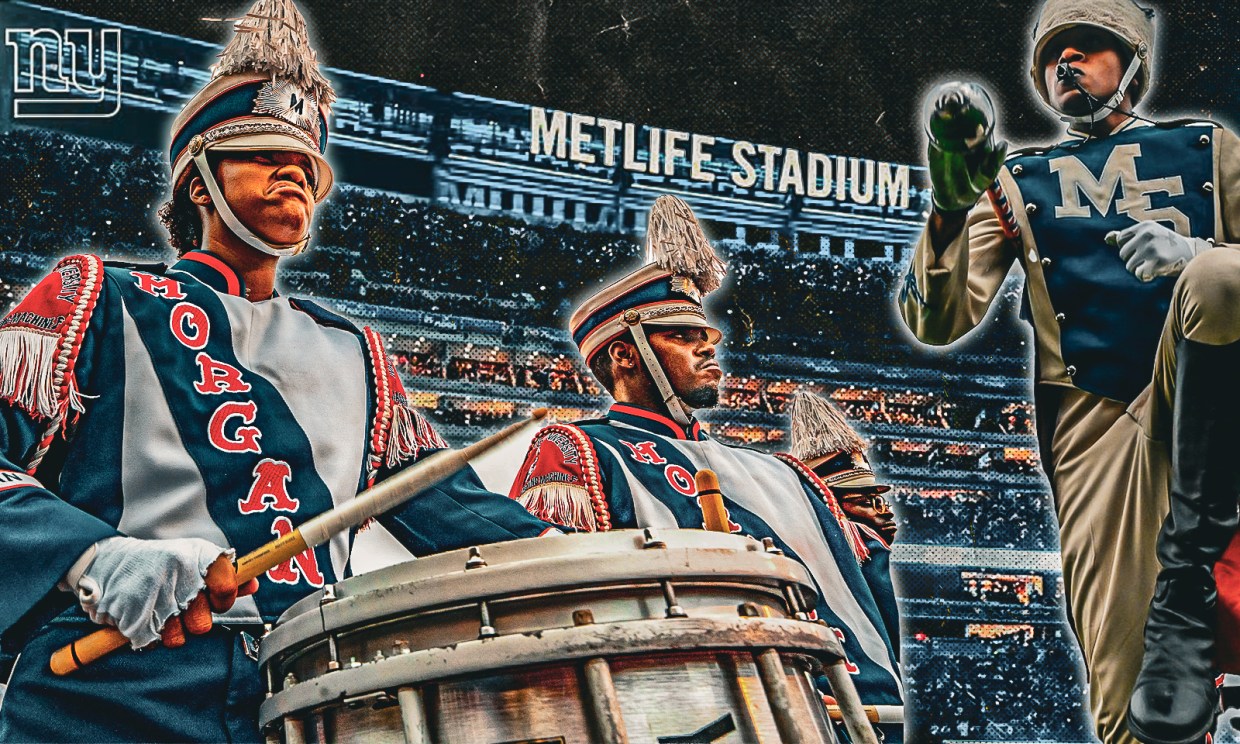
Morgan State University’s Magnificent Marching Machine joined the cast of “Hamilton” for an emotional 9/11 tribute before a national NFL audience.
The brightest stage of the NFL’s opening weekend belonged to an HBCU band.
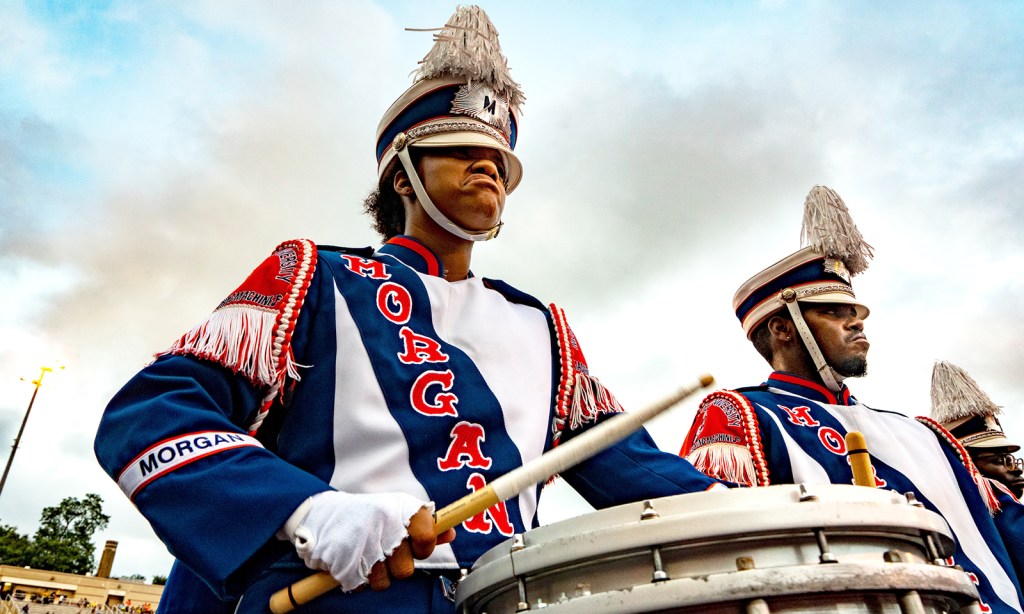
Morgan State University’s Magnificent Marching Machine transformed halftime of the New York Giants’ Sunday Night Football matchup against the Dallas Cowboys into a Broadway-sized tribute at MetLife Stadium.
The 150-member HBCU band performed alongside Penn State University’s Blue Band and members of the Broadway cast of “Hamilton,” including the musical’s creator, Lin-Manuel Miranda.
Held two days after the 25th anniversary of the September 11 attacks, the performance used one of Broadway’s most recognizable productions to honor the lives lost, the first responders who answered the call and the families forever affected by that day.
For Morgan State, it was another historic moment on one of the largest stages in American sports and entertainment.
An HBCU band meets “Hamilton” under the NFL lights
The halftime production brought together three distinct musical worlds.
Morgan State supplied the power, precision and showmanship of the HBCU marching band tradition. Penn State’s Blue Band added its traditional Big Ten sound, while performers from “Hamilton” carried the theatrical heart of the production.
The Broadway contingent included Miranda, Nicholas Christopher and Mandy Gonzalez, with soloist Jaheim Lee also featured during the tribute.
The musical arrangements were created by Tony Award-winning “Hamilton” composer Alex Lacamoire and Don P. Roberts, the veteran music educator and consultant whose work helped shape “Drumline Live.”
Together, the two arrangers built a medley capable of translating the sound and emotion of “Hamilton” from a Broadway theater to the open field at MetLife Stadium.
That required more than placing singers in front of two marching bands. The production had to synchronize live Broadway vocals, contrasting band traditions and coordinated movement involving more than 150 student musicians.
Behind-the-scenes footage showed members of Morgan State and Penn State rehearsing together at the stadium only hours before kickoff.
By halftime, the separate pieces had become one unified tribute.
Lin-Manuel Miranda praises Morgan State
The collaboration also marked a significant first for “Hamilton,” which participated in its first NFL halftime show.
After working with Morgan State, Miranda praised the Magnificent Marching Machine for handling the ambitious production.
“Morgan State, thank you for being a part of our first-ever NFL halftime show,” Miranda said in a message shared by the university. “Thank you for all of your hard work and thank you for doing impossible things.”
Miranda appeared especially impressed by the difficulty of producing complex music while executing movement across an NFL field.
That combination is familiar territory for an HBCU band.
Marching bands at historically Black colleges and universities are not simply supporting acts for football games. They are precision ensembles, cultural institutions and highly trained visual performers capable of adjusting their sound and presentation to nearly any stage.
At MetLife Stadium, Morgan State was asked to bring that tradition into a production carrying the emotional weight of a national remembrance.
“This invitation carries special significance as our nation reflects on the lives lost on September 11, 2001, honors the extraordinary courage and sacrifice of first responders and remembers the countless families and communities forever changed by that day,” Morgan State said before the performance.
The university described the appearance as another opportunity for the band to serve as an ambassador for Morgan on one of the country’s largest stages.
The latest landmark moment for Morgan State’s band
Sunday Night Football continued a remarkable stretch of high-profile appearances for the Magnificent Marching Machine.
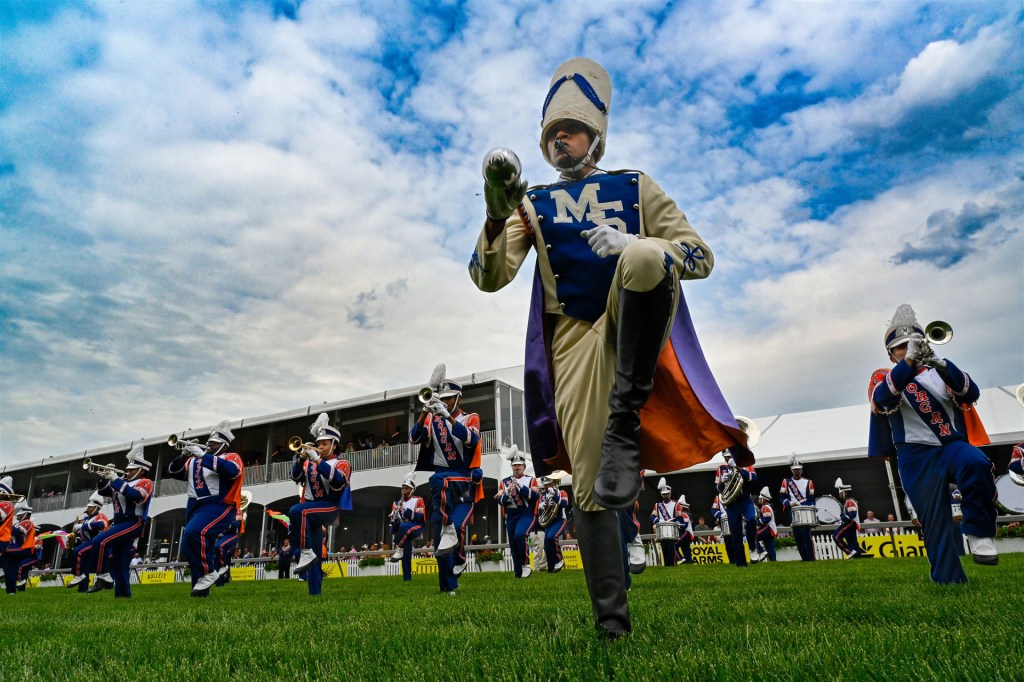
Led by Director of Bands Dr. Jorim E. Reid Sr., M3 began 2026 by completing the 5.5-mile Tournament of Roses Parade route in Pasadena, California.
The band later returned to the New York area for the U.S. Open’s HBCU Live celebration at Arthur Ashe Stadium. Weeks later, it was back under the lights in front of another national audience.
Those appearances are part of a much longer history.
In 2019, Morgan State became the first HBCU marching band from Maryland to participate in the Macy’s Thanksgiving Day Parade. In 2024, M3 traveled to Normandy and became the first HBCU band to participate in the D-Day Memorial Parade.
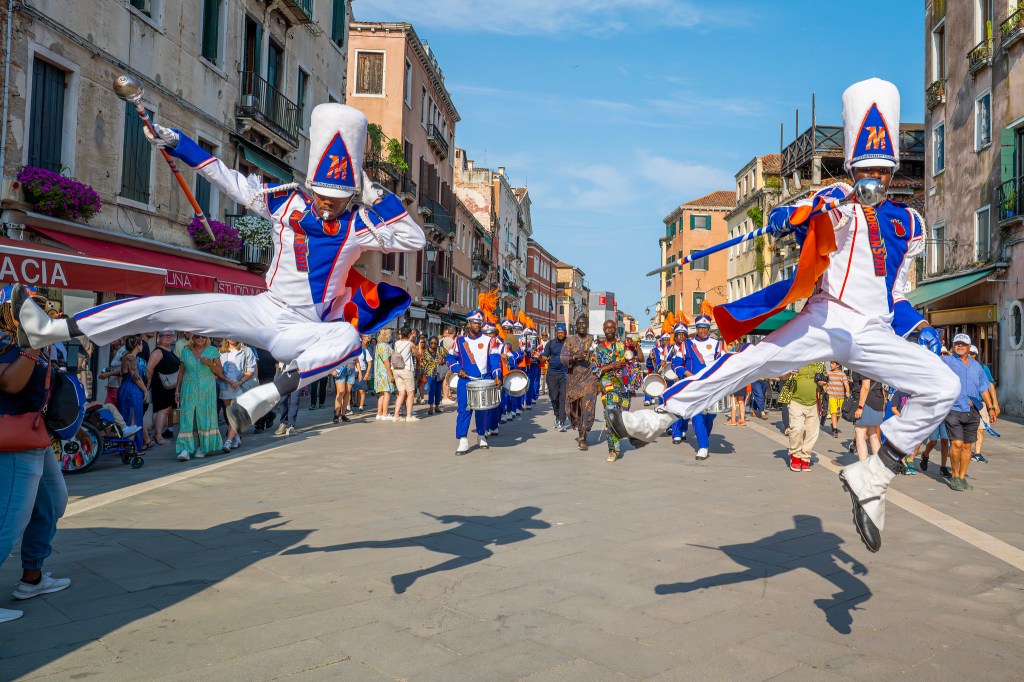
The band also performed during the 2025 Venice Architecture Biennale, appeared in the Chris Rock film “Head of State” and sent its drumline to perform at the White House during the Obama administration.
Its résumé includes the World Series, NFL stadiums, presidential events and international commemorations. Yet the “Hamilton” tribute stood apart because of the cultural forces it brought together.
Broadway met the NFL. A predominantly white institution’s traditional band shared the field with one of the country’s most prominent HBCU bands. Student musicians performed alongside accomplished theater stars during a tribute rooted in memory, sacrifice and American history.
More than a halftime show
The Giants-Cowboys rivalry delivered the audience, but the moment extended beyond football.
On the opening Sunday night of the NFL season, Morgan State’s students were placed at the center of a production designed to help the country reflect on one of its most painful days.
The Magnificent Marching Machine did not arrive merely to add atmosphere. Its musicians became essential to the scale, movement and emotional impact of the tribute.
That distinction matters.
HBCU bands have spent generations developing a performance culture that now influences college football, popular music and mainstream entertainment. Every appearance on a stage of this size gives a wider audience another opportunity to see the discipline behind the spectacle.
Morgan State entered MetLife Stadium as part of an unprecedented collaboration.
It left having shown once again why the Magnificent Marching Machine has become one of the HBCU band world’s most trusted ambassadors.