
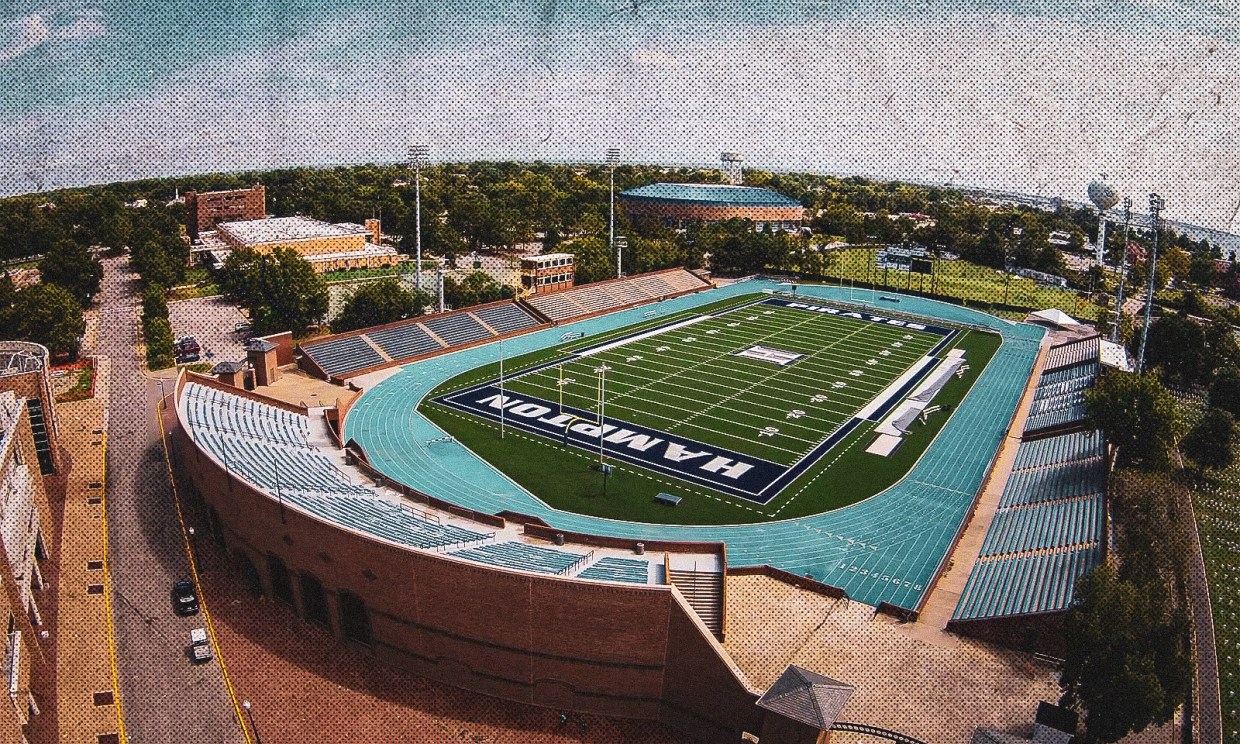
For more than a century, generations of HBCU athletes have run onto the same field at Hampton University’s Armstrong Stadium. The names on the jerseys have changed. The conferences have changed. Even the sport itself has evolved.
Now, one of the most historic venues in Black college athletics is changing again.
Hampton University announced that Armstrong Stadium—the oldest football venue in the Coastal Athletic Association (CAA) and the 13th-oldest stadium in the NCAA Football Championship Subdivision (FCS)—is undergoing a $3.2 million renovation this summer, giving one of college football’s oldest active stadiums a modern upgrade without sacrificing the history that makes it unique.
While many schools are racing to build shiny new facilities, Hampton is investing in preserving one of the sport’s living landmarks.
“It’s a statement that history still matters,” Hampton Director of Athletics Anthony D. Henderson Sr. said in announcing the project. “We are committed to providing a premier environment for all of our student-athletes to train, compete, and succeed.”
More Than a Football Stadium
Armstrong Stadium isn’t simply another HBCU football venue.
It has served as the backdrop for more than 100 years of Hampton athletics, dating back to May 20, 1922, when Armstrong Field first opened for an intercollegiate track meet before permanent seating even existed.
Fans watched events from blankets and temporary benches until Hampton students—led by Building and Construction Program graduate William E. Lee—constructed the original stadium themselves in 1928.
Those first wooden grandstands seated just 1,500 spectators.
Remarkably, portions of that student-built structure remain incorporated into Armstrong Stadium today, making it one of the few venues in college football where nearly a century of history still physically exists inside the stadium.
Since then, Armstrong has grown alongside Hampton University itself.
The venue has expanded through the CIAA era, the MEAC years, and now Hampton’s transition into the CAA, while hosting conference championships, Olympic-caliber track athletes, nationally televised games, and some of the biggest rivalry matchups in HBCU football.
A Modern Upgrade for a Historic HBCU Landmark
The centerpiece of the renovation is a complete replacement of the playing surface.
The previous AstroTurf field, installed in 2014, had reached the end of its expected lifespan. It will now be replaced with Shaw Sports Turf’s Legion 2.0 hybrid synthetic system, a surface designed to enhance durability, traction, and player safety while supporting multiple sports year-round.
The upgrade transforms Armstrong Stadium into a shared home for football, women’s soccer, and lacrosse.
Perhaps the biggest change outside football comes with Hampton women’s soccer.
For the first time in years, the Pirates will play home matches on campus rather than traveling to Williamsburg or Norfolk, creating a true home-field advantage and bringing another varsity sport back to the center of campus life.
The surrounding eight-lane track is also being completely resurfaced with a new Beynon BSS 1000 competition system, while field-event areas are being relocated adjacent to the stadium to meet modern competition standards.
Built for the Next Generation
For Hampton football coach Van Malone, the renovation represents far more than aesthetics.
A safer, faster playing surface benefits current players while becoming another recruiting tool in an increasingly competitive era of college athletics.
“This upgrade is a game-changer for our program,” Malone said. “Having a high-performance surface like this enhances player safety, supports the speed and physicality of our game and creates a championship-level environment for our student-athletes.”
That same investment extends across Hampton Athletics.
Women’s soccer gains its long-awaited on-campus home. Lacrosse receives a championship-level playing surface. Track and field athletes train on an entirely new competition-quality track.
Rather than benefiting a single program, the renovation reshapes the daily experience for multiple HBCU sports programs.


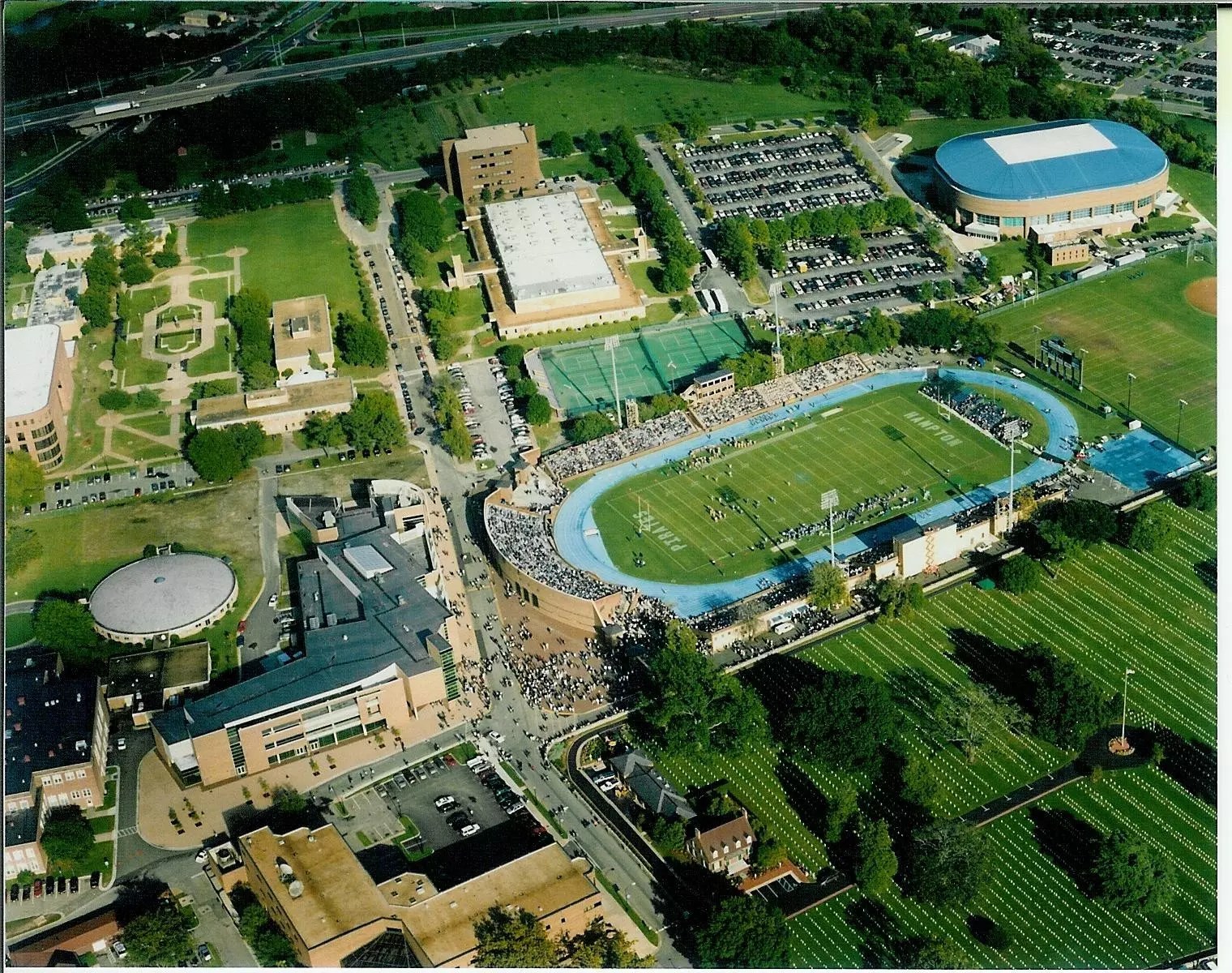
A Stadium Built on HBCU History
Few HBCU venues carry a resume quite like Armstrong Stadium.
Its official dedication came on Oct. 6, 1928, when Hampton celebrated the opening of its student-built stadium with a 13-0 victory over Virginia Seminary.
Decades later, Armstrong became the site of one of the greatest turnarounds in Hampton football history.
After suffering a 47-13 loss to Winston-Salem State during the 1985 regular season, the Pirates regrouped and earned a rematch in the CIAA Championship, defeating the Rams 13-7 to capture the program’s first conference title since 1931.
More recently, the stadium welcomed a standing-room-only crowd of more than 12,000 fans during Hampton’s dramatic 31-28 victory over Howard in 2022—the Pirates’ first football game after joining the CAA and another memorable chapter in the “Real HU” rivalry.
Annual Battle of the Bay matchups against Norfolk State have also produced some of the venue’s most electric atmospheres, helping cement Armstrong Stadium as one of Virginia’s premier HBCU football stages.
Olympic Dreams Start Here
Armstrong Stadium’s legacy extends well beyond football.
The facility has helped launch some of the greatest track and field athletes in HBCU history.
Two-time Olympic gold medalist Francena McCorory developed into one of America’s elite 400-meter runners while at Hampton, winning three NCAA national championships before anchoring Team USA’s gold medal-winning 4×400-meter relay squads in both London and Rio.
Kellie Wells also rose from Hampton to the Olympic podium, earning bronze in the 100-meter hurdles at the 2012 Olympics after becoming one of the most decorated hurdlers in program history.
Five-time All-American Ce’Aira Brown rewrote Hampton’s record books across multiple middle-distance events, while sprint standout Fred Johnson helped establish the program’s national reputation during the 1980s.
Their careers began on the same track, and now they are receiving their latest transformation.
Preserving the Past While Preparing for the Future
College athletics often celebrate the next big thing.
Hampton University is taking a different approach.
Instead of replacing one of the oldest venues in the FCS, the university is reinforcing it—preserving a stadium that has stood for more than 100 years while equipping it for the next generation of HBCU athletes.
For a program built on tradition, the $3.2 million investment isn’t about leaving history behind.
It’s about ensuring Armstrong Stadium continues creating it.