
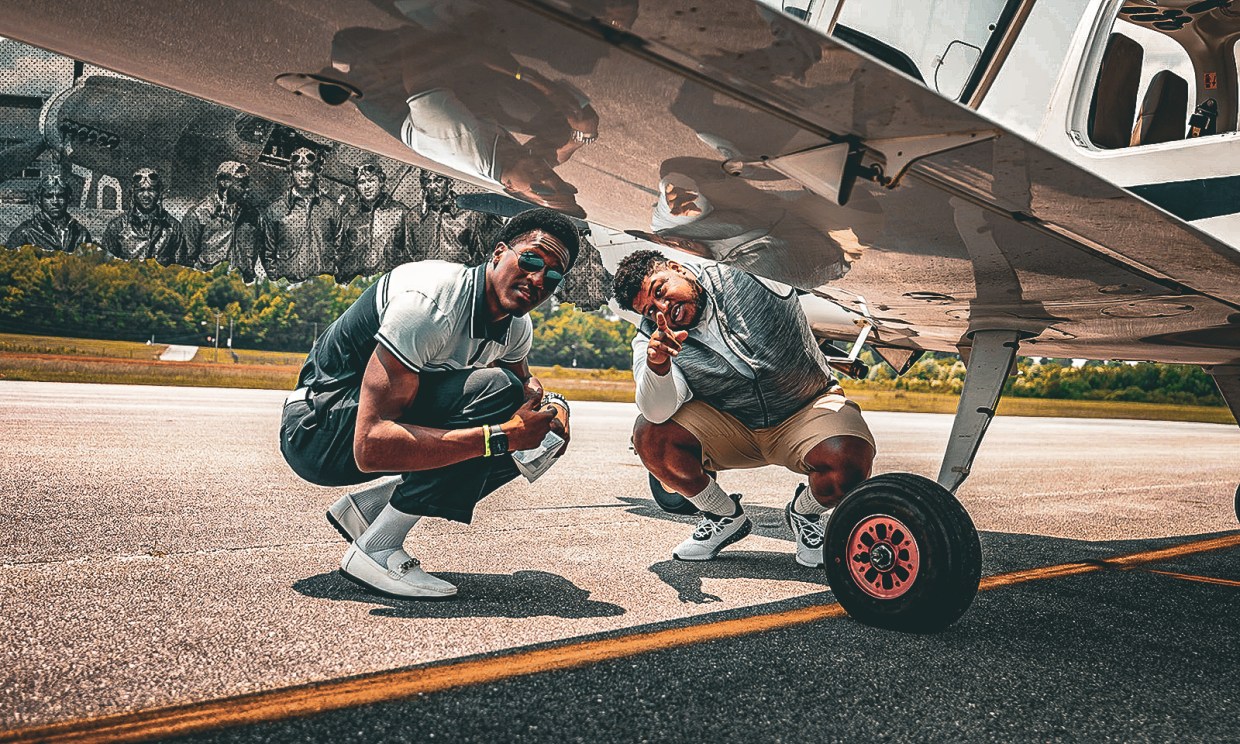
With blue skies above and milk-white clouds drifting in the distance, students at Tuskegee University methodically worked through pre-flight safety checklists on a warm June afternoon. Each step brought them closer to one of the most significant journeys of their lives. This summer, students at the historic HBCU took flight over Moton Field, once home to the famed Tuskegee Airmen.
For many, it marked the start of a bold new chapter—not just for themselves but for an HBCU rooted in excellence and national service.
Launching the Aviation Science Program at Tuskegee
Tuskegee University officially launched its Aviation Science degree program in partnership with Leadership in Flight Training (LIFT) Academy, the City of Tuskegee, and Macon County. A newly constructed hangar at Moton Field houses four aircraft used for training. Students fly up to two hours daily over a 12-week summer intensive is designed to fulfill critical flight hour requirements.
“We’re finally able to reignite the legacy of the Tuskegee Airmen,” said Dr. Javed Khan, head of the Aerospace Science Engineering Department. “We just launched our Aviation Science Program.”
That legacy is not lost on the students, who, after months of ground training and simulator work, are now logging takeoffs, landings, and live instrument control.
“Today marks a historic milestone,” said Titus Sanders, Aviation Science Program Director. “This moment is more than a first flight. It’s the next step in their journey to becoming the next generation of military and commercial aviators.”
Pilots in the Making, Grounded in Legacy
Among the first to fly was Isaiah Hand, a junior from Tallahassee, Florida. “This opportunity honestly has been a dream come true,” said Hand. “To say I was the first Tuskegee Airmen to take flight since 1946 is monumental for me.”
Hand is considering both civilian and military career paths. “My hope for the summer is to leave my mark as one of the first to go through this program and finish with my pilot license.”
Willie Murdock, a sophomore from Fresno, California, shares that passion. “I aspire to be at a legacy airline and hopefully one day make captain,” he said. “I want to fly large jets and provide service to the public.”
Representation in the Skies and the Cockpit
The program addresses a significant gap: the lack of Black pilots in commercial and military aviation. The FAA estimates a growing global pilot shortage, with a projected need for over 600,000 new pilots by 2042.
“Tuskegee University has a history of solving the world’s most complex problems,” said President Dr. Mark A. Brown. “The new generation of aviators will continue a tradition that has influenced and inspired an industry for decades.”
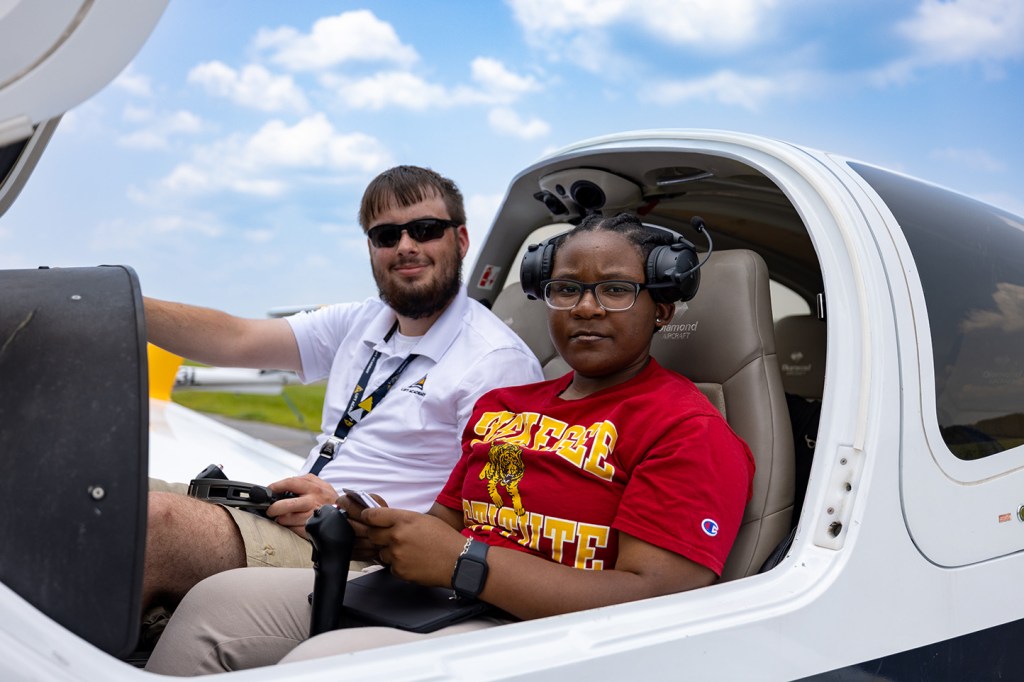
That message resonates deeply with HBCU students like Kembriah Parker, a junior from Houston who majors in Aerospace Engineering and Aviation Science.
“I’ve been dreaming about flying since sixth grade,” Parker said. “When I arrived at Tuskegee, that passion only grew stronger. Now, I’m incredibly grateful the opportunity to fly has finally become a reality.”
Her first experience in command was more than symbolic. “Honestly, for a girl who avoids roller coasters and probably never will get on one. Choosing to fly planes is a bold and beautiful leap that I’m proud I took.”
Continuing a National Legacy at an HBCU
For Parker, the connection to Moton Field is personal. “I went on a Freedom Tour with my church in 2017, and one of our stops was the Tuskegee Airmen Museum,” she said. “I remember thinking maybe I can do the same, I bought a P-51 Mustang model from the gift shop that day, and I still have it as a daily reminder.”
Retired Lt. Col. Leon G. Butler, national president of Tuskegee Airmen, Inc., sees the program as more than a degree. “Tuskegee University’s Aviation Science Degree Program is not just educating students. It’s igniting a new generation of aviators who embody the legacy of the original Tuskegee Airmen,” he said.
With the first cohort now flying, interest in the program is growing rapidly. The university’s waitlist for Aviation Science is climbing, as students across the country seek to earn their wings at the HBCU that made history — and continues to do so.