

When Sahfi Reed entered the NCAA Transfer Portal in January 2026, the move looked familiar. A Power Four athlete was searching for a new opportunity. What followed was not. Reed, a dual-sport athlete in football and track who most recently played wide receiver at the University of Houston, committed to Lincoln University (PA), an HBCU in the CIAA.
He arrives with three years of football eligibility and national-level track credentials. That combination immediately shifts the conversation around HBCU recruiting power.
The Philadelphia native brings rare two-sport value. His impact is already showing. Reed has begun competing for Lincoln’s track and field program just weeks after enrolling. At the same time, he is positioning himself to contribute on the football field this fall.
A Power Four Move With Two Lanes
At the University of Houston, Reed balanced football duties with one of the nation’s strongest track programs. While he saw limited snaps at wide receiver, his speed translated at the highest level of collegiate track.
In 2025, Reed earned USTFCCCA Second Team All-American honors as part of Houston’s 4×400-meter relay team. He helped the Cougars qualify for the NCAA Division I Outdoor Championships in Eugene, Oregon. The relay posted a season-best time of 3:03.49. That mark ranks among the fastest in program history.
That résumé followed Reed into the portal.
Instead of chasing another Power Four depth chart in the NCAA Transfer Portal, Reed chose an HBCU with a proven record of developing elite track athletes.
Speed That Translates Across Sports
Reed’s athletic profile separates him from most portal entries.
At 6-foot-2 and roughly 185 pounds, he pairs size with verified speed:
- 400m: 46.14 seconds
- 200m: 21.67 seconds
- 100m: 10.89 seconds
Those numbers made him a nationally recruited athlete prospect out of Martin Luther King High School in Philadelphia. There, he starred as both a wide receiver and a defensive back. His track success earned All-American honors at New Balance Nationals. Meanwhile, his football play drew Division I offers from Syracuse, UConn, Temple, Akron, and Old Dominion.
That speed has already shown up at Lincoln.
In early February, Reed ran a 21.85-second indoor 200 meters, one of the more competitive HBCU times this season.
Why Lincoln Makes Sense
Lincoln University’s (PA) track program is not a developmental gamble. It is a destination.
The Lions boast 17 NCAA national championships and a legacy defined by excellence. That history includes decades of podium finishes, All-Americans, and national relevance across multiple divisions. Track and field is central to Lincoln’s identity. The program even inspired the creation of Track Phi Track Social Fellowship, Inc., which celebrates elite athletic and academic achievement.
For Reed, the move connects performance with opportunity.
Rather than splitting its focus among Power Four programs, Lincoln offers a clear platform. His speed can be maximized on the track and leveraged within an HBCU football program that values multi-sport athletes.
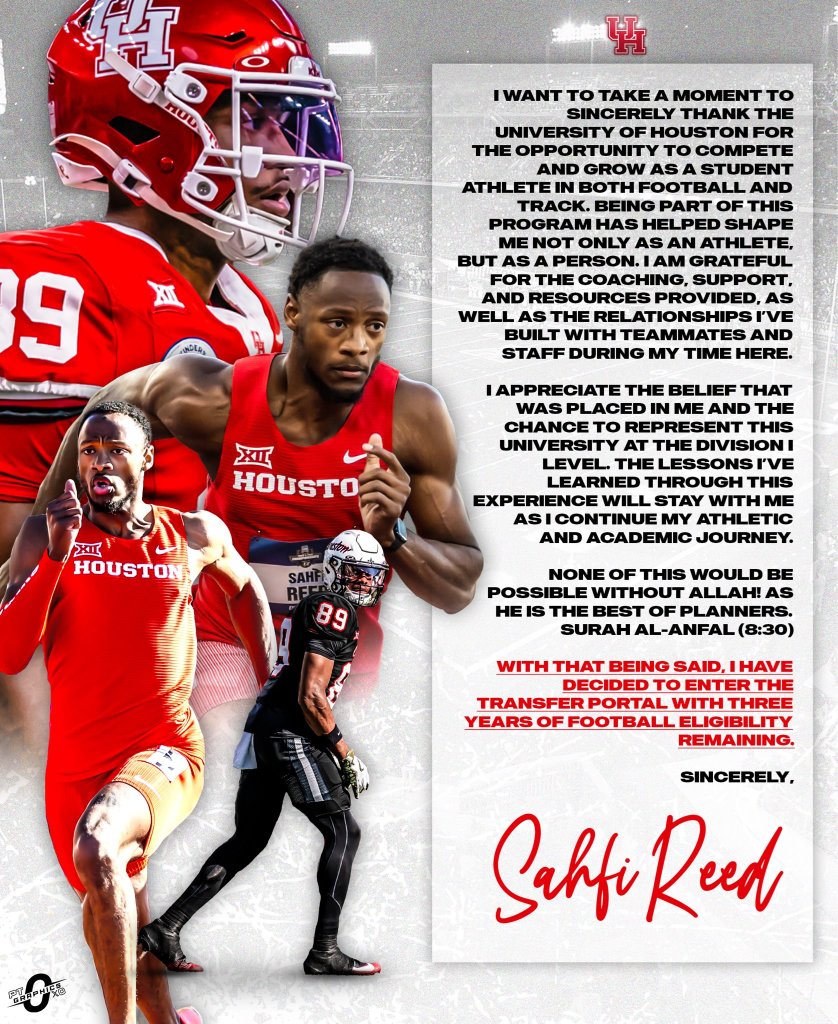
What This Transfer Represents
Most Power Four to HBCU transfers focus on football opportunity or playing time.
Reed’s decision to leave the University of Houston for a DII HBCU expands that narrative.
His move shows how HBCUs can recruit elite athletes holistically. These programs offer pathways that support multiple sports, personal growth, and competitive excellence. The decision also highlights the pull of legacy programs like Lincoln. Even in the portal era, that history still resonates.
For Lincoln, the addition is immediate and meaningful.
For the broader HBCU landscape, it reinforces a growing trend. Top-tier talent is choosing HBCUs not as a fallback—but as a strategic destination.